On May 16, 2024, a research team involving the University of Washington and other institutions published a global life expectancy forecast in the prestigious medical journal The Lancet. The study showed that by 2050, the global average life expectancy will increase by 4.5 years from 73.6 in 2022 to 78.1 years.

In March 2025, The Lancet predicted that there is a 93% probability the average life expectancy in China will exceed 80 years by 2035 — with men expected to live 78.1 years and women 85.1 years. PS: Men still live several years less than women. I once saw a video of elderly ladies energetically dancing in a square, while their husbands sat chatting in wheelchairs.
(1) Ancient Times
In ancient China, the average lifespan during the Xia and Shang dynasties was only 18 years. In the Qin and Han dynasties, it rose to 20 years, 22 years during the Eastern Han, 27 during the Tang, 30 during the Song, and 33 during the Qing. Even emperors, who had access to better living and medical conditions, only averaged 39 years.
PS: Confucius said: “At fifteen, I set my heart on learning; at thirty, I stood firm; at forty, I had no doubts; at fifty, I knew the decrees of Heaven; at sixty, my ear was obedient; at seventy, I followed my heart's desire without overstepping the line.” Truly wise words.
In the West, during ancient Greece and Rome, average life expectancy was around 30 years.
(2) Modern History
In the 17th century, life expectancy was about 35 years; in the 18th century, about 37 years. In the 19th century, industrialization in Europe improved healthcare and promoted vaccination, controlling some infectious diseases and raising life expectancy above 40.
(3) Contemporary Times
In the early 20th century, medical advances, antibiotics, public health systems, and vaccines significantly curbed infectious diseases. Life expectancy jumped from 40 to 61 years. By 1985, the global average reached 62. Since then, it has increased by about one year every five years.
By the 21st century, average lifespans continued to rise. According to China’s National Health Commission in 2024, life expectancy reached 78.6 years. In developed countries like Japan and Switzerland, it exceeds 80 years. Improved healthcare, technology, civilization, and living standards all contributed. However, some research suggests that without breakthrough anti-aging technology, 150 may be the natural limit of human lifespan.
(1) The Plague in Late Eastern Han (151–217 AD)
Massive plagues erupted in various parts of China. Zhang Zhongjing noted in his medical book preface that "Of my extended family of over 200, two-thirds died, seven out of ten from typhoid." Cao Zhi also described, "Every household mourned the dead, and some families were entirely wiped out."

(2) Late Ming Dynasty Epidemic (from 1633)
Plagues devastated Beijing, Hebei, Shandong, Jiangsu, and Zhejiang. Records describe Beijing as "nine out of ten homes empty, with no one left to collect the dead."

(3) Antonine Plague of the Roman Empire (165–180 AD)
Rome suffered massive losses — 2,000 people died daily, totaling around 5 million, about one-third of the empire's population. This marked the beginning of Rome’s decline.

(4) Black Death (1347–1351)
Originating in Central Asia, it spread through trade and rodents. About 25 million people, a third of Europe’s population, perished.

(1) Penicillin
Penicillin was discovered by chance. In 1928, British bacteriologist Alexander Fleming, while studying Staphylococcus aureus, noticed that a section of a petri dish contaminated with mold had no bacterial growth around it. He speculated that the mold—Penicillium—not only inhibited the growth of the bacteria but also secreted a substance responsible for this effect. He named it penicillin.
By the 1940s, scientists like Florey and Chain managed to solve the challenges of purifying and mass-producing penicillin, making it widely available in clinical settings. This development saved countless lives from bacterial infections and marked the beginning of the antibiotic era.
(2) Aspirin
From the Sumerian civilization around 3000 BC, where early humans began using willow bark medicinally, to Bayer’s commercial production of acetylsalicylic acid in 1899 under the name "Aspirin", nearly 5000 years passed. The journey of aspirin’s discovery and application was anything but smooth.
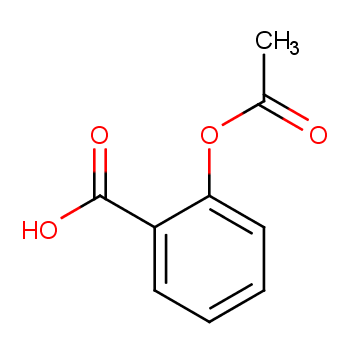
Reverend Stone found that dried willow bark alleviated fever and muscle pain caused by malaria. Professor Buchner extracted salicin from willow bark; chemist Piria then hydrolyzed salicin into saligenin and oxidized it into salicylic acid. Later, Hoffman synthesized acetylsalicylic acid, significantly reducing salicylic acid’s gastrointestinal side effects. Aspirin has stood the test of time, and in modern medicine, it has re-emerged as a powerful anti-thrombotic drug, becoming a legendary agent in longevity.
(3) Artemisinin
"A handful of Qinghao (Artemisia annua), soaked in two liters of water, wring out the juice and drink it all"—this is a record from Ge Hong’s Emergency Prescriptions Kept Up One’s Sleeve during the Eastern Jin Dynasty, describing the antimalarial use of Qinghao. It is also a precious gift from traditional Chinese medicine to the world.
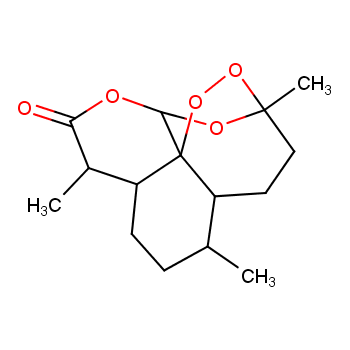
In the 1960s, when malaria was rampant, Tu Youyou and her team were urgently tasked with finding a new antimalarial drug. They compiled ancient Chinese medical texts, folk remedies, and consulted traditional doctors, eventually identifying Qinghao as a potential treatment. Tu and her team successfully extracted artemisinin from the plant Artemisia annua.
Subsequent researchers improved its efficacy and stability by developing derivatives like dihydroartemisinin, artemether, and artesunate. Artemisinin has saved millions of lives and made a significant contribution to extending human lifespan.
I always wondered why there seemed to be more elderly grandmothers than grandfathers — many dancing energetically, while the grandfathers sunbathed and chatted.
(1) Biological Factors
Women have two X chromosomes (XX), while men have one (XY). The X chromosome contains many health-related genes, and women’s second X can compensate for mutations. Men lack this backup, increasing disease risk.
Estrogen also protects women’s cardiovascular systems — it dilates blood vessels, lowers cholesterol, reduces atherosclerosis risk, and benefits bone health, reducing osteoporosis before menopause.
(2) Lifestyle Factors
Men tend to smoke and drink more. Women generally eat healthier, maintain weight, and avoid harmful habits.
Chinese Dietary Guidelines (2022) recommend:
PS: Modern philosopher Zhou Guoping said drinking has three realms: mild buzz, delightful intoxication, and complete inebriation — stop at the first. “I have a jug of wine, enough to soothe the dusty world.”
Improving diet, exercising, sleeping well, quitting smoking, limiting alcohol, managing weight, and maintaining a healthy mindset can significantly reduce disease risks.
Borrowing a line from Liu Cixin, “Give civilization to time, not just time to civilization.” Time grants humanity a unique mission — to proactively build a sustainable and orderly civilization, not passively await it. We must value both the length and breadth of life. Cherish time, live mindfully, and feel deeply — this is the meaning of never stopping, and constantly pushing the limits of human life.
[1]. Global Burden of Disease 2021 Findings from the GBD 2021 Study

