Thiourea, a widely used compound, plays a pivotal role across various domains. This article aims to explore the thiourea uses, delving into its applications and potential across different fields. Understanding the practical applications of thiourea is crucial for harnessing its functionalities and characteristics to the fullest. This article will focus on the applications of thiourea in everyday life, industrial agriculture, among others, elucidating its significance in scientific research and industrial production. By comprehensively understanding the uses and practical applications of thiourea, we can better utilize the properties of this compound, promoting technological innovation and industrial development.
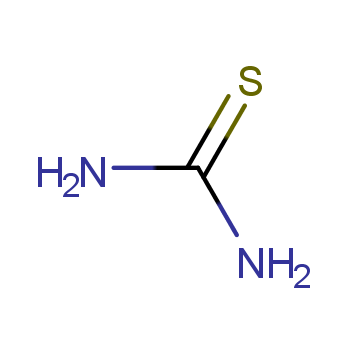
Thiourea exists in two tautomeric forms - thioketone and thiol form. With the chemical formula CH4N2S, thiourea resembles urea, with oxygen atoms replaced by sulfur atoms. It appears as white crystalline powder, flammable, emitting irritating or toxic smoke upon contact with fire. Thiourea itself finds limited applications, primarily serving as a precursor to thiourea dioxide, a common reducing agent in textile processing. Recently, research has explored several ideal properties of thiourea as a fertilizer, particularly under environmental stress conditions. It can be applied in various ways, such as seed pretreatment for germination, foliar spraying, or substrate supplementation.
Thiourea finds diverse applications in various aspects of everyday life, serving as a common ingredient across multiple industries. In photography, it acts as a fixing agent in photographic developing solutions, aiding in the removal of unexposed silver halide crystals from photographic film or paper. Its ability to dissolve silver salts is indispensable in the development process, ensuring the production of clear and high-quality photographic prints. In textile processing, thiourea serves as a reducing agent and dyeing auxiliary, facilitating the fixation of dyes on textile fibers, enhancing color fastness. Its role extends to bleaching and finishing processes, where it helps achieve desired fabric properties such as softness and luster. In the cosmetics industry, thiourea plays a significant role, acting as a hair softener in hair care products and a stabilizer in cosmetic formulations. Its mild and non-irritating characteristics make it suitable for use in skincare products, where it enhances product stability and texture without adverse reactions on the skin.
In household products, thiourea plays a crucial role in various formulations, contributing to their effectiveness and performance. In cleaning products, thiourea acts as a chelating agent, aiding in the removal of surface mineral deposits and stubborn stains. Its ability to bind with metal ions enhances the cleaning efficacy of detergents and household cleaners, ensuring thorough removal of dirt and grime. Additionally, thiourea is used in the production of flame-retardant textiles and interior decorative fabrics, improving the fire resistance and safety of household furnishings.
In personal care products, thiourea serves as a pH regulator and stabilizer, helping maintain the integrity of products and extending their shelf life. Its multifunctional properties make it a valuable ingredient in a wide range of consumer products, contributing to their efficacy and availability in everyday life.
Thiourea finds various applications in the food industry, serving as a food additive and preservative with multiple functions. One of its primary roles is as a dough conditioner during baking, enhancing the elasticity and texture of dough, thereby improving product quality and consistency. Additionally, thiourea acts as a leavening agent, promoting the expansion and fluffiness of baked goods such as bread and pastries. Its stabilizing and emulsifying properties make it a valuable ingredient in the production of sauces, condiments, and confectionery products, contributing to the smooth texture and uniformity of the final products. Thiourea's antioxidant properties enable it to effectively inhibit lipid oxidation, extending the shelf life of perishable foods, thereby reducing food waste and enhancing food safety.
In food processing and manufacturing, thiourea is also used as a flour bleaching agent and a color stabilizer in fruit and vegetable processing, ensuring packaged foods maintain vibrant colors and visual appeal. Although thiourea finds widespread applications, its use in the food industry is subject to regulatory scrutiny and strict safety standards to ensure consumer protection.
Thiourea is a highly valuable compound with various applications in industry, including being used as a sulfur-containing precursor, a precursor to thiourea dioxide commonly used as a reducing agent in textile processing. Thiourea serves as a flotation agent for metal minerals, an additive in diazo paper, photosensitive copying paper, and most types of copying paper. It is also used as a contaminant in ethylene thiourea-based fungicides, in the production of flame-retardant resins and vulcanization accelerators, and as a chemical tin plating solution for copper printed circuit boards.
Thiourea compounds exhibit broad biological activity in pesticides, including insecticidal and herbicidal activities. For example, thiourea compounds such as carbendazim, bromadiolone, cyromazine, and diuron are used as fungicides, rodenticides, acaricides, and growth regulators, respectively. Thiourea compounds are effective inhibitors of urease, delaying urea hydrolysis, reducing ammonia volatilization, inhibiting soil nitrification, and increasing soil NH4+ accumulation. Thiourea compounds also have the characteristics of low residue and low acute toxicity to animals, making them a hotspot in the research of green pesticides.
Thiourea is also used as a plant growth regulator, affecting various aspects of plant growth and development. As a cytokinin inhibitor, it inhibits the degradation of plant cytokinins and prolongs their activity, thereby enhancing the development of branches and lateral buds. This promotes the growth habits of shrubs and increases flower yield, making thiourea particularly valuable in ornamental plant cultivation and floriculture. Additionally, thiourea serves as a foliar fertilizer, providing plants with an easily accessible nitrogen source through leaf absorption. Its application has been shown to increase crop yield and quality in various agricultural environments, thereby enhancing profitability and sustainability for growers. By harnessing the benefits of thiourea as a plant growth regulator and fertilizer, farmers and horticulturists can optimize crop production while minimizing environmental impact, thereby promoting food security and agricultural sustainability.
Contact with thiourea can result in adverse health effects and poisoning. It is absorbed by the body through inhalation of its aerosols and ingestion. Repeated or prolonged exposure to thiourea can lead to skin sensitization and various health effects on the thyroid. Contact with solid or liquid forms of thiourea can irritate the skin, eyes, and respiratory tract, causing discomfort or allergic reactions in sensitive individuals. Inhalation of thiourea dust or vapors may induce respiratory irritation or exacerbate existing respiratory diseases.
To mitigate these risks, appropriate protective measures must be implemented, including the use of gloves, goggles, and respiratory protection when handling thiourea. Adequate ventilation in the work area is crucial to minimize exposure to airborne pollutants and ensure a safe working environment. Additionally, proper training and education on the handling and storage of thiourea are necessary to mitigate the risk of accidents or exposure incidents.
In addition to personal protective measures, proper storage and disposal methods are essential to prevent environmental contamination and ensure safety. Thiourea should be stored in a cool, dry, well-ventilated area, away from incompatible materials and heat or ignition sources. Containers should be tightly sealed to prevent leaks or spills and labeled with appropriate hazard information. Leaks or spills should be promptly cleaned up using absorbent materials and disposed of in accordance with local regulations and guidelines. It is also advisable to avoid unnecessary storage of large quantities of thiourea and to regularly review and assess storage conditions to ensure compliance with safety standards.
Thiourea is a versatile compound with diverse applications across various industries and aspects of daily life. Its indispensability in enhancing product performance, efficiency, and safety has been well established. The multifaceted nature of thiourea, encompassing its roles as a reducing agent, chelating agent, stabilizer, and preservative, underscores its importance across industries and highlights its ubiquitous presence in modern society. As we continue to innovate and explore new avenues for the utilization of thiourea, further advancements and discoveries will contribute to societal well-being, environmental sustainability, and economic prosperity.
[1] Shi Zhichuan, Zhao Zhigang, Liu Xingli, et al. Synthesis and Application Research Progress of Thiourea and Its Schiff Base Derivatives [J]. Chemical Research and Application, 2020, 32(01): 9-19.
[2] Cui Chunli, Zhao Liucheng, Zhang Jinrui, et al. Research Status of Gold Immersion Technology with Thiourea-containing Reagents [J]. China Mining, 2018, 27(12): 112-117.
[3] He Lijun, Huang Yan. Review of Thiourea on Inhibition of Biological Nitrification and Treatment of Thiourea-containing Wastewater [J]. Sichuan Chemical Industry, 2015, 18(03): 29-32.
[4]https://byjus.com/chemistry/thiourea/
[5]https://camachem.com/pt/blog/post/frequently-asked-question-about-thiourea
[6]https://en.wikipedia.org/wiki/Thiourea
 |
 |
 |



 15YRS
15YRS


