One week ago, on January 16, the JPM conference held in San Francisco came to a close. Most of the Chinese biopharmaceutical professionals who attended the event have already returned to China, diving into the busy days before the Spring Festival holiday. It has been ten days since the opening of the world’s largest healthcare conference on January 13. Ten days are enough to allow some reflections to settle.
For the Chinese attendees, the week in San Francisco was not just about absorbing information. Along with the rush of MNCs (multinational corporations) in China, these repeated meetings and exchanges didn’t only bring “future possibilities,” but were likely to immediately result in orders that could help Chinese Biotech companies stay alive and stop the bleeding.
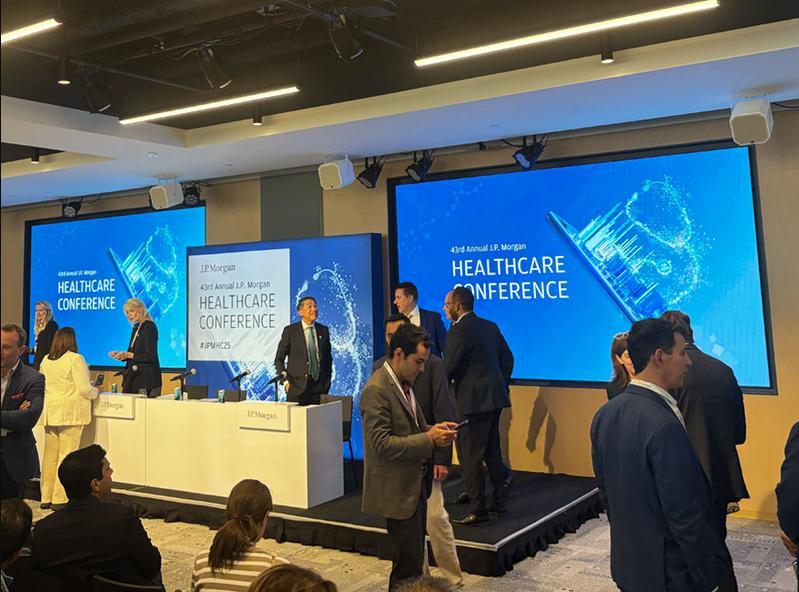
A few Chinese innovation drug investors, carrying the responsibility of post-investment management for their portfolio companies, couldn’t spare time to adjust to the time zone and held back-to-back meetings and discussions.
Pivotal BioVenture Managing Partner Liu Dan wrote on his social media that this year’s conference was the busiest he had ever attended, as he had meetings until the second day after the conference ended. On the evening of Friday, after the last meeting, he walked out and realized that the streets of downtown San Francisco, which had been crowded for three days with hurriedly dressed, suit-clad professionals from around the world, had suddenly emptied. He wasn’t used to it. Fortunately, a few of his invested companies that attended the conference were able to secure potential business development or investment intentions with one or two MNCs through their collective efforts.
Despite the enthusiasm from the Chinese “gold rushers,” the number of participants in this year’s conference was relatively low compared to previous years. "I’ve heard that many companies laid off employees last year," said an industry professional from the US. In addition, most companies, whether in investment or pharmaceuticals, are still keeping a contraction strategy, which is one of the main reasons for the reduced number of attendees.
However, outside the main conference hall at the Westin Hotel, the flow of attendees still caused traffic congestion. According to the aforementioned US professional, most participants had clear goals and tasks, such as focusing on the latest developments of certain companies. Outside of that, people mainly met with friends or clients. From the crowded steps of Union Square to the packed cafes nearby, the entire JPM event felt more like a large-scale party.
As described by the above investor, for many attendees coming from China, the mood wasn’t very relaxed. Many mentioned that the number of Chinese companies attending this year might have reached a historical high. On the one hand, this signifies that China’s innovation strength is gaining more international recognition; on the other hand, the driving force behind this is the urgent domestic demand for overseas deals.
"In the past year, my colleagues were discussing Chinese assets," said the aforementioned US industry professional working in an MNC's investment department. "This is a new experience for us, requiring a lot of knowledge updates. Although pursuing Chinese assets is currently a trend, it requires a lot of learning and communication, which makes us approach it with caution."
While overseas companies are trying to engage with China, Chinese companies are also actively making adjustments. A Chinese company representative attending the conference mentioned that some domestic companies are concerned that potential deal partners might be wary of the geopolitical uncertainty and are therefore trying to downplay their Chinese identity. "For example, they may change their company’s English name or sign some guarantees," he said.
Some overseas teams are still in the early stages of their business, and the founding teams fly to the US themselves to "attend events." In various presentation rooms, they are often seen speaking in imperfect English, introducing their company pipelines and clinical data. "The effectiveness of this approach is limited. Whether it succeeds depends on luck. Generally speaking, targeted contacts are easier," said a Chinese professional working in the US.
Among the Chinese companies attending, representatives often waved the flag of "In global, for global." Today, more and more Chinese biotech companies have not only established overseas R&D teams and clinical centers but also targeted global patient populations in the selection of their targets and indications.
For American companies, the still-recovering environment dictates that next year’s industry priorities will continue to focus on small-to-medium-sized deals, which is one of the reasons Chinese assets are attractive. Both in the US and China, it seems that both sides are gradually approaching a suitable intersection point.
Liu Dan conducted extensive research and engaged with senior executives from several MNCs during the JPM conference to understand their views on Chinese Biotech. Contrary to the previous belief that "after Trump’s rise, geopolitical factors would obstruct China-US biopharmaceutical cooperation," Liu Dan found that "of the 10 MNCs interviewed, 8-9 clearly stated that geopolitical factors are not a limiting consideration in their cooperation with Chinese biotech, at least for now."
Only one company expressed concern about geopolitical uncertainties and industry instability after Trump’s rise. "But this company is a relatively traditional and conservative pharmaceutical giant," Liu Dan added.
This perception has been communicated to the execution teams in the China BD departments of various MNCs, and they are still conducting transactions with Chinese Biotech according to market rules.
Although China-US geopolitics was a highly discussed topic at this year’s conference, there was little perception of its actual hindrances. One US industry professional mentioned that he has not seen any cases where geopolitical factors affected deals. Overall, he believes that China and the US will increasingly move towards mutual prosperity.
Wuxi AppTec’s CEO’s speech at the conference also confirmed this. "In April last year, a large pharmaceutical company’s manufacturing supervisor visited us. I asked him: 'What do you think the impact of geopolitics is?' His answer was that quality, execution, and price are most important. If you excel in these areas, geopolitics will not truly affect you." He also added that no company’s clients have encountered delays in FDA approval due to production inspection issues.
This year’s JPM conference did not bring many major announcements from MNCs. The most notable was Johnson & Johnson’s announcement of a significant acquisition, purchasing mental health drug developer Intra-Cellular Therapies for $14.6 billion.
The motive behind large acquisitions mainly comes from competitive pressure: a year ago, BMS acquired a similar company, Karuna, for $14 billion. In September of the same year, the FDA approved the company’s oral innovative compound Cobenfy (KarXT) for treating adult patients with schizophrenia, marking a historical milestone in the field. Against this backdrop, Johnson & Johnson’s strong move was not surprising, but whether this acquisition will be just a competitive follow-up or will lead to transformation and surpassing is still unknown.
During the conference, two other acquisition announcements came out: Eli Lilly acquired cancer drug company Scorpion Therapeutics for $2.5 billion, and GSK acquired gastrointestinal stromal tumor precision therapy company IDRx for $1.15 billion.
Alexis Borisy, who holds positions in both acquired companies, stated that both companies had secretly submitted listing plans. Especially for IDRx, whose drug showed strong potential in early testing, the company should have had an opportunity to go public. "But its valuation may not be higher than its most recent financing round, and it will have to bear the risk of a decrease in market value." Under such circumstances, both companies ultimately had to choose to sell.
Although more funds are being reintroduced into the biopharmaceutical industry under the current interest rate cut, the true recovery is still some distance away. "The industry needs funding flowing out of the IPO channel. However, we are still pessimistic about this," said the US industry professional.
Aside from some mergers and acquisitions, the discussions from MNCs at this JPM mainly focused on "LOE (Loss of Exclusivity)." Most company spokespersons emphasized their plans for the next five years and explained how they are preparing for revenue losses due to patent expirations.
Merck’s CEO expressed confidence about the development during the LOE transition period for Keytruda. Since 2021, the number of its phase III pipeline assets has nearly doubled. The company has also invested approximately $40 billion in strategic business development.
Pfizer’s CEO predicted that LOE losses would impact about $17 to $18 billion in annual sales, but the company’s prior acquisitions were enough to address this threat. By 2030, Pfizer’s series of acquisitions, such as the $43 billion acquisition of Seagen, will contribute around $20 billion in annual sales, sufficient to offset the anticipated losses.
Gilead also made a similar statement. After the expiration of the patent for Bituowei, the company is looking for new product growth points. Its CEO mentioned that it will conduct "appropriate mergers and acquisitions and partnerships to introduce and supplement" the company's portfolio. In this regard, he cited the company's $4.3 billion acquisition of liver disease drug developer CymaBay as an example to emphasize the company's strategic posture.
At present, MNC remains open to mergers and acquisitions, but only for some smaller transactions. From the perspective of the transaction pipeline, the prospect of a cash bomb is still slim, and the commercialization realization node is relatively long. Most transactions are more like conventional choices made to respond to market inquiries and stabilize market sentiment.
At this year’s JPM conference, the poor recent performance of GLP-1 drugs became one of the key concerns for attendees. Eli Lilly’s fourth-quarter results fell short of expectations. The company projected revenue of around $45 billion for 2024. Although this amount would represent a 32% growth compared to 2023, it was still $400 million lower than the lower end of the revenue guidance range provided by Eli Lilly in its October third-quarter earnings report. This triggered market panic, causing the company’s market value to evaporate by $50 billion.
In response, Eli Lilly's CEO explained that this was mainly due to the fact that December, which should have been the "peak sales month" for GLP-1 products, experienced an unusual situation this year, leading to forecast errors. He speculated that the main reason for the anomaly was the Medicare Part D provisions, which prevented patients from doubling their prescriptions at the end of the year to avoid deductible costs at the start of the next year.
Looking ahead, the challenges for GLP-1 are not just limited to this. For example, in the next round of drug price negotiations under Medicare, Novo Nordisk’s semaglutide will be considered a single product across different indications. Semaglutide will undergo its first negotiation in 2025. At the same time, the Biden administration proposed a new initiative last fall to allow Medicare to cover obesity treatments more widely.
The volatility of GLP-1 in the future is also affecting some manufacturing companies. The CEO of a well-known Chinese CRO company specifically addressed market concerns at the JPM conference, stating that changes in this field would not impact the company’s plans. He mentioned that after 2025, the company will focus more on the phase III pipeline and commercialization of small molecule drugs.
Another slightly alarming signal is that during the MNC’s purchasing spree in China, some Chinese biotech companies, buoyed by large orders from companies like Hengrui and other NewCos, have set high prices that make MNCs hesitate.
An MNC shared that after discussing a potential pipeline collaboration with a Chinese biotech, the company’s asking price shocked them. "For phase I clinical assets, I could easily find that price in the U.S." While Chinese biotech companies move quickly in collaborations, raising the price to 1.5 times or even nearly double what MNCs are willing to pay can make potential buyers walk away from the negotiating table.
Some top Chinese biotech companies’ presentations are also strengthening the confidence of industry professionals. Some shared achievements in commercialization over the past year: BeiGene’s Zanubrutinib ranked first in new prescriptions for CLL patients in the U.S. in 2024, and Legend Biotech’s Cilta-cel achieved $628 million in sales in the first three quarters, with the company planning to double its product’s commercial supply in 2025.
Others showcased the promising future prospects of their companies: In the next two years, Zai Lab is expected to introduce three "blockbuster drugs" — Bemarituzumab, KarXT, and TTFields. As a result, the company expects to achieve profitability by the end of 2025 and $2 billion in revenue by 2028.
These developments mean that China’s fastest-growing biotech companies have already reached or are about to reach the global market. This undoubtedly boosts the confidence of those following the "overseas expansion" path today, while also demonstrating the existing strength of Chinese biotech to overseas investors.
"The new trend in overseas deals this year in China is certainly influenced by the domestic capital winter," said the aforementioned industry professional working in the U.S. "But from another perspective, this is also an inevitable result after China’s biotech industry has reached a certain scale and level. Our company had already shifted its focus to overseas deals before the capital winter, and once you have matching capabilities, you will inevitably choose to seek out more diverse opportunities."
In this sense, the strong call from Chinese biotech companies for overseas opportunities today is not a temporary trend driven by capital pressure, but rather an early step towards the eventual historical endpoint.

