
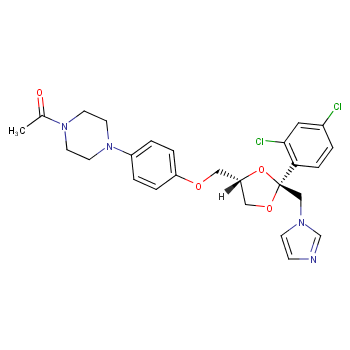
Ketoconazole, with the chemical formula C26H28Cl2N4O4 and CAS number 65277-42-1, is an antifungal medication primarily used for treating a variety of skin infections caused by fungi, including ringworm, jock itch, athlete's foot, dandruff, and tinea versicolor. It works by inhibiting the synthesis of ergosterol, an essential component of fungal cell membranes, thereby preventing the growth and reproduction of fungal cells.
Nystatin, with the chemical formula C47H75NO17 and CAS number 1400-61-9, is an antifungal medication used primarily in oral form to treat fungal infections, particularly intestinal candidiasis. Nystatin works by binding to sterols in the fungal cell membrane, disrupting its structure, and causing the leakage of cellular contents, leading to fungal cell death.
Ketoconazole and Nystatin are both effective antifungal agents, but they differ significantly in their applications, chemical composition, and mechanism of action. Ketoconazole is mainly used for topical fungal infections, while Nystatin is used orally for treating fungal infections in the gastrointestinal tract. Their respective uses highlight their differences in targeting specific types of fungal infections.


Both ketoconazole and nystatin are complex compounds, but their methods of synthesis reflect their differing origins. Ketoconazole, a synthetic antifungal, is chemically produced through a series of synthetic reactions, while nystatin, derived from natural sources, is obtained through microbial fermentation, specifically from the bacterium Streptomyces noursei.
Both ketoconazole and nystatin are highly effective antifungal treatments, yet their specific applications are distinct, largely due to their differing mechanisms of action and targeted areas of infection. Ketoconazole is predominantly used for treating skin infections, while nystatin is primarily employed to address internal fungal infections, especially those affecting the gastrointestinal tract. The differentiation between the two is essential, as it allows for the optimal use of each drug depending on the location and severity of the fungal infection.

Ketoconazole is a broad-spectrum antifungal that is widely used in the treatment of a variety of superficial fungal infections, particularly those that affect the skin. This includes common dermatophyte infections such as ringworm, athlete's foot, jock itch, and tinea corporis, as well as seborrheic dermatitis and dandruff. Ketoconazole works by inhibiting the enzyme lanosterol demethylase, which is critical in the synthesis of ergosterol, a key component of the fungal cell membrane. Without ergosterol, the membrane integrity of the fungus is compromised, preventing its growth and eventual eradication.
The topical form of ketoconazole, often available as creams, shampoos, or gels, allows for targeted application directly to the affected area. This localized treatment ensures that the drug acts directly where it is needed, making it effective for treating conditions like tinea versicolor, which causes discolored patches on the skin, as well as dandruff, which is often due to fungal overgrowth. Ketoconazole’s efficacy is especially noted in its ability to combat even more resistant fungal strains, such as Malassezia species, which are implicated in seborrheic dermatitis and dandruff. The use of ketoconazole cream or shampoo is generally well-tolerated, with side effects being rare and typically mild, such as skin irritation or dryness. This makes ketoconazole a convenient, effective, and reliable choice for treating a wide range of superficial fungal infections, especially in patients who are seeking non-invasive treatment options.
In addition to its use in dermatological conditions, ketoconazole has also been used off-label for other fungal infections and as a part of combination therapies. The formulation’s ease of use and minimal systemic absorption mean that it can be safely employed for prolonged periods in most cases without the risk of significant side effects, making it an important tool in the management of chronic fungal conditions.
On the other hand, nystatin is primarily used to treat internal fungal infections, particularly those caused by Candida species, within the gastrointestinal system. Unlike ketoconazole, which is applied topically, nystatin is typically administered orally, often in the form of tablets, suspensions, or lozenges. It is especially effective for treating conditions like intestinal candidiasis or oral thrush, both of which are caused by an overgrowth of Candida fungi. The gastrointestinal tract, including the esophagus, stomach, and intestines, can be affected by candidiasis, leading to symptoms like abdominal discomfort, bloating, and digestive disturbances.
Nystatin’s mechanism of action differs from ketoconazole’s. It works by binding to ergosterol in the fungal cell membrane, forming pores that disrupt membrane integrity and cause leakage of cellular contents, ultimately leading to cell death. This makes nystatin particularly effective for local infections within the gastrointestinal tract, as it targets the fungal cells directly in the affected areas. Unlike systemic antifungal treatments, nystatin has a minimal absorption rate in the gastrointestinal tract, meaning it predominantly acts locally without entering the bloodstream in significant amounts. This localized action reduces the risk of systemic side effects, making it a safe option for treating internal fungal infections, especially in immunocompromised patients or those with compromised gut flora.
Nystatin is commonly prescribed when topical treatments are ineffective for addressing internal fungal infections, or when a systemic antifungal therapy is necessary for more severe cases. While it is reserved for treating less serious infections compared to stronger systemic antifungals, nystatin plays an essential role in the management of Candida infections that are limited to mucosal surfaces or the gastrointestinal tract. It can be particularly useful for patients who have chronic or recurrent candidiasis that has not responded to other treatments.
In addition to its role in treating gastrointestinal candidiasis, nystatin is also used for mucosal infections in other parts of the body, such as the mouth and throat, where it is prescribed as a suspension for oral thrush. It is also sometimes used as a preventive measure in patients with weakened immune systems, such as those undergoing chemotherapy, to reduce the risk of opportunistic fungal infections.
In conclusion, both ketoconazole and nystatin are highly effective antifungal agents, but their applications differ significantly. Ketoconazole is a versatile antifungal cream used for a wide range of skin infections, while nystatin is primarily used to treat internal fungal infections such as intestinal candidiasis. Each compound has its own advantages, and the choice between them depends on the type and location of the fungal infection being treated.
| Side Effect |
Ketoconazole |
Nystatin |
|---|---|---|
| Digestive Issues | Rare, but may cause mild skin irritation or redness | Unlikely to cause significant digestive issues |
| Low Blood Pressure | Possible, especially with long-term use | No significant effect on blood pressure |
| Allergic Reactions | Rare, could include rash, itching, or swelling | Rare, could include rash, itching, or difficulty breathing |
When choosing between Ketoconazole and Nystatin for treating fungal infections, it’s essential to consider the specific type of infection you’re dealing with and the method of administration that best suits your needs. Ketoconazole, in its topical form, is most effective for skin and superficial fungal infections. If you’re dealing with conditions like athlete’s foot, ringworm, or dandruff, Ketoconazole provides a fast-acting and localized treatment. Its broad-spectrum antifungal properties also make it suitable for more persistent or resistant fungal strains.
On the other hand, Nystatin is particularly effective for internal fungal infections, especially those caused by Candida. If you are suffering from gastrointestinal candidiasis or other systemic fungal infections, Nystatin is the go-to option. Since it is usually taken orally, it targets fungal growth in the digestive system, which is where Ketoconazole may not be as effective. Nystatin’s natural origin also offers a gentler alternative for people looking to avoid synthetic treatments for internal infections.
Ultimately, if you're dealing with a skin infection, Ketoconazole is the superior choice, as it works directly where the infection resides and can be applied locally for targeted treatment. However, if your concern is an internal fungal infection, such as Candida overgrowth or intestinal fungal imbalances, Nystatin is the better option, as it effectively addresses fungal issues from within.
* For optimal results, it is recommended to consult your healthcare provider to determine the most suitable antifungal treatment based on your specific condition. Your provider can assess your symptoms, offer personalized advice on dosage, and ensure that you are using the right medication tailored to your needs and health profile.
If you're looking to purchase these compounds, Guidechem is your go-to platform for sourcing high-quality raw materials and reliable suppliers. With our extensive global network, we connect you to a wide range of Ketoconazole suppliers and Nystatin suppliers, ensuring you find the right products to meet your specific research or production requirements. Whether you're in pharmaceuticals, healthcare, or other industries, Guidechem simplifies the sourcing process, offering verified supplier information, competitive pricing, and seamless communication.
[1]Antifungal Agents: Mechanisms of Action by L. S. Lee.
[2]Ketoconazole: Pharmacology and Applications in Clinical Infectious Diseases.
[3]Nystatin and its Use in Gastrointestinal Candidiasis in Journal of Antimicrobial Chemotherapy.
[4]Advances in the Synthesis of Ketoconazole Derivatives by P. G. Chen.
 |
 |
 |



 3YRS
3YRS


