Shandong NHU Pharmaceutical Co., Ltd.'s synthetic fragrance project has made new progress. Its project with an annual output of 77,815 tons of synthetic fragrances has undergone a second round of environmental impact assessment (EIA) publicity on relevant websites.

Upon completion, the project will have the following production capacities:
The project will be constructed in four phases. Phase I will expand the following:
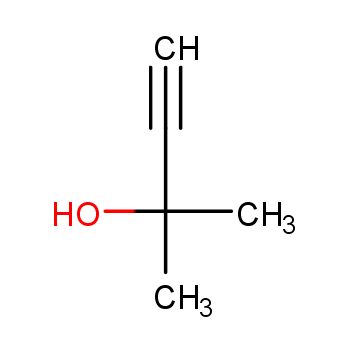
The construction will utilize 28 sets of existing equipment, including gas holders, compressors, and reactors. The main raw materials are acetone and acetylene. The production process involves the alcoholysis reaction of acetylene and acetone to produce 2-methyl-3-butyn-2-ol (70%), which is then dehydrated to yield 2-methyl-3-butyn-2-ol (99%).
2-Methyl-3-butyn-2-ol
This is an important intermediate in organic synthesis with dual activity of alkyne and hydroxyl groups. In pharmaceuticals, it is an intermediate for the antidepressant Veranamine, and participates in Sonogashira coupling and cyclization reactions for the synthesis of intermediates for anti-atrial fibrillation or antihypertensive drugs. In pesticides and fragrances, it can be used to synthesize DV pyrethroids (a type of insecticide) and linalool (a fragrance compound). In materials industry, it serves as a polymerization inhibitor in platinum-catalyzed hydrosilylation reactions in silicone rubber production. It can also be used as an acid-etch inhibitor and viscosity stabilizer in coatings and plastics. Additionally, it acts as a stabilizer for chlorinated solvents and as a polymer monomer or heat transfer medium.
Dehydrolinalool
Used directly in the fragrance industry as a raw material for daily-use fragrances, it provides floral and green scent notes, commonly used in perfumes and detergents. It is also a precursor for linalool, one of the most widely used terpene fragrances globally. The double bond structure of dehydrolinalool makes it suitable for synthesizing intermediates of vitamins A and E. Its derivatives possess insect-repelling activity and can be used as natural pesticide synergists. Through cyclization, it can be converted into ionone compounds (such as α-iso-methyl ionone), or esterified into ester-type fragrances (such as dehydrolinalyl acetate).
|


 5YRS
5YRS

