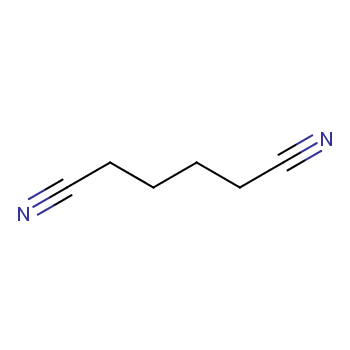
On the morning of June 6, the commissioning ceremony for China Pingmei Shenma Group's 100,000 tons/year AESA plant and the groundbreaking of the 200,000 tons/year AESA project was held at the Nylon Technology Company. This marks a significant breakthrough in breaking the long-standing foreign monopoly on adiponitrile (ADN)—a key raw material for nylon 66—in China. It paves the way for a strategic reshaping of China’s nylon industry.

Nylon 66, as a high-performance engineering plastic, features excellent mechanical properties, heat resistance, chemical resistance, and dimensional stability. It is widely used in aerospace, defense, automotive manufacturing, electronics, and other industries. ADN is a critical raw material for producing nylon 66. Previously, China was highly dependent on imports, which severely constrained the industry's development. Therefore, localization of ADN production has been designated as a major national scientific project and is listed as an “encouraged” item in the Industrial Structure Adjustment Guidance Catalog.
As the R&D and construction platform for the Group's “7+2” major scientific projects, Nylon Technology Company tackled technical difficulties and successfully developed a new technology route with independent intellectual property rights. This technology produces aminocapronitrile directly from caprolactam via ammonolysis and dehydration, followed by hydrogenation to obtain hexamethylenediamine (HMDA).
The specific process involves: caprolactam and ammonia undergoing an ammonolysis ring-opening reaction to form 6-aminocaproamide, which is then dehydrated to 6-aminocapronitrile. Finally, 6-aminocapronitrile is hydrogenated to obtain HMDA. This route bypasses traditional ADN processes, reducing reliance on imported ADN. According to quality inspections by the Group and downstream enterprises, the products from this facility meet premium-grade standards and can fully replace imported ADN, achieving a leap in innovation and domestic leadership.
A project official stated that the successful construction and commissioning of the 100,000-ton AESA plant signifies a historic shift for the Group—from being dependent to becoming a leader in nylon 66 raw material production. The initiation of the 200,000-ton AESA project lays a solid foundation for building a million-ton-level nylon 66 industry under Pingmei Shenma Group.
Since 2020, China Pingmei Shenma Group has been tackling the technical challenges of ADN localization. After tens of thousands of experiments, they successfully developed a complete technological pathway with independently developed processes, equipment, and catalysts. In Q3 of 2023, the Group’s pilot 20,000-ton/year AESA project was fed and tested, indicating preliminary technical success.
This achievement not only secures the Group’s coal-based nylon chemical industry chain but also establishes an integrated path between nylon 6 and nylon 66, strengthening the competitiveness and voice of the “China Nylon City” industrial cluster. Once operational, the project will effectively ease the supply tension of ADN in the nylon industry and enhance the resilience of the entire supply chain.
It provides strong support for the collaborative and integrated development of nylon 6 and nylon 66 industries by China Pingmei Shenma Group, helping “China Nylon City” to build a hundred-billion-level industrial chain. Ultimately, this supports China's transition from a “major nylon country” to a “strong nylon nation.” Through disruptive localization technologies, the project ensures the security of the nylon 66 downstream supply chain and promotes synergetic development of nylon 6 and nylon 66 industries.
|


 4YRS
4YRS


