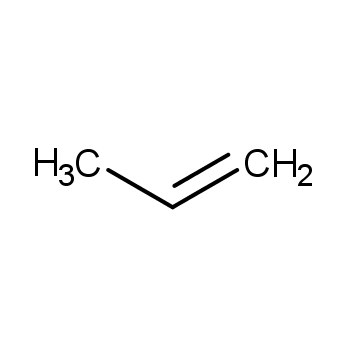
Propylene, a colorless and flammable gas, stands as the second simplest alkene hydrocarbon after ethylene. Exhibiting an odor reminiscent of garlic, it holds wide applications in the chemical industry as an intermediate for synthesizing various derivatives, including polypropylene, propylene oxide, isopropyl alcohol, acetone, and acrylonitrile. The production of propylene parallels that of ethylene, involving steam cracking of hydrocarbon feedstocks, a process that breaks molecules into smaller units through catalyst-infused steam injection.
The accelerated utilization of polypropylene gained momentum in the late 1950s with the discovery of Ziegler-Natta catalysts, enabling economically viable large-scale polymerization of propylene. Polymerizing propylene results in diverse structures with varying properties based on their tacticity—how groups are arranged in the polymer. The general structure of the polypropylene molecule can be envisioned as polyethylene, with a methyl (CH3) group replacing a hydrogen atom in each monomer. Three main structures for polypropylene—termed isotactic, syndiotactic, and atactic—are illustrated in Figure 76.1. These structures use conventional symbols to represent the three-dimensional nature of the molecules, with solid wedges indicating bonds above or out from the page and dashed lines representing bonds behind the page.

Isotactic polypropylene displays a regular pattern, with methyl groups consistently positioned on the same side of the molecule, creating a highly ordered structure. In the syndiotactic structure, methyl groups alternate above and below the plane of the page, resulting in an alternating pattern. The atactic structure showcases a random arrangement of methyl groups above and below the plane of the page.
Distinct forms of polyethylene, such as low-density polyethylene (LDPE) and high-density polyethylene (HDPE), dictate its physical properties. During polymerization, the isotactic structure forms helical coils, allowing tight packing and producing a hard, strong, and stiff plastic with a high melting point. In contrast, the atactic configuration prevents a tight structure, resulting in an amorphous, soft substance. Polypropylene production gained momentum around 1960 with the introduction of Ziegler-Natta catalysts to control the polymerization process. Over the last two decades, significant progress in the propylene industry has stemmed from a new group of catalysts known as metallocene catalysts, featuring a transition metal, such as titanium or zirconium, sandwiched between carbon rings.
Metallocene catalysts have played a pivotal role in enhancing control and advancements in polymerization processes. The polymerization of isostatic propylene, up until around 1995, yielded a structure with approximately 5% atactic polypropylene. The introduction of metallocene catalysts marked a significant shift, enabling the production of 100% isostatic or syndiotactic polypropylenes. These catalysts have empowered chemists to meticulously regulate the chain length of polypropylene tacticities, resulting in a diverse range of polypropylenes with distinct physical and chemical characteristics.

For instance, the production of rubbery elastomer polypropylene involves creating atactic polyethylene chains interspersed with regions of isostatic polypropylene along the chain. The isotactic regions, characterized by enhanced attraction and packing between molecules, lead to cross-linking of the chains, resembling the vulcanization process in rubber and resulting in a soft and flexible polypropylene. Polypropylene is also co-polymerized with polyethylene to broaden its applications.
Identifiable by the recycling symbol bearing the number 5 with the letters PP beneath, polypropylene exhibits several noteworthy characteristics, compared to polyethylene, as outlined in Table 76.1. Closer in properties to HDPE, polypropylene boasts superior heat resistance, making it preferred for items subjected to high temperatures, such as dishwasher components. Its versatility extends to extensive use in dairy product containers, including those for yogurt, butter, margarine, and spreads.
Notably resistant to various solvents, acids, and bases, polypropylene finds applications in diverse fields such as car batteries, truck bed liners, outdoor carpets, welcome mats, plastic bottle tops, storage tanks, car trim and paneling, and toys. Additionally, polypropylene is widely employed in fiber form within textile applications, with approximately one-third of its U.S. production utilized in this sector. Global fiber polypropylene usage reached around 2.5 million tons in 2005, with major applications in carpeting, upholstery, paper and packaging, construction fabric liners, diapers, and rope.

Propene, serving as a starting material for various compounds, yields isopropyl alcohol, acrylonitrile, and propylene oxide. Isopropyl alcohol, derived from propylene hydration during cracking, serves as a solvent, antifreeze, and rubbing alcohol, with a primary application in acetone production. Acrylonitrile is a crucial monomer in acrylic fiber production, contributing to trade names such as Orlon (DuPont) and Acrilan (Monsanto), while also playing a role in the synthesis of dyes, pharmaceuticals, synthetic rubber, and resins. Propylene oxide production, akin to the ethylene oxide process, involves chlorohydrination, and its hydration leads to the production of propylene glycol, propylene polyglycols, and polyether polyols. These products find applications in manufacturing rigid and flexible polyurethane foams, elastomers, sealants, and adhesives.
Richard L. Myers (2009). The 100 Most Important Chemical Compounds: A Reference Guide. Greenwood Publishing Group. October 1, 2009. https://doi.org/10.1021/ed086p1182
 |
 |
|