The ship had been roaming these waters for months. The salty sea breeze had marked the forty-eighth sunrise and sunset, and the creaking mast seemed to protest this endless voyage. Jacob Roggeveen, the explorer who had set sail in search of a new continent, was reluctant to turn back, but with fresh water nearly exhausted, he had no choice but to consider retreat.
Suddenly, a patch of verdant green broke into Roggeveen’s view, causing his heart to leap. Squinting, he made out shapes on the land that appeared to be people staring at them. Overcome with excitement, he leapt onto the deck, running and shouting to urge the fleet to press on at full speed. Closer and closer, the expedition finally set foot on the long-sought shore.
But before they could celebrate, an incredible scene met their eyes: their observers were not humans at all, but rows of solemn ten-meter-tall stone giants! The shocking sight sent shivers down every spine. As they recoiled in terror, a group of barely clothed islanders rushed toward them. Though no common tongue united them, Roggeveen could tell from their cries that the fleet was unwelcome. He immediately ordered his men to avoid conflict, and once they had taken on enough fresh water, he decisively withdrew.
Though the expedition failed in its original aim, the island’s strange wonders left Roggeveen spellbound. That day was Easter—April 5, 1722—and to commemorate the historic moment, he named the land Easter Island.

Roggeveen’s visit brought neither civilization nor progress to the island. Over the next century, the Rapa Nui endured enslavement, massacres, epidemics, and forced migrations, and by 1877 only a little over a hundred souls remained. In 1888—once again on Easter—the Chilean government formally annexed the island and leased most of its land to sheep-raising companies.
By the 1960s, at the height of the Cold War, the world was rife with tension and strategic maneuvering. Western powers saw scientific exploration of the South Pacific as critically important.
In 1964, a project supported by the Canadian Navy, led by McGill University, funded by the WHO, and overseen by Stanley C. Skoryna was launched: the “Medical Expedition to Easter Island.” Its aim was to use interdisciplinary research in medicine and ecology to explore how the Rapa Nui’s genetic traits and disease patterns related to their isolated environment. A permanent observation station was planned to record population dynamics, environmental changes, and disease transmission, filling a global gap in long-term studies of isolated communities. Soon after, a research vessel carrying microbiologists, virologists, parasitologists, doctors, and sailors docked on Easter Island.

Georges L. Nógrad, a microbiologist from the University of Montreal, was charged with collecting plant and soil specimens. One day, he made a startling discovery: the islanders did not seem to suffer from tetanus. Given the abundance of horses on the island and the locals’ barefoot customs, they should have been at high risk of encountering tetanus spores. To investigate, Nógrad gathered over sixty soil samples, but found tetanus spores in only one. He passed the samples on to various research institutions, including the Ayerst Pharmaceutical Company in Montreal.
At Ayerst, Dr. Surendra Nath Sehgal isolated a rare actinomycete bacterium—Streptomyces hygroscopicus—from the soil samples. Through fermentation, he obtained a new compound with potent anti-inflammatory and antifungal properties. In honor of its birthplace, Sehgal named it Rapamycin, after the island’s native name, Rapa Nui.
Sehgal then sent samples of rapamycin to the U.S. National Cancer Institute, where it demonstrated strong inhibitory effects on solid tumors. In 1975, his team perfected the isolation techniques and elucidated rapamycin’s chemical structure, confirming it as a member of the triene macrolide class.
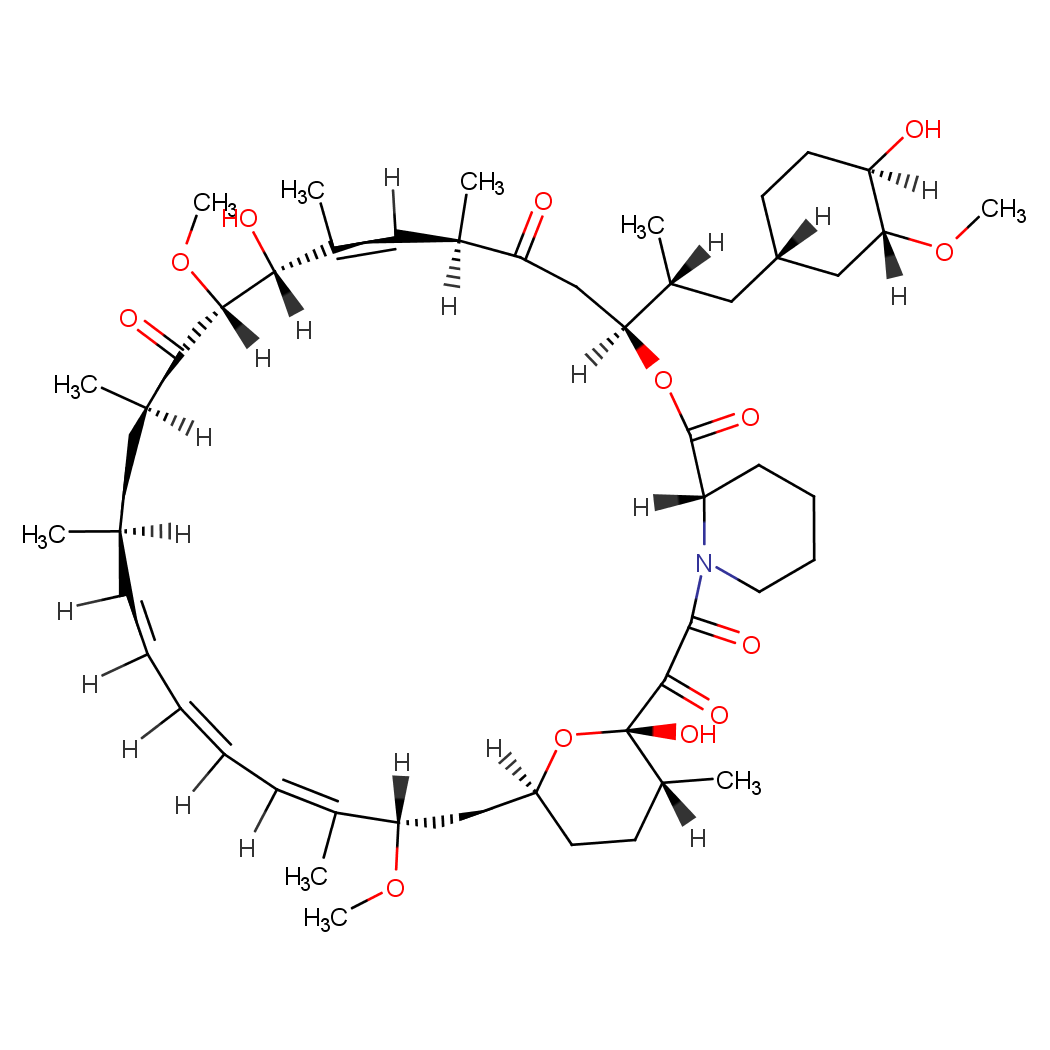
However, due to observed toxicity in animal models and internal company decisions, rapamycin’s development as a drug was shelved. In 1983, Ayerst closed its Montreal research center and transferred Sehgal and his colleagues to Princeton, New Jersey. The project was put on ice, and the remaining fermentation samples were stored in Sehgal’s home freezer—where they remained for another five years before reemerging.
In 1987, Wyeth merged with Ayerst. A year later, Sehgal finally convinced the new management to resume development of Rapamycin. Building on previous research, Sehgal soon discovered Rapamycin’s immunosuppressive properties—findings that came just as immunosuppressive drugs were gaining popularity.
Back in 1983, Sandoz had developed the first organ transplant immunosuppressant, cyclosporine, which quickly became a blockbuster product. In 1987, Japan’s Fujisawa Pharmaceuticals reported the development of FK-506 (later known as tacrolimus), an immunosuppressant with structural similarities to Rapamycin. Given FK-506’s structure and activity, Wyeth-Ayerst began to place high importance on advancing Rapamycin as an immunosuppressive agent. They focused on formulation development and soon successfully created an oral dosage form of Rapamycin.
In December 1998, with clinical trials nearing completion, Wyeth-Ayerst submitted a new drug application to the FDA. Clinical data showed that Rapamycin had higher efficacy and lower toxicity compared to other immunosuppressants. One month later, Rapamycin was granted FDA priority review and was officially approved in July 1999. By September of the same year, Wyeth-Ayerst had received formal FDA approval.
In the 1980s, after discovering Rapamycin’s ability to suppress tumor cell activity, chemists began modifying its chemical structure in hopes of developing better anti-cancer drugs, while also studying its mechanism of action.
In 1990, scientists at Sandoz discovered that Rapamycin could block intracellular pathways responsible for regulating growth and metabolism—pathways present in organisms ranging from yeast to human cells. After confirming Rapamycin’s inhibitory effects on both yeast and human cells, researchers realized these growth-regulating genes were highly conserved throughout evolution.
In 1991, Professor Michael N. Hall from the University of Basel identified a key regulatory protein in yeast affected by Rapamycin, naming it the Target of Rapamycin (TOR). In 1994, Harvard University’s Professor Stuart L. Schreiber discovered the mammalian counterpart and named it mTOR. In 2004, Hall found that mTOR was in fact two multi-protein complexes: mTORC1, which regulates cell growth, and mTORC2, which promotes cell survival.
Further research confirmed that many of Rapamycin’s physiological effects were closely tied to mTOR. mTOR regulates various nutrient signals—such as amino acids, sugars, and oxygen—affecting whether cells die or proliferate. By inhibiting mTOR, Rapamycin suppresses cell growth, exhibiting anticancer activity. Additionally, by binding with the immune protein FKBP12, it inhibits the growth of B and T cells, resulting in immunosuppressive effects.


The discovery of TOR garnered enormous attention in the biological sciences, and Rapamycin’s identification as a TOR pathway inhibitor was considered groundbreaking for understanding and treating cancer. Numerous new drugs began targeting mTOR kinases, leading to the development of a new generation of mTOR inhibitors.
Research into Rapamycin’s novel pharmacological effects did not stop there. In 2003, it was discovered that reducing mTORC1 activity significantly extended the lifespan and function of Caenorhabditis elegans (a nematode worm). In 2009, a Nature article reported that Rapamycin extended the lifespan of male mice by 9% and female mice by 14%. Subsequent studies showed it slowed the progression of tendon stiffness and liver function decline—two key markers of aging. In 2014, Novartis published findings showing Rapamycin could significantly enhance immune function in the elderly and offered potential therapeutic effects for age-related Alzheimer’s disease.
Thus, Rapamycin’s journey turned a new page, possibly heralding a broader future for humanity—not in the mythical immortality of the legendary Peng Zu, but in medicine-assisted longevity that is increasingly within reach.
Today, the mysterious moai statues of Easter Island still silently gaze toward the unknown, just as they did when Roggeveen arrived three centuries ago. They have witnessed the rise and fall of island civilizations, and gifted humanity with a long-hidden treasure. They will continue to stand watch, alongside other relics of ancient civilizations, over the forgotten gifts of nature scattered across the world’s corners.
[6]. Research Advances on Anti-Cancer and Anti-Aging Drugs Targeting mTOR
[7]. Laplante M, Sabatini DM. mTOR signaling in growth control and disease. Cell. 2012 Apr 13;149(2):274-93. doi: 10.1016/j.cell.2012.03.017. PMID: 22500797; PMCID: PMC3331679.
|



 2YRS
2YRS