I lay on the bed, with a vomit basin next to me. At this moment, my penis had been erect for about 8 hours. Even applying cold compresses did not alleviate the condition. My wife was shocked and exclaimed, "You must be going crazy!" I weakly raised my arm and replied, "We might be getting rich." – Professor Mac E. Hadley
In 1923, Gabrielle Chanel (founder of the Chanel brand) revealed her tan skin while vacationing in France, sparking the "tanning" fashion trend. People began flocking to tropical cities and beaches, dreaming of getting a tan. However, by the 1960s, scientific research confirmed the link between ultraviolet (UV) exposure and the incidence of skin cancer, leading to the rise of sunless tanning. Sunless tanning refers to achieving a tan through tanning agents without exposing the skin to sunlight.
Dihydroxyacetone (DHA) is the most commonly used tanning agent. In the mid-1950s, researcher Eva Wittgenstein at the Cincinnati Children's Hospital accidentally discovered that DHA could turn the skin brown. This process works by reacting with amino acids in the skin's keratin to undergo the Maillard reaction (the same process that occurs when meat turns brown while grilling), leading to pigmentation and a darker skin tone.
However, the history of tanning agents is filled with scientific accidents, industry collaborations, and the unpredictability of life. Now, let us fast forward to around 1984, at the University of Arizona in the United States.
In 1984, in a laboratory at the University of Arizona, Professor Mac E. Hadley, with the help of Victor Hruby and his students from the Chemistry Department, successfully synthesized some highly bioactive α-MSH analogs. His goal was to find a new tanning agent.
The α-MSH (alpha-melanocyte-stimulating hormone) is a peptide consisting of 13 amino acids, primarily regulating skin and hair pigmentation. The amino acid sequence is Ac-Ser-Tyr-Ser-Met-Glu-His-Phe-Arg-Trp-Gly-Lys-Pro-Val-NH2. In earlier studies, it was discovered that the key "active site" sequence of α-MSH was His-Phe-Arg-Trp, which is crucial for its biological function.
One of the analogs synthesized by Professor Hadley and his team was based on α-MSH, but with methionine (Met) at position 4 replaced with norleucine (Nle) and phenylalanine (Phe) at position 7 replaced with D-phenylalanine (D-Phe). They named this compound Melanotan I (MT-I). During the early studies of MT-I, Professor Hadley volunteered to be the "guinea pig" and injected himself with the substance to test its tanning effect.

MT-I can cause skin darkening by activating the melanocortin 1 receptor (MC1R) in the body. Its activity is 10-1000 times higher than that of endogenous α-MSH, and it has a longer half-life and resistance to enzymatic degradation. In 1995, due to the large funding required for further development of MT-I, commercial collaborations were sought. MT-I was later licensed by Competitive Technologies, a technology transfer company, to an Australian biotech company, Epitan (later renamed Clinuvel), for commercialization. Clinuvel initially intended to develop it as a cosmetic product, but due to regulatory restrictions and societal health concerns, the company abandoned this idea in the 2000s. Eventually, MT-I was developed as a subcutaneous implant and approved by regulatory agencies, including the U.S. FDA (approved in 2019), for use in adult patients with a history of photosensitivity due to erythropoietic protoporphyria (trade name: Scenesse?).
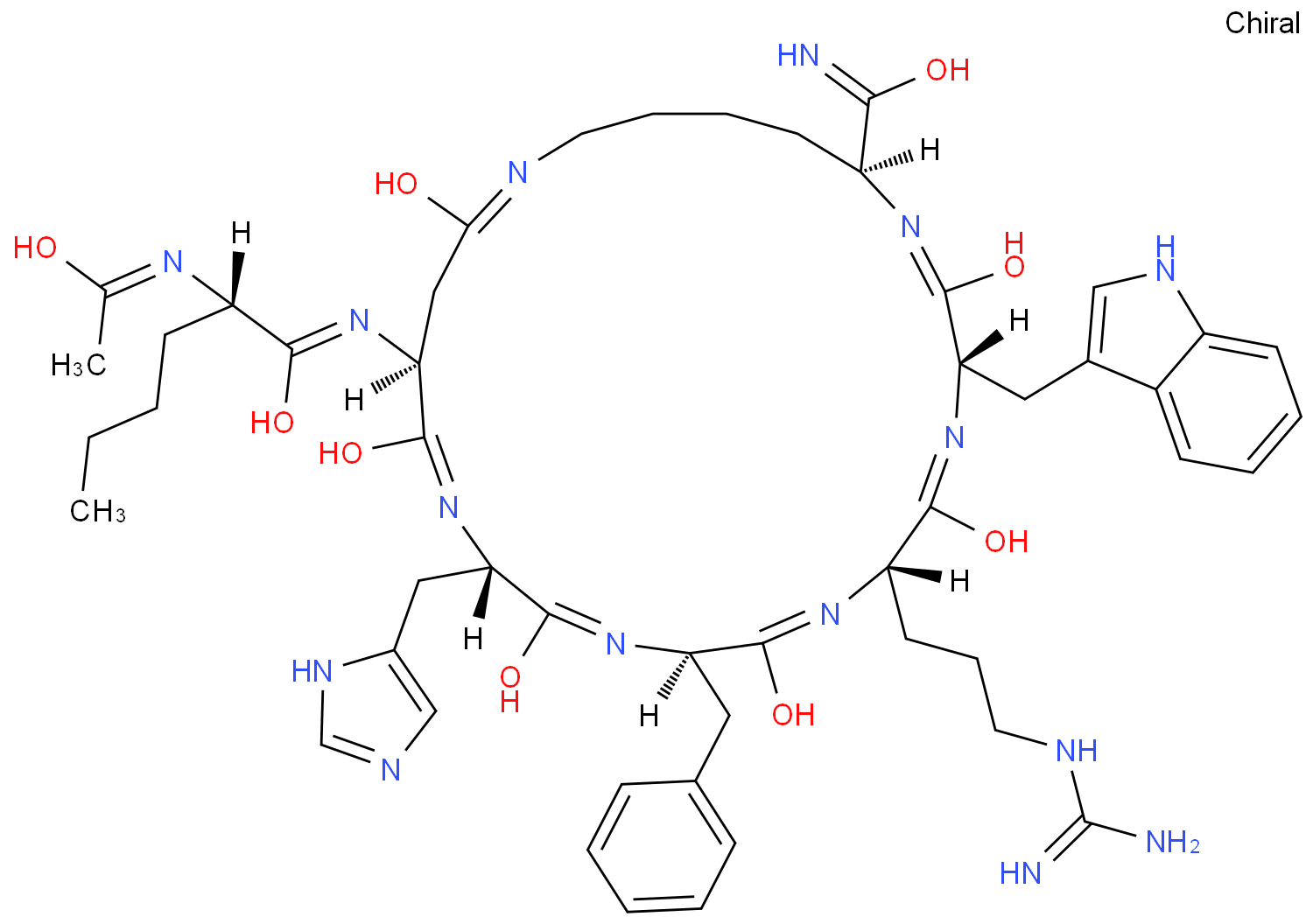
Melanotan II from Guidechem Encyclopedia
Professor Hadley and his team also synthesized a structurally smaller α-MSH analog, half the size of MT-I (only seven amino acids). This analog forms a cyclic structure through a lactam bridge, enhancing its lipophilicity. They named it Melanotan II (MT-II). MT-II was more cost-effective to synthesize, and research found that it had similar activity to MT-I, with strong, long-lasting, and enzymatically resistant characteristics. Based on these properties, Professor Hadley and his team prepared a sterile injectable formulation of MT-II to test its tanning ability.
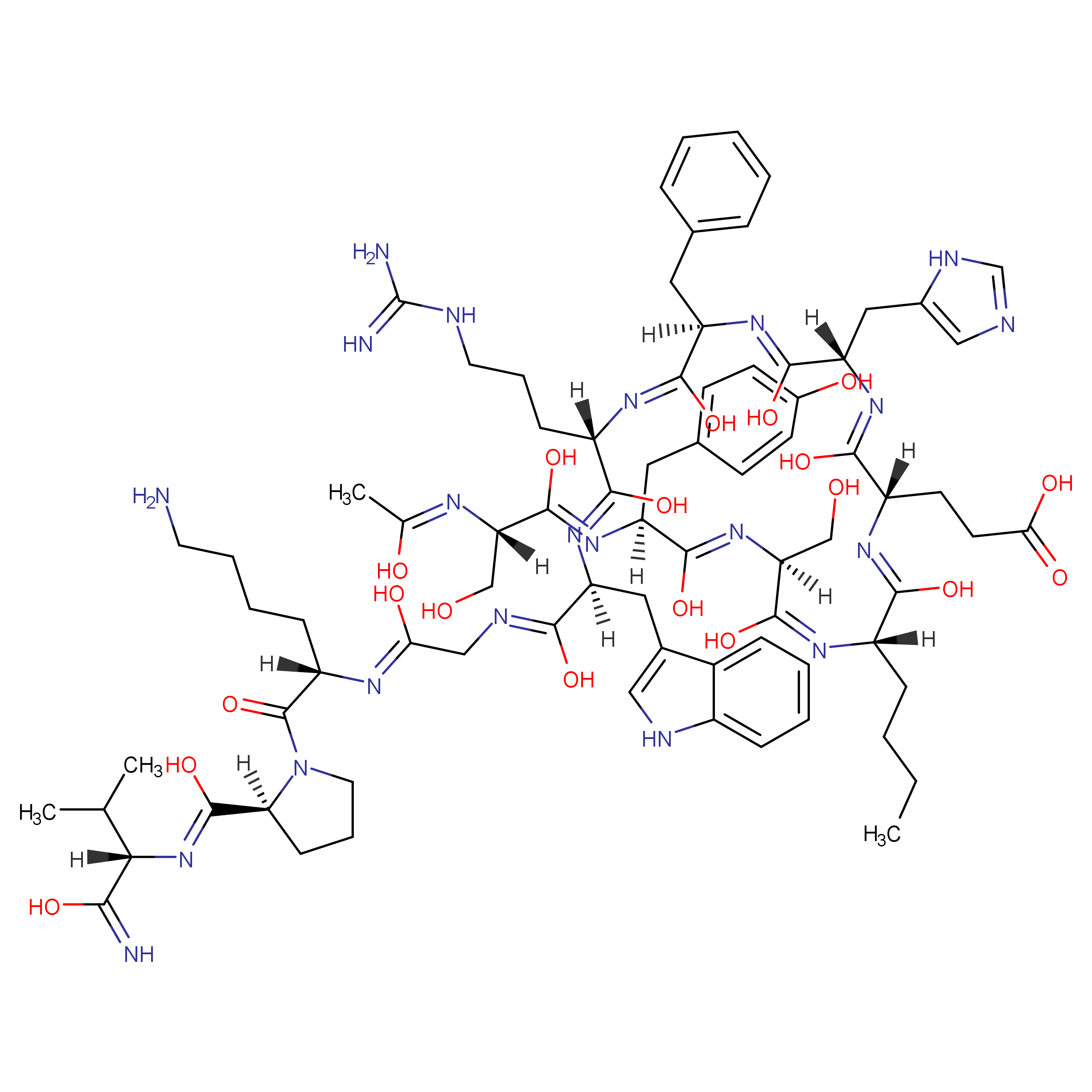
Melanotan I From Guidechem Encyclopedia
However, Professor Hadley made a mistake: previously, when he injected a 10-milligram dose of MT-I, it only caused skin darkening with no other physiological effects. But this time, he did not consider that MT-II's molecular weight is about half of MT-I's. So when he injected a 10-milligram dose of MT-II, it was actually about double the normal dose. Unlike MT-I, MT-II immediately triggered an unexpected reaction: nausea soon overwhelmed Professor Hadley, and to his surprise, he experienced an erection. According to Professor Hadley's recollections, his penis remained erect for about 8 hours, and even cold compresses couldn't relieve it. Since this experience, he jokingly referred to MT-II as the "erection peptide."
This accidental observation had significant clinical and commercial implications, opening up research into MT-II's potential in human sexual function regulation. Competitive Technologies, seeing the potential of MT-II in treating sexual dysfunction, licensed the drug's development to Palatin Technologies. However, Palatin later changed its development strategy, discontinuing MT-II and instead synthesizing a new drug: bremelanotide (code name PT-141). Palatin patented this new drug and began its development. Bremelanotide is actually a metabolite of MT-II, differing from MT-II only by replacing the C-terminal -NH2 group with -OH. This action led to a legal dispute, and the two parties eventually reached a settlement in 2008, with Palatin retaining the rights to bremelanotide and Competitive Technologies regaining the rights to MT-II, with Palatin paying $800,000.
On November 15, 2006, around 3:30 PM, in Tucson, Pima County, Arizona, the otherwise quiet 1900 block of Sica-Lecampanad-Plata was pierced by the sharp sound of police sirens. The body of 76-year-old retired University of Arizona professor Mac E. Hadley was found in his home, which was also deliberately set on fire. The only suspect in the case was 31-year-old Marco A. Chavez. Professor Hadley had returned home at an unusual time that afternoon and encountered the burglar. After shooting Hadley in the head, the killer set fire to the house to cover up the murder. One week before his death, Professor Hadley was negotiating a $200 million deal with other researchers from the University of Arizona regarding his work on melanocortins (such as MT-I and MT-II).

Professor Mac E. Hadley (1st from left) and his colleagues
Born in 1930 in California, Professor Mac E. Hadley (shown in the picture) served in the U.S. Navy in his early years and later obtained a biology bachelor's degree from San Jose State University. After graduation, he became a teacher and also worked as a park ranger in the summer. Professor Hadley had an exceptionally sharp sense of observation, which led him to develop a deep interest in animal pigmentation while working as a park ranger. He then pursued further studies at Brown University, earning his master's and Ph.D. in 1962 and 1966, respectively. In 1968, he became an assistant professor at the University of Arizona and was continuously promoted. During his nearly fifty-year research career, he made numerous pioneering discoveries in the biology and chemistry of α-MSH. He closely collaborated with colleagues to develop various α-MSH analogs, laying the foundation for understanding the biological role of α-MSH receptors and facilitating the translation of basic research into clinical applications, with many publications in top journals. After retiring in 1997, Professor Hadley continued his research at the University of Arizona.
Professor Hadley was an outstanding teacher, and his 1973 book "Endocrinology" is now in its sixth edition and serves as a main reference for many universities. People who interacted with Professor Hadley describe him as quiet, introverted, low-key, articulate, hardworking, focused, and passionate about his work. He was a diligent and enterprising person. His colleagues remarked that family was very important to him. He was a good husband, father, and grandfather, and his face always lit up with a smile when talking about his grandchildren.
Professor Hadley's widow, 86-year-old Gertrude Hadley, painfully stated in court during the trial of the murderer: "I have lost my husband, my home, my health, and my happiness."
|
 |



 2YRS
2YRS


