Today, in reality, there is also a kind of drug that is being treated as a shortcut for work and study, favored by many parents, students, and professionals. It is nicknamed "smart drugs," claiming things like "take a pill before the exam, and you will easily pass" or "after taking smart drugs, work becomes more efficient"... So, what exactly are these so-called "smart drugs"?
Do they really have such magical effects? In fact, the aforementioned "smart drugs" do not refer to a single medicine; they refer to a class of drugs, mainly including Adderall, Ritalin or Concerta, and Modafinil.
During World War II, Nazi Germany and Japanese militarism, in order to expand their armies and prepare for war, supplied troops with drugs capable of breaking through the limits of human energy and willpower to enhance soldiers' combat abilities. After using these drugs, soldiers could fight continuously for 36–50 hours without sleep, with greatly reduced hunger and pain. The main ingredient of this "miracle drug" is methamphetamine, which may be unfamiliar to you, but it also has a more widely known name—crystal meth.
Adderall contains active ingredients such as dextroamphetamine aspartate, amphetamine sulfate, dextroamphetamine saccharate, and dextroamphetamine sulfate. Amphetamine has two optical isomers, and dextroamphetamine is the more active one. Amphetamine is highly structurally similar to methamphetamine, so it has effects similar to crystal meth. Due to its obvious features for illegal synthesis, Adderall has not been approved for sale in China.
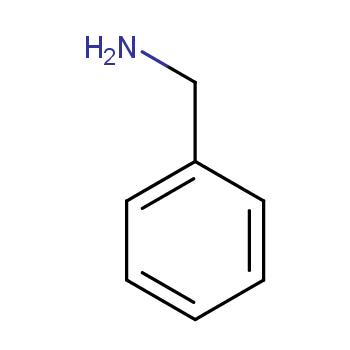
Benzylamine structure
In the United States, Adderall was approved by the FDA in 2001 as a Schedule II controlled substance for treating attention deficit hyperactivity disorder (ADHD) and narcolepsy. ADHD is what we commonly call "hyperactivity disorder," clinically manifesting as inability to sustain attention, overactivity, and impulsive emotions. Modern medicine has not clarified its exact cause, but researchers generally believe it is related to genetics, environment, abnormal brain development (such as central nervous system dopamine and norepinephrine dysfunction, and increased serotonin function), among other factors. Amphetamines can stimulate the central nervous system by enhancing the release of dopamine and norepinephrine, which may be the main reason they can treat ADHD.
However, the FDA also explicitly requires a top-level "black box warning" on the instruction leaflet to alert users that the drug has a high risk of abuse. Long-term use of Adderall can lead to tolerance, severe psychological dependence, and serious social dysfunction, and can cause irreversible brain damage. Abuse can even lead to sudden death and severe cardiovascular adverse effects.

An overseas experiment revealed that after using Adderall, the human brain's activity changes very significantly. As shown in the figure, this is essentially like "burning life energy," and if the body maintains this state for a long time, it will inevitably cause great harm to health.

Brain with/without Adderall
In addition, a study at the University of Pennsylvania gave college students without ADHD either Adderall or a placebo and tested their learning weekly. The final results showed that there was no significant difference between Adderall and placebo; the effect was only psychological self-suggestion.
Ritalin and Concerta are actually the same drug because both contain methylphenidate. Behind the creation of Ritalin lies a beautiful love story.
In 1944, Italian chemist Leandro Panizzon first synthesized methylphenidate at Ciba-Geigy (the predecessor of Novartis). His wife Margaret loved tennis but suffered from low blood pressure and always needed to take medicine before playing. To relieve his wife's burden and make her more energetic, Panizzon gave her methylphenidate, hoping to achieve the desired effect. Miraculously, Margaret indeed felt that her attention and mental state during tennis improved significantly. Later, Leandro named the drug Ritalin after his wife's nickname, Rita. In 1955, Ritalin was approved by the FDA for treating ADHD. After Ritalin's patent expired, Johnson & Johnson developed extended-release dexmethylphenidate tablets, Concerta, which was FDA-approved in 2000 for ADHD treatment.
Ritalin and Concerta both treat ADHD by inhibiting the reuptake of dopamine and norepinephrine at the presynaptic membrane. The difference is that Ritalin is short-acting, lasting 3–4 hours, while Concerta is long-acting, lasting 10–12 hours.
Similarly, as a Schedule II controlled substance, the FDA requires a "black box warning" to alert users of the high risk of abuse and addiction, and overdose may be fatal.

Methylphenidate is similar to cocaine in chemical structure and pharmacological effects, but less potent and with a longer duration, which can make users overlook potential risks. In China, methylphenidate is strictly controlled as a Schedule I psychotropic drug. Approved Concerta includes both original foreign products and domestic generics. According to state regulations, extended-release formulations for ADHD can be prescribed for up to 30 daily doses and must be issued by medical institutions with special authorized stamps. Due to its dual nature of legal medical use and illegal abuse, illegal circulation is treated as a narcotic, and illegal sale may constitute drug trafficking.
Modafinil is a wakefulness-promoting agent. Here, "wakefulness" does not refer to a game-style "ultimate awakening," but rather to maintaining a state of alertness. Modafinil was approved in the U.S. in 1998 as a Schedule IV controlled substance for treating narcolepsy, shift work sleep disorder, and excessive daytime sleepiness related to obstructive sleep apnea. Researchers later found it could significantly improve ADHD as well. The pharmacological mechanism of modafinil is not fully understood, but studies suggest it may increase glutamine synthetase, reduce GABA production, and enhance neuronal detoxification and energy metabolism to increase central nervous system activity.
In a targeted study, researchers assessed modafinil's abuse potential relative to methylphenidate, showing similar psychoactive and euphoric effects. Additionally, it may cause severe rashes or allergic reactions. On September 11, 2023, the National Medical Products Administration announced that modafinil was reclassified from Schedule I to Schedule II psychotropic drug in China. Currently, only domestic generic formulations are approved for sale.
Like other drugs mentioned, long-term use of modafinil in healthy individuals is harmful. It does not increase IQ but can cause headaches, nausea, insomnia, anxiety, mania, depression, and severe dependence. The human body is not a machine; it needs sleep for regulation and rest. Long-term use of such drugs that deprive sleep will inevitably cause great physical and mental harm.
All drugs carry some toxicity, and these strictly controlled psychotropic drugs are no exception. For patients, they may be a miracle, but for healthy individuals, they are definitely poison. People all hope to become better, but true strength does not come from drugs. Do not let ignorance and recklessness overdraw life and the future, only to regret it later. There is no regret pill in the world, and certainly no smart drug—only those who think themselves clever.
[1]. Take Your Pills (2018)
|



 4YRS
4YRS

