Imagine this: you dedicate yourself to a research project during your student years that reaches the level of a Nobel Prize, but your mentor not only secretly takes the enormous patent fees from this achievement but also claims the Nobel Prize honor that should have been yours. How would you feel?
In 19th-century Europe, although the Industrial Revolution pushed forward urbanization, it also led to a general decline in environmental quality, which further exacerbated the spread of diseases. A plague quickly spread across the continent. From ordinary citizens to famous nobles, no one could escape its fate. Famous figures such as Chopin, Chekhov, and Kafka all died because of it. This slow-acting but ruthless disease was tuberculosis, also known as "the ten deaths out of nine" in Lu Xun's "Medicine." In modern medicine, it is known as tuberculosis (TB).
In fact, as early as 1882, the German bacteriologist Robert Koch had discovered that the tuberculosis bacillus was the pathogen that caused tuberculosis. However, the medical conditions at the time were so backward that people were helpless against the disease, leading to various superstitious beliefs and nonsensical treatment methods. For example, Europeans used bloodletting therapy and clay-induced vomiting, which not only failed to save patients but also caused excessive blood loss and gastrointestinal bleeding, accelerating death. The human blood buns described in Lu Xun's "Medicine" are even more horrifying.

The end of this cruel situation came unexpectedly through a single piece of sputum.
Researchers discovered that when tuberculosis patients spat and the sputum fell on the soil, the tuberculosis bacilli in the sputum were rapidly killed! This realization alerted them to the fact that there might be something in the soil that could combat the tuberculosis bacillus.
From then on, the battle between humans and tuberculosis bacilli shifted dramatically.
Selman Abraham Waksman, the scientist later known as the "Father of Soil," developed an extensive and rigorous research plan at the time. This plan aimed to isolate different microorganisms from the soil and systematically study their bactericidal capabilities.
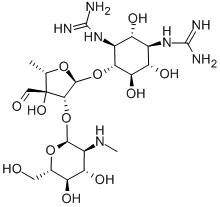
However, this task was like searching for a needle in a haystack. With the support of the Merck company, Waksman's team studied more than 15,000 microorganisms in the soil. In 1942, they succeeded in isolating two slightly effective antibiotics: actinomycin and streptomycin. Unfortunately, both of these substances were too toxic to be used clinically.
In 1943, Waksman's former student, Albert Israel Schatz, returned to Rutgers University after completing his military service to continue pursuing a PhD under Waksman. During his time there, Schatz was tasked with discovering new species of streptomyces. Due to limited experimental conditions and to reduce the risk of contamination, Schatz had to conduct dangerous experiments alone in a basement laboratory converted by his mentor.

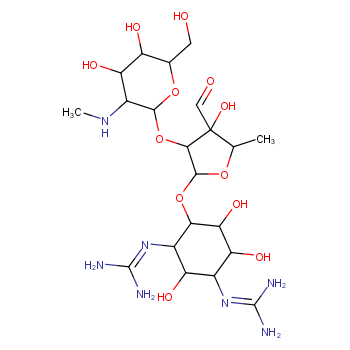
Sometimes, one has to admit that luck is part of skill. While Waksman spent 20 years digging through soil without success, Schatz, this "chosen one," only took three months to isolate two strains of streptomyces from the soil and the throat of a chicken, which inhibited the growth of tuberculosis bacilli. In October of the same year, Schatz further discovered a new antibiotic—streptomycin.

After confirming that the toxicity of streptomycin was within acceptable limits, the Mayo Clinic began using it to treat tuberculosis patients, with remarkable results! In January 1944, Schatz published his findings in the "Journal of Experimental Medicine and Biomedical Association."
Although Schatz disagreed with patenting this life-saving drug for the benefit of all humanity, he reluctantly compromised due to his mentor's insistence. After obtaining the patent, Waksman and Schatz agreed to transfer the patent to Rutgers University for the nominal price of $1, as a sign of their respect for life. Schatz gladly agreed.

In 1946, Schatz graduated with his PhD. Waksman introduced him to a prestigious research institute, and Schatz frequently corresponded with his mentor. However, three years later, one day, this peaceful life was shattered—Schatz discovered that Waksman had secretly profited from the streptomycin patent for years without informing him!
It turned out that when the patent was transferred, Waksman had secretly signed an agreement with Rutgers University that required them to pay him 20% of the patent revenue. In three years, Waksman had personally earned more than $350,000 from it.
Upon learning the truth, Schatz was furious and immediately sued Rutgers University and Waksman. When Schatz claimed that he should receive a share of the streptomycin patent earnings, Waksman made a statement in court that was viewed as "scientific arrogance": "…You must fully realize that your contribution to the solution of the streptomycin issue is not substantial. You were just one part of the great wheel of my laboratory's research on antibiotics. Many graduate students and research assistants helped me in this work. They were my tools, my hands, if you will…"
After a year, the case was settled out of court in December 1950. Rutgers University issued a statement that Schatz would receive $120,000 in foreign patent revenue and 3% of the patent earnings, while Waksman would receive 10% of the patent earnings, with the remaining 7% being shared by other researchers who contributed to the discovery of streptomycin. Waksman himself declared that he would voluntarily donate half of his patent earnings to establish a foundation to fund microbiological research.
However, despite winning the lawsuit, Schatz seemed to lose the rest of his life. This dispute left him without a position in the academic world. Schatz applied to more than 50 universities but was rejected by all of them. Left with no other choice, Schatz eventually moved to Chile to teach.
In October 1952, upon hearing that Waksman would be awarded the Nobel Prize in Physiology or Medicine for his discovery of streptomycin, Schatz immediately requested to share the honor with Waksman. He also sought help from several Nobel laureates and other scientists, but all his efforts were in vain. In December of the same year, the Nobel Prize in Physiology or Medicine was awarded solely to Waksman. During his acceptance speech, Waksman made no mention of Schatz, merely listing him in the acknowledgments. In Waksman's later memoirs, "Schatz" was never mentioned, replaced only by "that graduate student."
Throughout his life, Waksman not only coined the term "antibiotic" but also systematically studied the antimicrobial properties of soil microorganisms. His method of screening soil microbes laid the foundation for the subsequent development of antibiotics, ushering in the golden age of antibiotic development. In 1973, at the age of 85, Waksman passed away, leaving behind more than 500 papers and over 20 books.
Schatz's contribution to streptomycin was almost forgotten. In 1969, Schatz returned to the United States and taught at Temple University for ten years before retiring in 1980. At that time, microbiologist Milton Wainwright from the University of Sheffield in the UK was writing a book about antibiotics. While researching related archives at Rutgers University, Wainwright uncovered this long-forgotten history. Since then, many media outlets and professors have called for the restoration of Schatz's reputation. Finally, in 1994, on the 50th anniversary of the discovery of streptomycin, Rutgers University recognized Schatz's contributions and awarded him the prestigious Rutgers Medal, the highest honor from the university.
Looking back on this story, did Waksman truly steal Schatz's research results? From the paper, we can see that Schatz was the first author as the primary researcher, Elizabeth Bugie was the second author, and Waksman, as the research advisor, was the third author. This order is entirely in line with international conventions, indicating that Waksman did not deliberately erase Schatz's contributions. However, the unfair sharing of the patent led to a legal battle between the teacher and student.

Was it appropriate for the Nobel Prize to be awarded solely to Waksman? Schatz indeed discovered streptomycin, but this discovery was largely due to Waksman's systematic research plan and methods. Schatz's work was indeed only a part of it. From the perspective of academic originality and impact, Waksman's award is justified. However, from the perspective of research implementation and the sharing of results, the neglect of Schatz's contribution is certainly controversial. This case highlights the difficult balance in scientific awards between "academic leadership" and "specific discoverers."
Today, with deeper research and the rapid development of science and technology, the serious side effects of streptomycin have been gradually confirmed, and more effective alternative drugs have emerged. Streptomycin is now used less frequently in clinical settings. However, it cannot be denied that its birth completely changed the situation of tuberculosis being an "incurable disease" and marked the beginning of the era of systematically exploring microbial-derived antibiotics, making a tremendous contribution to human health.
|



 3YRS
3YRS