On August 31, 2012, German pharmaceutical company Grünenthal GmbH unveiled an indoor bronze statue "Contergan-Denkmal" in the city of Stolberg. The statue, about 60 centimeters tall, depicts on the left side a little girl without arms and with malformed legs, painfully leaning on a chair, while on the right side stands an empty chair. The base is inscribed with "In memory of the dead and surviving victims of thalidomide." Meanwhile, outdoor protests filled the air with deafening cries…

In 1946, post-war Germany was rebuilding. To meet the growing demand for antibiotics, soap manufacturer Grünenthal decided to enter the pharmaceutical field.
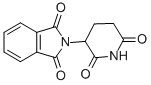
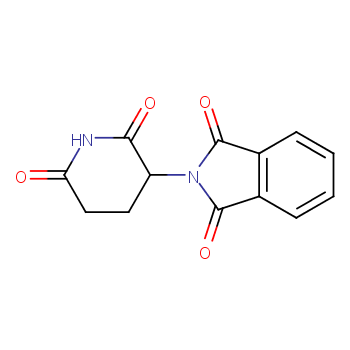
In 1953, Heinrich Müeckter, who had researched antiviral drugs for the German military, was hired as Grünenthal's head of R&D. One year later, Müeckter's team accidentally isolated a byproduct during antibiotic research: thalidomide, whose structure somewhat resembled the barbiturate sedative Grünenthal had produced. Subsequent pharmacological experiments showed thalidomide not only had a good sedative and hypnotic effect but also significantly reduced vomiting during pregnancy. Grünenthal decided to market it for the latter effect and began internal trials within the company. Due to lack of knowledge and regulation, Grünenthal did not conduct safety evaluations for pregnant women.

In 1956, this century's calamity first struck an unfortunate family. On Christmas Eve, the wife gave birth to a girl with no ears and shortened limbs. This news stirred pity among those who heard it, but no one noticed that the husband worked for Grünenthal and had given his wife thalidomide produced by the company.
In 1957, Grünenthal began promoting thalidomide on the market, describing it as a "perfect drug" that treated insomnia and headaches, was especially effective against nausea and vomiting during pregnancy, and had no side effects. The overwhelming advertising campaign quickly made thalidomide popular; as it was an over-the-counter drug, its sales rivaled aspirin. However, nobody expected this "miracle cure" to become a "devil’s pill" that harmed the innocent.
In 1958, a series of newborn deformity cases appeared in Germany. Amid the Cold War, people attributed the birth defects to radiation from nuclear bomb tests since, at the time, medical knowledge held that fetal deformities were caused by genetic defects, and radiation was the only external factor known to cause such incidents. This misled investigations and yielded no satisfactory results. Later, other suspects like contraceptives and abortion drugs were examined but found irrelevant.
By 1961, many malformed infant cases emerged in the UK, France, Italy, and elsewhere. An Australian doctor, William McBride, noticing a spike in malformed newborns at his hospital, started investigations. Eventually, all clues pointed to one factor—the mothers had taken thalidomide during pregnancy. In December of that year, McBride published his findings in the journal JAMA.
Simultaneously, German pediatrician Widukind Lenz wrote an article for World on Sunday, describing hundreds of infants born with serious physiological defects, which he linked to maternal thalidomide use during pregnancy. He also wrote to Grünenthal requesting a recall, but the company ignored him. Left with no choice, Lenz applied pressure through other media. Finally, later that year, Grünenthal began an urgent recall of thalidomide. By then, the drug was sold in more than 40 countries worldwide.
Initially, many doubted thalidomide's link to birth defects. But after the drug was pulled from the market, the number of new malformed births dropped sharply, confirming thalidomide as the culprit.
According to incomplete statistics, from 1957 to 1962, over 10,000 children worldwide were born with thalidomide-induced deformities; at least another 10,000 malformed infants either died after birth or were killed by hospitals or their parents—an unprecedented tragedy.
Only a few countries escaped this disaster, including China and the United States. At that time, mainland China was under economic embargoes and trade sanctions by Western countries; thalidomide, a Western drug, was not introduced into the domestic market. China’s strict import and export controls further prevented the tragedy’s spread. The United States was spared thanks to FDA drug reviewer Frances Kathleen Oldham Kelsey.
In 1960, after the company Marion Merrell Dow obtained U.S. sales rights, it applied for FDA approval. Newly employed, Kelsey carefully reviewed the application and noticed that, despite approval in Europe and Canada, the experimental data were unreliable. She demanded more safety data. Marion Merrell Dow submitted six applications, all rejected by Kelsey, who withstood immense pressure as a newcomer.
When the thalidomide tragedy was exposed in 1962, Kelsey became a national hero for her strict diligence, preventing the U.S. from suffering a similar disaster.
In August 1962, President Kennedy awarded her the Distinguished Federal Civilian Service Award, the highest honor for federal employees.

Although Kelsey blocked thalidomide's U.S. approval, some individuals still obtained it by other means, resulting in over a dozen malformed births in America. The public became aware of regulatory gaps and demanded Congress strengthen drug oversight. In October 1962, the Kefauver-Harris Amendment was enacted. Its provisions included:
This law laid the foundation for modern drug regulation, promoted ethical clinical trial review, and led to the development of pharmacovigilance systems.
Further research revealed that chemically synthesized thalidomide consisted of two mirror-image compounds—chiral compounds—like left and right hands. The marketed thalidomide was a racemic mixture: the R-isomer inhibited pregnancy reactions and sedated, while the S-isomer caused birth defects. At that time, science was unable to recognize or separate these similar compounds. Later studies showed that even when only the R-isomer was administered, it could convert to the harmful S-isomer under physiological conditions. Thalidomide introduced the concept of chiral drugs and their dual biological activity, spurring development of chiral pharmaceuticals and re-evaluation of old drugs.

In 1964, Israeli doctor Jacob Sheskin treated a leprosy patient suffering from severe erythema nodosum—a painful skin disease caused by an overactive immune system that left the patient sleepless. In desperation, after other treatments failed, Sheskin used thalidomide as a sedative. Two days later, the patient showed remarkable improvement! Although medical science had found drugs to kill leprosy bacteria, no effective treatment existed to reduce the excessive immune response. Sheskin then tested thalidomide on more leprosy patients, confirming its efficacy for erythema nodosum leprosy. Supported by WHO, clinical trials for leprosy treatment soon began.
In 1971, Harvard professor Judah Folkman published an article in NEJM proposing that solid tumor growth depended on angiogenesis and could be starved by inhibiting new blood vessel formation. His team member Robert D’Amato discovered thalidomide as an effective angiogenesis inhibitor. Around that time, a woman contacted Folkman about saving her dying husband with late-stage multiple myeloma. Despite thalidomide’s infamous history, Folkman persuaded the patient’s doctors to try it, achieving surprisingly good results. Later research revealed thalidomide’s main mechanisms were immune suppression and transcription factor degradation, not angiogenesis inhibition. Nevertheless, it offered terminal patients hope.
In 1998, thalidomide was re-approved in the U.S. to treat erythema nodosum leprosum; in 2006, FDA approved it for multiple myeloma. Today, thalidomide derivatives like lenalidomide and pomalidomide—with fewer side effects—have been developed, as well as apremilast for psoriasis. Thalidomide has become a treasure trove awaiting further exploration.

The Müeckter team responsible for developing thalidomide was never prosecuted nor held accountable.
Grünenthal only apologized to victims 50 years later in 2012.
Victims never received fair compensation from Grünenthal; most delayed reparations were provided by governments…
[1]. Thalidomide is an inhibitor of angiogenesis
[2]. Antitumor activity of thalidomide in refractory multiple myeloma
|


 2YRS
2YRS