Reviewing the price changes in the chemical products market in 2024, the price fluctuation of Trimellitic Anhydride (TMA) reached an unprecedented 203.2%. Industry experts widely believe that tight supply combined with continued growth in demand has provided strong support for the surge in TMA prices.
The main market fluctuations for TMA occurred in the first half of 2024. At the end of March 2024, TMA prices suddenly surged from approximately 20,000 yuan per ton to a peak of 50,000 yuan by the end of April, a year-on-year increase of 305.24%. The shutdown of a U.S. factory was a key factor driving this price spike.
Globally, there are only five factories producing TMA, with a total capacity of just over 200,000 tons. The supply-demand balance was already tight. By late 2023, spot market supplies showed signs of strain. However, due to a sluggish domestic market, demand recovery was slow, and TMA prices remained relatively stable in January and February 2024.
In early March 2024, an unexpected malfunction at a U.S. TMA plant with an annual capacity of 70,000 tons shocked the market, tightening an already limited supply. Domestic factories seized the opportunity, pushing up TMA prices. In April, the situation escalated as the U.S. factory announced a permanent shutdown. This news caused a sharp reduction in spot resources and exacerbated the supply gap, intensifying market tension. Panic buying ensued, with some businesses stockpiling raw materials for future production, further driving up TMA prices.
The reduction in TMA imports and the increase in export orders further limited the availability of TMA in the domestic market, pushing prices even higher.
Currently, major TMA producers include Zhengdan Corporation and Baichuan Corporation. TMA synthesis involves four primary methods, with the choice of catalyst and multi-stage oxidation process being crucial. Among these, the liquid-phase air oxidation method using pseudocumene as a raw material is the most widely adopted globally due to its advantages, including easy availability of raw materials, low consumption of raw materials and utilities, low corrosion, and easier resolution of environmental issues. However, TMA production requires stringent safety management due to the high-risk factors associated with high-temperature liquid-phase oxidation equipment. The industry's operating rate rarely exceeds 80% and requires regular maintenance, which limits supply growth.
In recent years, overseas TMA production capacity has gradually exited the market, further exacerbating supply shortages. Currently, global TMA demand stands at approximately 181,000 tons, while effective production capacity in 2024 is about 148,000 tons, resulting in a supply gap of 63,000 tons, or about 30% of total demand. With the exit of U.S. production capacity, supply-demand imbalances have deepened.
Zhengdan Corporation plans to invest in a 65,000-ton-per-year green TMA production upgrade, but the project requires time, and capacity is unlikely to be fully operational before 2025. Given the limited additional capacity, the tight global TMA supply situation will be difficult to resolve in the short term.
With the development of the international TMA industry and the trend of downstream industries shifting to China, domestic TMA consumption demand has steadily increased.
The three major drivers of TMA market growth are plasticizers, powder coatings, and advanced insulating materials. TMA's primary use is reacting with isooctanol to produce environmentally friendly plasticizer Trimellitate Ester (TOTM). Additionally, TMA is used to produce powder coatings, advanced insulating materials, high-temperature curing agents, and advanced lubricants. Polyimides, polyamide-imides, and polyester-imides made from TMA are key materials for F-grade and H-grade high-end motor insulation, used in explosion-proof electrodes, heavy-duty motors, air conditioners, and refrigerators. Trimellitate Ester (TMT), derived from TMA, is also a preferred base oil for high-temperature chain oils, high-viscosity compressor oils, and advanced lubricants.
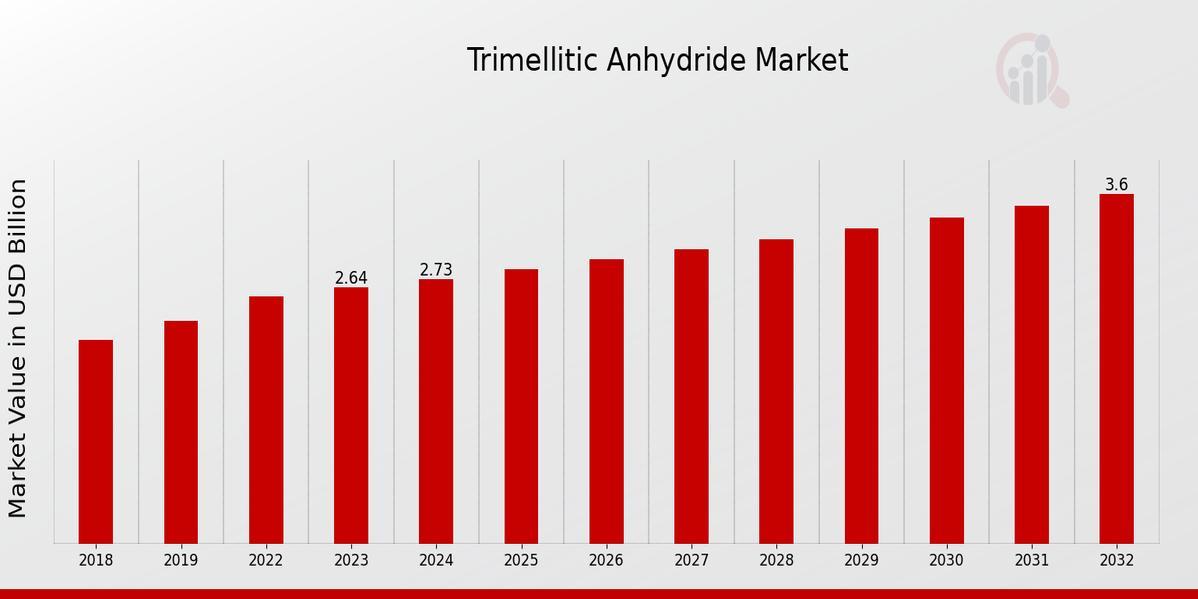
As the fine chemicals industry develops and downstream demand continues to grow, the global TMA market has shown steady growth with high-quality, high-demand, and high-service requirements. According to a survey by Bezjes Consulting, the global TMA market size reached 3.377 billion yuan in 2022 and is projected to reach 4.47 billion yuan by 2028, with a compound annual growth rate of 5%.
Tight supply, coupled with overseas factory shutdowns and continued demand growth, has collectively driven significant fluctuations in the TMA market.
https://www.marketresearchfuture.com/reports/trimellitic-anhydride-market-30696
|


 2YRS
2YRS


