Many years ago, Mark Bates and his teammate Sam were sitting side by side on the sidelines of a sports field. They had just finished an intense intra-school soccer match and were enjoying a rare moment of leisure. During their casual conversation, Mark learned that Sam was a respected dentist outside the field. Suddenly, Mark had a thought and smiled as he asked Sam, “Hey, Sam, have you ever used a periodontal treatment tool that I helped design? That was quite a while ago, probably over twenty years.” Mark initially thought that the product had faded from the market, but when Sam replied that it was still in use at dental clinics today, Mark felt an indescribable shock and emotion rise within him. In Sam’s clinic, Mark saw the product he designed once again. What surprised him even more was that this product had undergone no changes since its inception. This situation is extremely rare in the medical field, as medical products are typically improved due to factors like cost reduction, material updates, safety considerations, or market competition. Mark’s thoughts drifted back to 1997. That year, Mark's company, Continuum, collaborated with OraPharma to design a product. At that time, OraPharma was a fledgling startup focused on developing and producing products that improve and maintain oral health. The company firmly believed that minocycline in microsphere form could deliver significant results in treating gum disease, so they asked Continuum to design an easy-to-use, ergonomic device to deliver this medication.

Figure 1 Minocycline hydrochloride microsphere drug delivery device and patent
To create a suitable drug delivery system, Continuum's team conducted in-depth observations and analyses of the cleaning and scaling processes performed by dental professionals. They took into full consideration the needs and workflow of dentists and, based on these observations, generated a series of design concepts. These concepts were then submitted for feedback from dentists to ensure their practicality and acceptability. After multiple design iterations, they finalized a design that included a single-use drug cartridge and a reusable handheld delivery device.

Figure 2 Minocycline hydrochloride microsphere drug delivery device (cartridge and handheld propeller)
In February 2001, the U.S. FDA approved the marketing application submitted by OraPharma for Minocycline Hydrochloride Extended-Release Microspheres (brand name: Arestin?) for use as an adjunct to scaling and root planing (SRP) in the treatment of adult periodontitis. Periodontitis is a chronic inflammatory condition caused by bacteria in plaque invading the periodontal tissues. This condition gradually destroys the supporting structures of the periodontium, leading to the formation of periodontal pockets, loss of attachment, and resorption of the alveolar bone. As the disease progresses, teeth may become increasingly loose, accompanied by gum recession, and may ultimately result in tooth loss. Scaling and root planing (SRP) is a fundamental procedure for treating periodontitis, wherein fine scaling instruments penetrate deep into the periodontal pockets to remove plaque and calculus attached to the tooth roots, followed by further smoothing of the root surface to make it smooth, hard, and clean, reducing the likelihood of plaque reattachment and lowering the risk of periodontal disease recurrence. However, SRP often cannot completely remove calculus and plaque, leading to disease recurrence, and for patients with deeper periodontal pockets, SRP alone may not achieve optimal treatment results. Arestin? is a sustained-release microsphere formulation containing the drug minocycline hydrochloride encapsulated in a biodegradable polymer, poly(lactic-co-glycolic acid) (PLGA), with a specification of 1 mg. This product is classified as a drug-device combination product, with each unit dose of medication sealed in a disposable cartridge. After undergoing SRP, patients are required to assemble the cartridge containing the minocycline hydrochloride extended-release microspheres with a specialized handheld delivery device, which then pushes the microsphere powder from the cartridge into the patient's periodontal pockets.
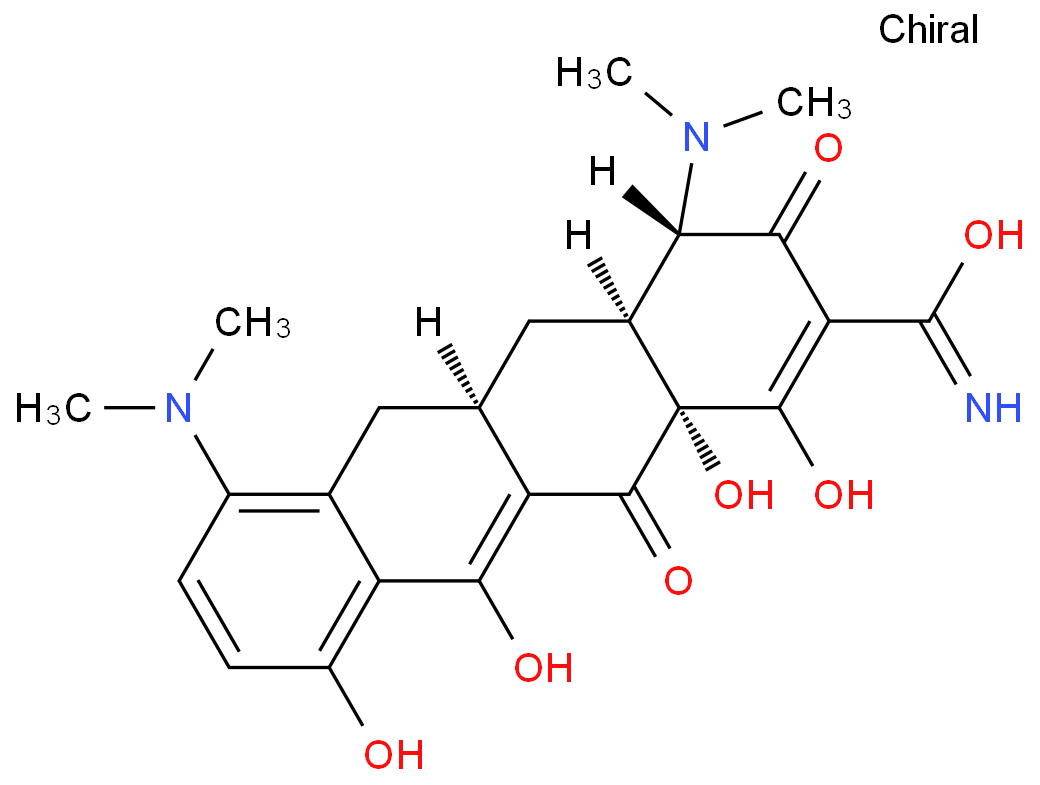
Minocycline Hydrochloride is a semi-synthetic second-generation tetracycline antibiotic that can specifically bind to the 30S ribosomal subunit of microorganisms. This binding interferes with the normal formation of the tRNA-aminoacyl-mRNA ribosomal complex, thereby blocking the protein synthesis pathway of pathogenic bacteria, which results in its antibacterial effect. Results from bacterial drug sensitivity tests indicate that even at a low concentration of 8 μg/mL, minocycline can still significantly inhibit the growth of various major periodontal pathogenic bacteria, highlighting its potential therapeutic value for periodontal infectious diseases.
Minocycline Hydrochloride has a wide range of clinical applications. In addition to being used to improve and control periodontal inflammation, it is also employed in the treatment of skin inflammatory diseases such as acne and rosacea (e.g., FDA-approved Amzeeq? oil foam and Zilix? oil foam). Its anti-inflammatory and antibacterial properties help alleviate skin symptoms. Furthermore, minocycline hydrochloride can be taken orally to treat certain types of respiratory infections, urinary tract infections, and sexually transmitted diseases.

Figure 3 Schematic diagram of Arestin? administration
A pharmacokinetic study of Arestin? showed that the serum half-life of the drug after administration is 24 hours, while its half-life in saliva is significantly extended to 45 hours. Further analysis revealed that the drug concentration in saliva is much higher than that in serum, with a mean dose-normalized Cmax in saliva reaching 5.55 μg/mL, which is approximately 1000 times higher than the corresponding concentration in serum (0.005 μg/mL). Additionally, the mean dose-normalized AUC in saliva is also significantly higher than in serum, reaching 17.5 μg?h/mL, about 125 times greater than the serum AUC (0.139 μg?h/mL). A multicenter, randomized, single-blind, three-arm parallel-controlled Phase III clinical study showed that Arestin?, when used in conjunction with SRP, significantly reduces periodontal pocket depth in patients with moderate to severe periodontitis, with more pronounced effects in patients with deeper periodontal pockets.
According to the FDA’s publicly released review documents related to Arestin?, approximately 1 mg of minocycline is encapsulated in 3 mg of PLGA (Figure 4), resulting in a yellow dry powder microsphere.

Figure 4 Scanning electron microscope image of Arestin? microspheres
Poly(lactic-co-glycolic acid) (PLGA) is a biodegradable functional polymer material formed by the polymerization of lactic acid and glycolic acid (also known as hydroxyacetic acid). The earliest application of PLGA dates back to the 1970s when it was used in absorbable surgical sutures, receiving FDA approval. Since then, PLGA has been widely used in various long-acting injection products, such as microspheres and implantable drug delivery systems. These drug delivery systems can continuously release drugs, enhance therapeutic effects, reduce dosing frequency, and improve the quality of life for patients. In the environment of periodontal pockets, when Arestin? sustained-release microspheres are exposed to crevicular fluid, the microspheres adhere to each other and firmly attach to the tissue surface inside the periodontal pockets. Subsequently, PLGA begins to undergo hydrolysis, gradually releasing the encapsulated minocycline hydrochloride. The final hydrolysis products of PLGA are lactic acid and glycolic acid, both of which are part of the body's natural metabolic pathways and are eventually converted to carbon dioxide and water through physiological processes, eliminating the need for additional surgical removal and reducing the treatment burden on patients. Arestin? sustained-release microspheres exhibit bioadhesive properties, allowing them to tightly adhere to the tissue surface within the periodontal pocket, thereby eliminating the need for additional fixation steps and simplifying the treatment process.
From a clinical application perspective, the administration process of Arestin? is simple and quick, requiring no complex pre-mixing preparation; it is directly administered through a handheld delivery device, improving treatment efficiency. In terms of efficacy, Arestin? can achieve sustained local drug release at the application site for at least 14 days, ensuring a high drug concentration is maintained within the periodontal pocket, effectively inhibiting pathogen growth. Furthermore, due to low systemic drug exposure, the impact on the systemic system is reduced, lowering the risk of bacterial resistance. Arestin? sustained-release microspheres require a low administration frequency, with treatment needed only once every three months, providing an effective solution for the long-term treatment of periodontitis.
Common methods for preparing microspheres include phase separation, emulsion evaporation, and spray drying. According to the literature I have accessed, minocycline hydrochloride sustained-release microspheres are prepared using the phase separation method. The so-called phase separation method consists of two main steps: the first step involves introducing a non-solvent into the mixed solution of the drug and polymer to reduce the solubility of the polymer, prompting the polymer to encapsulate the drug and form drug-loaded coacervate droplets, resulting in phase separation; the second step involves transferring these drug-loaded coacervates into a curing agent, ultimately forming a solid microsphere structure. This step is usually followed by treatments such as washing, filtering, sieving, and drying to obtain the final drug microsphere formulation.
Relevant patents disclose that the preparation process for Arestin? sustained-release microspheres involves dispersing micronized minocycline hydrochloride in a solution of PLGA in dichloromethane, followed by the addition of a non-solvent (dimethyl silicone oil), causing phase separation between the polymer and the solvent. The mixture is then poured into a curing agent (octamethylcyclotetrasiloxane) to solidify. However, literature regarding reverse engineering of Arestin? suggests that the curing agent actually used in commercial production may be hexane rather than octamethylcyclotetrasiloxane.
During the early exploration of the minocycline hydrochloride sustained-release microsphere delivery device, the design team initially proposed a pen-like delivery device, which provided high control for dental practitioners and was favored internally. However, the team recognized the need to validate this concept's effectiveness through actual feedback from dentists. They presented this design to dental professionals at a periodontal conference and conducted tests, but the results did not meet expectations. Although dentists acknowledged the potential of this design in terms of control, they expressed a preference for a syringe-like delivery method, as using a syringe for local anesthesia is a common practice in dentistry.
This demonstrates that the product design team did not merely develop the product based on technology or theory; instead, they conducted in-depth observations and analyses of dental professionals' actual operations and needs. Through multiple design iterations and feedback exchanges with practitioners, they continuously optimized the product to create a delivery device that better fits practical usage.
Therefore, the product design process must always be user-centered, with iteration and feedback being indispensable components. In pursuing innovation, it is crucial to consider the practicality of the product and its acceptance by the target audience.
Arestin?, as a drug-device combination product, delivers the drug directly to the periodontal lesions through a special delivery device, significantly increasing the local drug concentration. This enhancement boosts the antibacterial and anti-inflammatory effects of minocycline hydrochloride, avoiding the systemic side effects that may arise from oral medications and improving the safety of the treatment.
Moreover, the microsphere sustained-release technology enables the drug to be continuously and stably released over a prolonged period, maintaining an effective local drug concentration in the periodontal area, extending the drug's duration of action, reducing the frequency of administration, and enhancing treatment convenience and patient compliance. The design of the delivery device allows doctors to easily administer the drug to the patient's periodontal lesions, streamlining the treatment process.
Through the unique design of the drug-device combination, Arestin? achieves various advantages, including precise drug delivery, sustained-release technology, a convenient delivery device, and significant overall therapeutic effects. These advantages underscore the important clinical application value of this product in the treatment of periodontitis.
|


 6YRS
6YRS

