D-lysine (D-lysine) is an important amino acid that plays various vital physiological functions in the human body. Structurally slightly different from L-lysine, D-lysine possesses many biological activities. D-lysine plays a significant role in protein synthesis, nitrogen metabolism, and intracellular fatty acid metabolism. This article will delve into the definition, functions, and importance of D-lysine in human health.
Lysine (symbol Lys or K) is an α-amino acid and a precursor to many proteins. It contains an α-amino group, an α-carboxylic acid group (in the deprotonated? COO? form when dissolved in water), and a side chain lysyl ((CH2)4NH2), classifying it as a basic, charged (at physiological pH), aliphatic amino acid. It is encoded by the codons AAA and AAG. Like almost all other amino acids, the α-carbon is chiral, and lysine can exist as two enantiomers or a racemic mixture thereof.
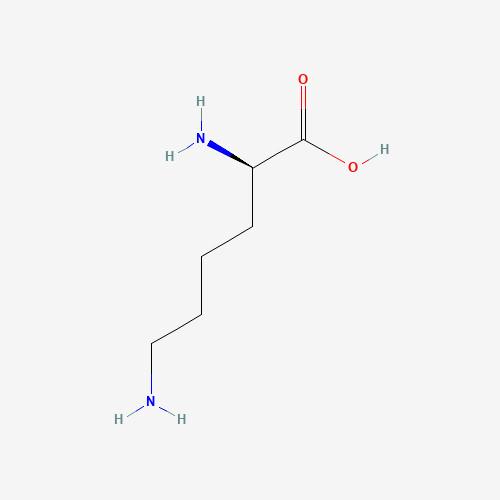
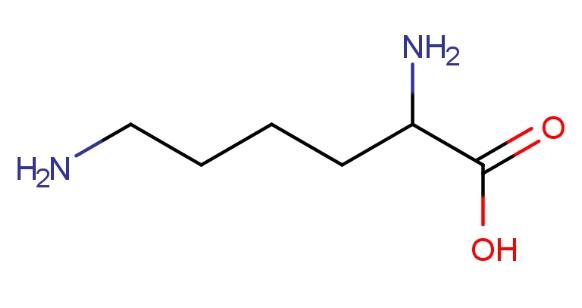
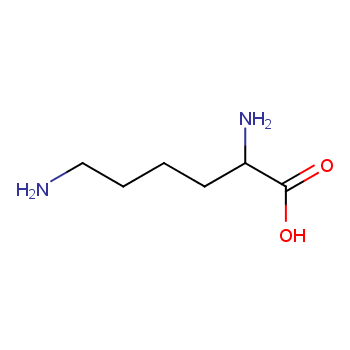
D-lysine is a natural product found in water fleas. D-lysine is the d-enantiomer of the amino acid lysine. It acts as a bacterial metabolite and a fungal metabolite. It is a derivative of lysine and d-amino acid. It is the conjugate base of D-lysinium(1+). It is a conjugate acid of D-lysine. It is an enantiomer of L-lysine. The structure of D-lysine is as follows:
Lysine is an essential amino acid. Reported benefits of lysine include improved blood sugar control, anxiety and stress management, collagen formation, and wound healing. Your body cannot produce lysine, so you must obtain it from food or supplements. Lysine comes in two chemical versions: L-lysine and D-lysine. L-lysine is the biologically active form found in foods and supplements used by the body.
D-lysine and L-lysine are mirror image isomers. They differ in the spatial arrangement of atoms around the central carbon atom. This seemingly minor difference can have significant consequences:
L-lysine is optically active, meaning it interacts with biological molecules in the body. D-lysine has lesser biological activity in the human body. Lysine is a principal amino acid and essential nutrient for vertebrates. L-lysine, the biologically active form of lysine, is present in supplements. In itself, lysine is not as stable or bioavailable as L-lysine.
L-lysine naturally occurs in protein-rich foods such as meats, fish, eggs, and dairy products. D-lysine is relatively uncommon as a dietary component.
In almost all cases, L-lysine is the preferred form. Here's a detailed analysis:
This is the fundamental form needed for various functions in our bodies, such as protein synthesis, carnitine production, and calcium absorption. Potential benefits of L-lysine are also being explored for muscle growth, recovery, and immune function.
While D-lysine is harmless, it is not well-utilized by the human body.
Supplements can be helpful if you cannot meet your daily needs through diet alone. Always consult your doctor before starting any new supplements.
D-lysine (D-Lys) possesses effective antibacterial and antifungal properties and is an important drug intermediate in new drug development. D-lysine is a critical drug intermediate and a precursor for synthesizing luteinizing hormone (LH) analogs, as well as highly active gonadotropin-releasing hormone (GnRH) analogs. Introducing D-Lys to replace L-Lys in a class of antimicrobial peptides (CM15) containing 15 residues significantly reduces cytotoxicity, prevents proteinase hydrolysis, and enhances cell membrane permeability. Oral and intravenous administration of D-Lys can reduce the absorption of renal radiopharmaceuticals, making D-Lys more suitable for use in cancer therapy than L-Lys. Additionally, D-Lys oligomers serve as excellent drug carriers, stimulating proliferation of human chondrocytes and astrocytes.
Due to potential side effects and interactions with medications, you should take dietary supplements under the supervision of a healthcare provider. Lysine can increase calcium absorption. Be cautious when taking large amounts of calcium supplements while supplementing lysine. While dietary lysine is considered safe, excess may lead to gallstones. There are also reports of renal dysfunction, including Fanconi syndrome and renal failure.
If you have kidney disease, liver disease, or if you are pregnant or breastfeeding, consult your doctor before taking lysine supplements.
D-Lysine, also known as L-lysine, is an essential amino acid, meaning that it is necessary for human health but cannot be synthesized by the body. You must obtain lysine from food or supplements. Amino acids like lysine are building blocks of proteins. Lysine is crucial for normal growth and plays a vital role in carnitine production, which is responsible for converting fatty acids into energy and helping to lower cholesterol levels. Lysine appears to aid in calcium absorption, plays a role in collagen formation, and is essential for the structure of bones and connective tissues, including skin, tendons, and cartilage.
Currently, there is no strong scientific evidence supporting lysine's direct impact on hair thickness. Hair growth is a complex process influenced by genetics, hormones, and overall nutrition. Amino acids like L-lysine are responsible for protein formation in the body. Proteins are the building blocks of everything in our bodies and are therefore vital. Each amino acid has a slightly different composition, but they all play crucial roles in producing the proteins we need. Without amino acids, we cannot produce proteins and cannot survive. Although lysine is a component of proteins and hair, research on its impact on hair thickness is still lacking.
Collagen is a support system for many organs, including the skin, bones, and cartilage. L-lysine is crucial for collagen production; without it, we would not produce as much collagen, and our skin, bones, and connective tissues would not function properly. Collagen is also responsible for wound healing. Large doses of L-lysine can expedite this process and help wounds heal faster.
Lysine plays a role in collagen production, a protein that gives skin structure and elasticity. However, studies have not definitively proven that lysine supplements directly translate to younger-looking skin. Maintaining a balanced diet rich in various nutrients that support collagen production may be more beneficial for overall skin health.
The role of lysine in gut health is not fully understood. Some research is being conducted on the potential benefits of lysine for wound healing, which may indirectly relate to gut health as the intestinal mucosa constantly renews itself. However, more research is needed to confirm this connection.
Studies suggest that up to 6,000 milligrams of lysine can be taken daily without causing any serious effects. However, you may experience gastrointestinal side effects at lower doses, depending on your sensitivity. These may include nausea, stomach pain, and diarrhea. Other side effects may include kidney issues and gallstones, but these are not fully supported by research.
Should I take lysine in the morning or at night? Research suggests taking lysine supplements in the morning with food to allow them maximum time for digestion. However, you can take them at any time of the day, with or without food.
D-Lysine, as a vital amino acid, plays an indispensable role in human physiological functions. Its roles in protein synthesis, intermediary metabolism, and other aspects are highly valued and essential for maintaining human health. Understanding the definition, functions, and importance of D-Lysine helps us better understand and address human nutritional needs, thereby maintaining a healthy lifestyle. For any questions or further information about D-Lysine, it is advisable to consult a nutritionist or doctor for personalized advice and guidance.
[1] https://www.verywellhealth.com/can-lysine-help-to-heal-cold-sores-88922
[2] https://www.innerbody.com/best-lysine-supplements#who-should-take-a-lysine-supplement
[3] https://www.skinglocollagen.com/blog/what-is-l-lysine/
[4] https://www.mountsinai.org/health-library/supplement/lysine
[5] https://pubchem.ncbi.nlm.nih.gov/compound/57449
[6] Lu Yang, Wu Siping, Zhang Hongjuan, et al. Biotransformation of D-lysine by Dual Enzymes[J]. Fine Chemicals, 2015, 32 (08): 873-877+890. DOI:10.13550/j.jxhg.2015.08.007. [Chinese]
[7] Liu Yi, Jiao Qingcai, Yin Xiaoxing. Preparation of D-lysine by Chemical-Biological Coupling Method[J]. Modern Chemical Industry, 2007, (05): 32-34. DOI:10.16606/j.cnki.issn0253-4320.2007.05.007. [Chinese]
 |
|


 13YRS
13YRS

