Daunorubicin is an antibiotic drug compound whose importance in cancer treatment has been increasingly recognized in recent years, in addition to its application in infectious diseases. What is the mechanism of action of daunorubicin? This article will focus on elucidating the daunorubicin mechanism of action in cancer treatment, discussing its role in inhibiting tumor growth, promoting apoptosis, and suppressing tumor angiogenesis. Daunorubicin demonstrates potential value in cancer treatment by affecting tumor cell growth and proliferation, as well as modulating the tumor microenvironment. Understanding daunorubicin mechanism of action in cancer treatment contributes to a better understanding of its clinical application, providing more effective treatment options for cancer patients.
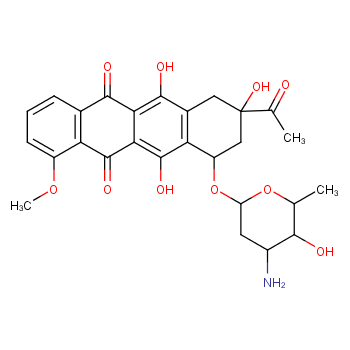
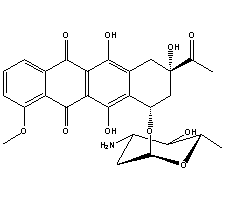
Daunorubicin is a drug used to treat various cancers, especially leukemia. It belongs to the anthracycline class of drugs. Daunorubicin, derived from natural sources like Streptomyces, possesses a complex chemical structure. It is a slightly red-orange molecule with a unique sugar component attached to the tetracycline framework. The significance of anthracyclines lies in their ability to disrupt fundamental cellular processes of cancer cells. By interfering with DNA replication and inhibiting enzymes crucial for cell division, daunorubicin effectively halts the uncontrolled growth of cancer.

What is the mechanism of action of daunorubicin? Daunorubicin exerts a dual action within cancer cells, disrupting their growth and division. Here are its daunorubicin mechanism of action:
Daunorubicin is a member of the anthracycline class of antibiotics. It exerts its anti-tumor properties through various mechanisms, including anti-mitotic and cytotoxic activities. It acts by intercalating DNA base pairs, causing unwinding of the DNA double helix and inhibition of topoisomerase II enzyme, leading to single and double-strand breaks, thereby inhibiting DNA and RNA synthesis.
Daunorubicin also inhibits polymerase activity, causing dysregulation of gene expression, leading to DNA free radical damage, ultimately resulting in apoptosis, mitochondrial damage, and programmed cell death.
Daunorubicin is an effective chemotherapy drug that should only be administered by qualified healthcare professionals. Here are its typical uses:
What is the mechanism of action of doxorubicin and daunorubicin? Daunorubicin and doxorubicin are both anthracycline antibiotics with potent cytotoxic effects on cancer cells. Their mechanisms of action are remarkably similar. Both drugs disrupt DNA replication by intercalating base pairs and inhibiting topoisomerase II, leading to DNA damage. However, subtle chemical differences result in some pharmacological variations between them. Daunorubicin is often cleared from the body at a faster rate than doxorubicin, which may reduce the risk of long-term cardiotoxicity, a major side effect of anthracycline drugs. Clinically, both drugs are effective in treating acute leukemia, but doxorubicin has broader activity, making it applicable to a wider range of cancers, including certain types of breast cancer. The choice between the two drugs depends on several factors. For leukemia, the shorter half-life of daunorubicin may be advantageous. However, for cancers less sensitive to daunorubicin, the broad spectrum of doxorubicin may be preferred. Ultimately, the decision depends on the specific type and stage of cancer, the overall health of the patient, and their tolerance to potential side effects.
Daunorubicin is an anti-tumor drug approved by the U.S. Food and Drug Administration (FDA) for induction therapy in acute non-lymphocytic leukemia (including adult acute myeloid, promyelocytic, and myelomonocytic leukemia, as well as childhood and adult acute lymphoblastic leukemia (ALL)), in combination with another cytotoxic drug.
In adult non-lymphocytic leukemia, the complete remission rate of daunorubicin monotherapy is 40% to 50%, while that of combined treatment with cytarabine is 53% to 65%. The best results with cumulative doses of 270 mg/m^2 are achieved with combined cytarabine therapy, with the lowest toxicity.
Clinical studies have shown that daunorubicin, when combined with vincristine and prednisone, prolongs the complete remission time of childhood ALL compared to using vincristine and prednisone alone. However, there is currently no evidence regarding the impact of its use as part of consolidation therapy. In adults with ALL, the addition of daunorubicin to the vincristine, prednisone, and l-asparaginase regimen significantly increases the complete remission rate from 47% to 83%; however, it does not affect the duration of complete remission.
Daunorubicin is also used as part of the CHOP (cyclophosphamide, doxorubicin, vincristine, and prednisone) regimen for the treatment of adult T-cell leukemia caused by human T-cell leukemia virus (HTLV) and other chronic lymphomas, but its long-term remission effect is limited.
In 2017, the daunorubicin and cytarabine liposome combination was approved by the FDA for the treatment of AML with therapy-related changes or AML with myelodysplastic syndrome-related changes (AML-mrc), both of which are known for their poor prognosis.
Off-label use, such as the liposomal form of daunorubicin, in combination with HAART therapy, is also a first-line treatment for Kaposi's sarcoma in patients with advanced human immunodeficiency virus (HIV) syndrome.
Although daunorubicin has established its role in cancer treatment, research on it continues to push boundaries. Scientists are delving deeper into its mechanism of action, discovering new pathways that can be utilized to enhance treatment efficacy. A major focus is overcoming drug resistance mechanisms in cancer cells. This includes exploring more efficient ways to deliver drugs to tumor sites while minimizing damage to healthy tissues. Additionally, the field is ripe with the potential of personalized medicine approaches. By analyzing patients' specific genomic compositions and tumor characteristics, researchers hope to tailor daunorubicin therapy to maximize benefits and minimize side effects. This personalized approach holds promise for making daunorubicin a more potent weapon against cancer.
Daunorubicin, as a drug showing potential value in cancer treatment, exerts its mechanism of action by affecting tumor cell growth and proliferation, as well as modulating the tumor microenvironment, demonstrating significant clinical significance in cancer treatment. However, it is important to recognize that there are still many gaps in our current understanding of daunorubicin in cancer treatment, hence ongoing research is crucial for improving treatment outcomes and patient care. We encourage readers exploring daunorubicin as a cancer treatment option to consult healthcare professionals for personalized advice and guidance to provide the most suitable treatment plans for patients. Through continued effort and research, we can better utilize drugs like daunorubicin to provide more effective treatment and care for cancer patients.
[1]https://go.drugbank.com/drugs/DB00694
[2]https://www.ncbi.nlm.nih.gov/books/NBK559073/#_article-20265_s3_
[3]https://www.frontiersin.org/journals/genetics/articles/10.3389/fgene.2013.00231/full
[4]https://www.cancerresearchuk.org/about-cancer/treatment/drugs/daunorubicin
 |
|
 |


 15YRS
15YRS