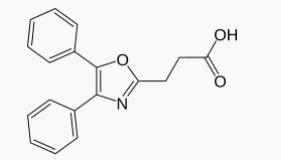
Oxaprozin is a novel propionic acid class non-steroidal anti-inflammatory drug (NSAID) that effectively inhibits cyclooxygenase (COX) and, consequently, the biosynthesis of prostaglandins. Studies have shown that Oxaprozin is effective in treating rheumatoid arthritis, osteoarthritis, ankylosing spondylitis, shoulder periarthritis, tenosynovitis, and gout attacks, as well as for inflammation and pain relief following trauma and surgery. Similar to ibuprofen and aspirin, Oxaprozin offers significant anti-inflammatory and analgesic effects, but at a lower dose (400-600 mg/day) and with fewer side effects compared to ibuprofen and aspirin. After oral administration, Oxaprozin reaches peak plasma concentration in 3–4 hours and binds 99.9% of plasma proteins, thus primarily distributing within the bloodstream.
Developed by Wyeth-Ayerst in 1968, Oxaprozin was first marketed in Portugal in 1983 under the brand name Duraprox. The U.S. FDA approved Oxaprozin in 1992 under the brand name Daypro.
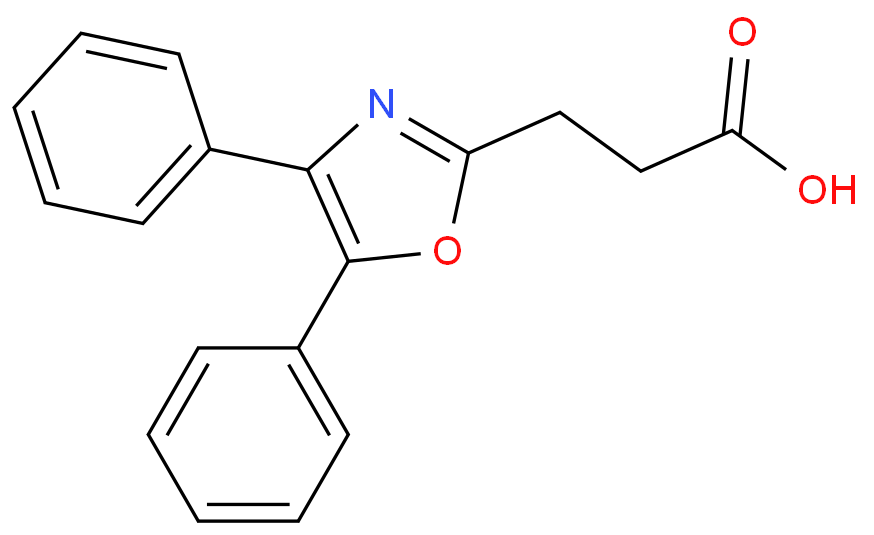
Etanercept, sold under brands such as Enbrel, is a biological product that acts as a TNF inhibitor, interfering with tumor necrosis factor (TNF), a soluble inflammatory cytokine, to treat autoimmune diseases. It has been approved by the U.S. Food and Drug Administration (FDA) for the treatment of rheumatoid arthritis, juvenile idiopathic arthritis, psoriatic arthritis, plaque psoriasis, and ankylosing spondylitis. Tumor necrosis factor alpha (TNFα) is a major regulator of inflammation across many organ systems. Autoimmune diseases are caused by an overactive immune response. Etanercept potentially treats these diseases by inhibiting TNF-α.
Etanercept (etanercept) is a large molecule drug with a molecular weight of 150 kDa that specifically binds to TNFα, thereby mitigating its role in inducing excessive inflammation-related diseases in humans and other animals. These diseases include autoimmune conditions such as ankylosing spondylitis, juvenile rheumatoid arthritis, psoriasis, psoriatic arthritis, and rheumatoid arthritis, as well as other diseases potentially caused by excessive TNFα production. Etanercept is listed on the World Health Organization's list of essential medicines, highlighting its importance in treatment.

Oxaprozin is a long-acting NSAID that requires a prescription for purchase and is used to treat chronic arthritis. In first-line arthritis treatment, oral NSAIDs are used to quickly alleviate pain and inflammation. NSAIDs work by blocking the synthesis of prostaglandins through inhibition of COX-1 and COX-2, achieving analgesic and anti-inflammatory effects. However, NSAIDs have proven cardiovascular and gastrointestinal side effects, and long-term oral NSAID use is not recommended for arthritis treatment.
For some conditions where oral medications like corticosteroids (GC) and biologics such as TNF-α inhibitors are unsuitable, injection might be a more appropriate method of administration. GC acts faster than NSAIDs by activating corticosteroid receptors and inhibiting pro-inflammatory transcription factors to suppress inflammation development. Due to GC receptors being present in almost all human tissues and their multi-effectiveness on several signaling pathways, GC can cause widespread adverse effects. These side effects affect most major organ systems, including musculoskeletal, gastrointestinal, cardiovascular, and endocrine systems. Therefore, low-dose intra-articular GC should only be used when arthritis symptoms are severe to alleviate local inflammation.
TNF-α is a cytokine that promotes joint inflammation, and TNF-α inhibitors prevent the release of TNF-α-driven inflammatory factors and further development of inflammation. Most TNF-α inhibitors are monoclonal antibodies or fusion proteins and therefore require injection to ensure efficacy. Common TNF-α inhibitors for treating arthritis include Etanercept, Adalimumab, and Infliximab.

Choosing between medications depends on several factors, including:
Combining alcohol or tobacco with certain medications can also lead to interactions. Avoid drinking alcohol while taking Oxaprozin, as alcohol increases the risk of gastrointestinal bleeding and ulcers. If you experience stomach pain, vomit, or blood in your stools, contact your healthcare provider immediately.
When deciding between Etanercept and Oxaprozin, consider your specific condition and treatment goals. Given the significant differences in their mechanisms and indications, it's best to make a decision under the guidance of a physician. Professional medical advice will help you choose the most suitable medication to ensure safe and effective treatment.
[1]https://en.wikipedia.org/wiki/Oxaprozin
[2]https://en.wikipedia.org/wiki/Etanercept
[3]https://www.ncbi.nlm.nih.gov/books/NBK548334/
[4]Wang J, Zeng J, Liu Z, et al. Promising strategies for transdermal delivery of arthritis drugs: Microneedle systems[J]. Pharmaceutics, 2022, 14(8): 1736.
[5]Guo Hong. Design and evaluation of oxaprozin transdermal drug delivery system[D]. Shenyang Pharmaceutical University, 2007.
[6]https://www.drugs.com/drug-interactions/oxaprozin.html
 |
 |
 |


 4YRS
4YRS