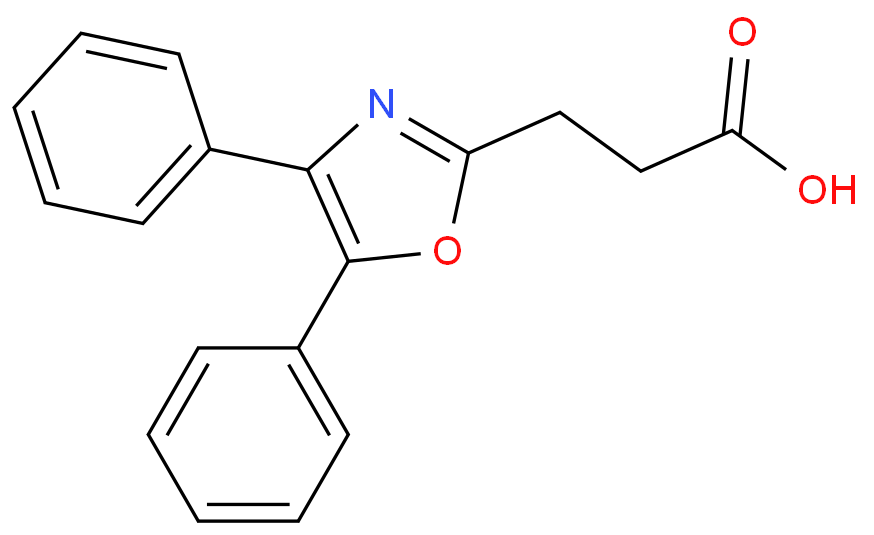
Oxaprozin is an NSAID that reduces the formation of prostaglandin (PG) precursors by inhibiting cyclooxygenase, leading to decreased PG biosynthesis and alleviation of pain and inflammation. After oral administration, Oxaprozin is well absorbed, reaching peak plasma concentrations within three to six hours. The drug is primarily excreted unchanged in the urine and has a long elimination half-life, with persistent presence in synovial fluid. Studies also indicate that Oxaprozin is effective in treating juvenile rheumatoid arthritis and ankylosing spondylitis. It is used to relieve inflammation, swelling, stiffness, and joint pain associated with osteoarthritis, rheumatoid arthritis, and chronic arthritis caused by juvenile rheumatoid arthritis.
Naproxen was initially approved for prescription use in 1976 and remained a prescription drug until it was approved as an over-the-counter (OTC) medication in 1994. The FDA has approved Naproxen for treating acute gout, ankylosing spondylitis, bursitis, polyarticular juvenile idiopathic arthritis, osteoarthritis, tendinitis, rheumatoid arthritis, pain, and primary dysmenorrhea. While Naproxen, like other NSAIDs, is approved by the FDA for inflammatory arthritis treatment, it does not alter the disease course or prevent common sequelae of these diseases, such as joint and soft tissue damage. In these cases, disease-modifying antirheumatic drugs (DMARDs) are considered the first-line treatment for inflammatory joint diseases, while NSAIDs like Naproxen are used as adjunctive therapy.
Naproxen is also used for treating acute migraines and preventing migraines, where it is considered a first-line abortive therapy. Additionally, it can be used with other medications (such as beta-blockers, antidepressants, and anticonvulsants) for preventing chronic migraines.

Common side effects of Oxaprozin include constipation, diarrhea, nausea, rash, and dyspepsia. Like other NSAIDs, Oxaprozin may cause gastrointestinal adverse reactions. Other potential adverse effects include allergic reactions, analgesic nephropathy, liver toxicity, and increased bleeding time.
Common side effects of Naproxen include dizziness, headache, bruising, allergic reactions, heartburn, and stomach pain. Severe side effects include increased risk of heart disease, stroke, gastrointestinal bleeding, and stomach ulcers. The risk of heart disease may be lower compared to other NSAIDs. Naproxen is not recommended for individuals with kidney problems or in late pregnancy.
The anti-inflammatory effect of Oxaprozin is thought to be due to the inhibition of cyclooxygenase in platelets, leading to blocked prostaglandin synthesis. Its antipyretic effect may be due to its action on the hypothalamus, resulting in increased peripheral blood flow, vasodilation, and subsequent heat dissipation. Oxaprozin is a non-selective NSAID with lower COX-2 selectivity, indicating higher COX-1 selectivity.
Like other non-selective NSAIDs, Naproxen exerts its clinical effects by blocking COX-1 and COX-2 enzymes, leading to reduced prostaglandin synthesis. While both enzymes contribute to prostaglandin production, they have distinct functional differences. COX-1 has constitutive activity found in normal tissues such as the gastric mucosa, while COX-2 has inducible activity, producing prostaglandins that mediate pain, fever, and inflammation. COX-2 mediates Naproxen's antipyretic, analgesic, and anti-inflammatory properties, while adverse reactions such as gastrointestinal discomfort and renal toxicity are associated with COX-1 inhibition.
For adults, the expected daily dosage is 600-1200 mg, administered as a single dose, for the treatment of rheumatoid arthritis, osteoarthritis, and pain relief. For children, Oxaprozin 10-20 mg/kg/day has been used to treat juvenile rheumatoid arthritis. Oxaprozin is effective with once-daily dosing but does not offer any therapeutic advantage over other currently available NSAIDs.
Typically, when using Naproxen and other NSAIDs, treatment should start with the lowest effective dose and be as short as possible. For elderly patients, consideration should be given to starting at lower doses. For mild to moderate arthritis (osteoarthritis, rheumatoid arthritis, and ankylosing spondylitis), the dosage is 220 to 550 mg orally every 12 hours; for acute gouty arthritis, an initial dose of 825 mg is followed by 275 mg every 8 hours until symptoms improve.
Maximum recommended daily dosage for children aged 12 and above is 20 mg/kg/day, not exceeding 1000 mg/day orally; for OTC use, up to 660 mg/day orally.
In clinical studies, Oxaprozin has been shown to be as effective as aspirin and equally effective as Naproxen in treating rheumatoid arthritis.
For osteoarthritis treatment, Oxaprozin is as effective as Naproxen and more effective than aspirin or piroxicam. A double-blind trial involving 24 patients with knee or hip osteoarthritis compared the efficacy and tolerability of Oxaprozin and Naproxen. Patients were randomly assigned to receive fixed doses of Oxaprozin 1200 mg daily or Naproxen 250 mg three times daily for 8 weeks. Assessments at baseline and after 4 and 8 weeks of treatment showed that the Oxaprozin group had significant reductions in observer ratings, patient ratings, pain intensity, and disability at both treatment visits, indicating improved patient condition. The Naproxen group also showed significant reductions in observer ratings, patient ratings, pain intensity, and time to walk 15 meters. The average differences between the two groups were not statistically significant. Out of 12 patients on Oxaprozin, 3 reported adverse reactions, while 6 out of 12 patients on Naproxen reported adverse reactions. Specific adverse reactions reported were diarrhea in Oxaprozin users and dyspepsia in Naproxen users. From this perspective, there was no statistically significant difference between the two groups. Laboratory tests indicated no toxicity in either group.
Generally, it is not recommended to use Naproxen and Oxaprozin together due to the increased risk of gastrointestinal side effects, including inflammation, bleeding, ulcers, and rare gastrointestinal perforation. Gastrointestinal perforation is a severe and potentially life-threatening condition where holes develop in the stomach or intestines. To reduce these risks, it is advisable to take these medications with food. If you have any concerns or questions, you should consult a doctor, who may suggest alternative options with less risk of drug interactions.
Although both Oxaprozin and Naproxen are used to relieve pain and inflammation, their specific uses differ, and the choice of medication should be based on individual circumstances. Therefore, it is recommended to consult a healthcare professional before deciding to use Oxaprozin or Naproxen to ensure the most appropriate treatment for your needs.
[1]https://pubmed.ncbi.nlm.nih.gov/6373152/
[2]https://go.drugbank.com/drugs/DB00991
[3]https://en.wikipedia.org/wiki/Naproxen
[4]https://en.wikipedia.org/wiki/Oxaprozin
[5]https://www.ncbi.nlm.nih.gov/books/NBK548334/
[6]https://www.ncbi.nlm.nih.gov/books/NBK525965/
[7]https://pubmed.ncbi.nlm.nih.gov/1617910/
[8]https://www.drugs.com/drug-interactions/coxanto-with-naproxen-1763-20614-1690-0.html
[9]https://go.drugbank.com/drugs/DB00788
 |
|
 |


 4YRS
4YRS