In perfumes and personal care products, musky scents are favored by consumers for their unique longevity and warm qualities. Ethylene brassylate vs galaxolide are two commonly used synthetic musk fragrances, each with distinct aroma characteristics and application advantages. Ethylene brassylate is renowned for its gentle, sweet scent, often used in high-end perfumes and skincare products to provide a fresh and long-lasting fragrance. On the other hand, Galaxolide is known for its strong and enduring scent, widely utilized in various detergents and personal care products to enhance the longevity of fragrances. This article will compare the characteristics and applications of these two musk fragrances to assist you in choosing the most suitable musky scent for yourself.
Musk is a category of aromatic substances commonly used as base notes in perfumes. They encompass secretions from musk deer and other animals emitting similar scents, various plants, as well as synthetic substances with musk-like odors. Despite the common notion of musk being intense and strong-smelling, the reality perceived by perfumers differs significantly. Musk, to a trained nose, doesn't align with the stereotypical heavy and dark fragrance; rather, it's a subtle molecule yet incredibly potent, indispensable in any perfume formulation.
Originally, musk referred to a substance obtained from the glandular secretions of musk deer, widely used as a popular fixative in perfumery, ranking among the most expensive animal products globally. Natural musk resides within animals, particularly musk deer or muskrats, secreting a brown substance with a pungent odor, which, once collected and dried into powder form, is soaked in ethanol (for months or years) to yield a more pleasant fragrance. This musk carries a faint powdery, furry, slightly sweaty scent, constituting one of the most expensive raw materials worldwide.
Natural musk found extensive use in perfumery until economic and ethical motives led to the adoption of synthetic musk, now predominantly used. Modern usage of natural musk pods occurs in Traditional Chinese Medicine (TCM). Except for specially exempted medicines, all utilize a synthetic version of the undisclosed ingredient created in 1994. This process garnered the National Science and Technology Progress Award in 2015.
Ethylene brassylate, also known as musk ambrette, with the chemical name 13-Methyltetradecanoic acid 2-ethyl-1-(2-ethylhexyl) ester (CAS: 105-95-3, molecular formula: C15H26O4).

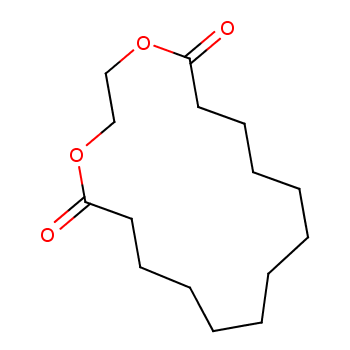
Ethylene brassylate is a synthetic fragrance compound with a musky scent, belonging to the macrocyclic musk chemical family, renowned for its enduring aroma. These molecules feature a cyclic structure with two ester groups.
Ethylene brassylate (a macrocyclic lactone) stands as one of the oldest white musks, created by DuPont in 1934, immediately recognized for its potential by Andre Fraysse, who incorporated it into high-end perfumes, debuting when the company experienced explosive industrial growth. Ethylene brassylate gained popularity due to its ease of use (as a liquid) and its considerably cheaper nature compared to other non-nitro musks of the early 20th century, such as muscone and Civetone (Ruzicka, 1926), and Exaltolide? (1930).
Ethylene brassylate serves as a fragrance ingredient used in many compounds. It finds utility in decorative cosmetics, high-end perfumes, shampoos, soaps, other toiletries, as well as non-cosmetic items like household cleaners and detergents. It is colorless to very pale yellow, possessing a fairly tenacious sweet musky odor (Arctander, 1969). Global usage of ethylene brassylate is estimated at over 1000 tons annually (International Fragrance Association, 2008).
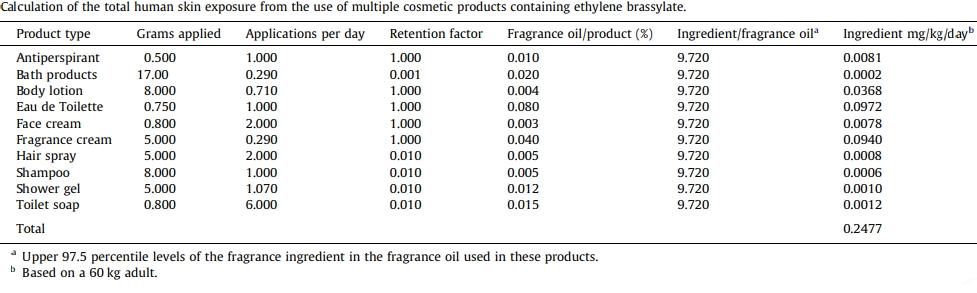
When used in cosmetics at recommended levels, it is generally considered safe for most individuals. However, Ethylene brassylate has been identified by the European Union's Scientific Committee on Consumer Safety (SCCS) as a potential skin sensitizer. This implies it may trigger allergic reactions in some individuals, causing irritation or redness. Regulatory bodies have recognized this hazard and have established safety guidelines for its use in cosmetics.
1,3,4,6,7,8-Hexahydro-4,6,6,7,8,8-hexamethyl-cyclopenta-γ-2-benzopyran, also known as galaxolide, with the chemical name (CAS: 1222-05-5, molecular formula: C18H26O).
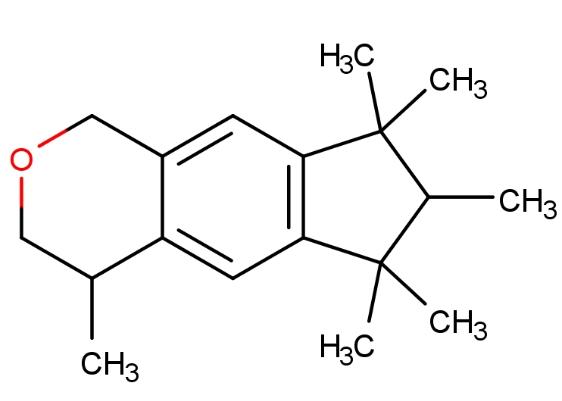
Galaxolide, or cyclopentadecanolide (also known as Abbalide, Pearlide, Astrolide, Musk 50, Polarlide), is a synthetic musk with a clean, sweet musky floral woody scent, used in fragrances. It is one of the musk components employed by perfumers and cologne manufacturers to impart a musky scent to their products. Cyclopentadecanolide was first synthesized in 1965 and used in some fabric softeners and detergents in the late 1960s. High concentrations are also blended into fine fragrances.
Cyclopentadecanolide has become a major synthetic musk component of the polycyclic musk group defined by the International Fragrance Association (IFRA). Its odor is described as "clean," sweet, floral, woody musk, with studies indicating particularly the (4S,7R) and (4S,7S) forms of cyclopentadecanolide being the most potent musky scents, with odor thresholds of 1 ng/L or lower.
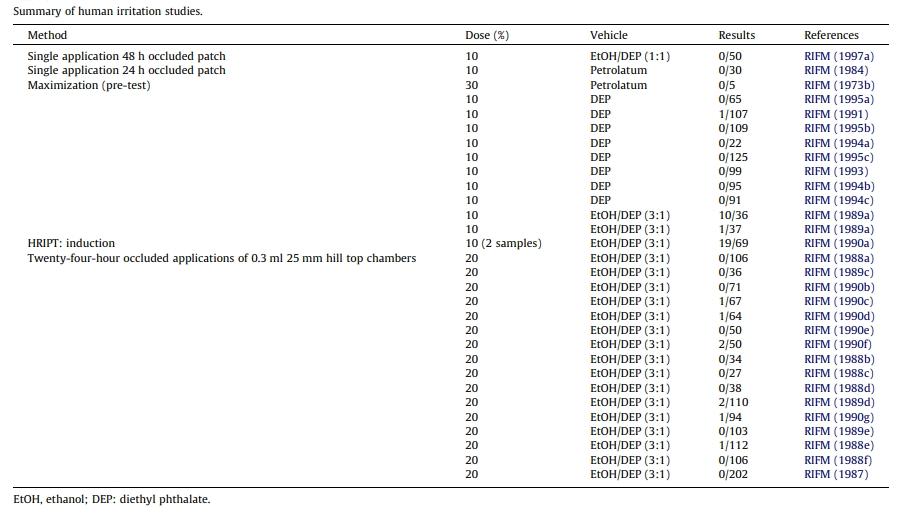
Cyclopentadecanolide is not an irritant, is non-toxic, not a CMR substance, and not a sensitizer. Based on testing data, the European Union's Scientific Committee on Consumer Safety included cyclopentadecanolide in its proposal to expand allergen information for cosmetics, as it claims to have seen only up to 100 cases of reports of irritation or allergic reactions to cyclopentadecanolide through the use of cosmetics over the past decades. Cyclopentadecanolide has been found in human biomonitoring studies, with its presence in human tissues evaluated by some scientific authorities. For instance, in a 2004 study, cyclopentadecanolide was detected in 97% of Massachusetts mothers' breast milk samples. A 2009 study found cyclopentadecanolide in the plasma of 91% of study participants. Extensive investigations into the presence of cyclopentadecanolide in biomonitoring studies have been completed and assessed by various regulatory agencies. The results of all these studies indicate that cyclopentadecanolide can be safely used in consumer products.
Both ethylene brassylate vs galaxolide exhibit considerable longevity in perfumes, providing lasting fragrances.
Tonalide, Ethylene Brassylate, and Galaxolide are all synthetic musks commonly found in the vast majority of men's perfumes produced today, with at least one of them present. Their exact structures and characteristics are not as crucial, except for Tonalide, which is a sweet fruity musk, Ethylene Brassylate, a deep musk with vanilla undertones, and Galaxolide, a sweet, strong, and highly floral musk. These three are often blended in certain proportions with woody amber molecules (such as Amber X-Treme and Ambroxan), resulting in the clean, fresh laundry characteristic predominant in most modern men's fragrances.
Galaxolide is less biodegradable, raising concerns about environmental persistence. Ethylene Brassylate is generally considered more biodegradable than Galaxolide. Studies have detected Galaxolide in waterways, potentially affecting aquatic ecosystems. Compared to Galaxolide, there is less evidence of Ethylene Brassylate being widespread in the environment.
Both ethylene brassylate vs galaxolide are generally considered safe for use in cosmetics at prescribed levels. However, further research may be needed on the long-term health impacts of these compounds, requiring more extensive studies to fully understand the potential long-term effects of ethylene brassylate vs galaxolide on health.
An increasing number of consumers are drawn to unique and subtle musky scents, seeking fragrances beyond traditional powdery or animalic aromas. Perfumers are responding with innovative musk blends, combining various types of musks to create complex and captivating fragrances.
Amidst olfactory shifts, there's a growing demand for transparency and sustainability. Consumers are more informed and prioritize safer, eco-friendly choices. This translates to a preference for ethical, biodegradable musk alternatives. In response, the industry is actively exploring and implementing sustainable practices, including the use of bio-based musks derived from renewable resources.
If you aim to create a light, crisp, unsweetened aquatic product, you wouldn't want to use Ethylene Brassylate. Musk usage is similar, but with much finer distinctions in choice, as the differences are subtle compared to other fragrance families. For fruity accords, you'd lean towards fruity musks like Galaxolide, Helvetolide, Applelide, Romandolide, among others. For powdery oriental fragrances, Aurelione, Cosmone, Muscenone, Velvione, Iso Muscone; for sensuous animalic fragrances, Exaltone, Exaltolide, Laevo muscone, Exaltenone, Civetone, and others. Price is another driving factor for certain musks. For example, Romandolide, compared to Galaxolide, is expensive and cannot replace it; Romandolide's fruitiness is too intense, and its base is dim and fuzzy, while Galaxolide always remains bright and fresh.
Choosing the right musk depends on the effect you desire. Ethylene brassylate vs galaxolide are safe for use in cosmetics at prescribed levels. However, some individuals may have sensitivities. Patch testing is essential before widespread application. Dilution is key when using concentrated fragrance oils. A little musk goes a long way. Start with a small amount and gradually increase until you achieve the desired intensity. Remember, fragrance is personal. Experiment and find the musk (or musk blend) that best complements your taste, pairing it with other fragrances of your choice.
In conclusion, ethylene brassylate vs galaxolide each possess unique aroma characteristics and application advantages. The choice between these musky scents depends on your personal preferences and usage needs. If you prefer a gentle, sweet, and long-lasting fragrance suitable for high-end perfumes and skincare products, Ethylene Brassylate might be the ideal choice. Whereas if you lean towards a strong, enduring fragrance suitable for various detergents and daily care products, Galaxolide would be more appropriate. Regardless of the choice, both synthetic musks can add a touch of unique fragrance to your everyday life. By understanding the characteristics of these two fragrances, you can make a better-informed decision that aligns with your preferences, enriching your olfactory experience.
[1] https://en.wikipedia.org/wiki/Galaxolide
[2] https://en.wikipedia.org/wiki/Musk
[3] https://experimentalperfumeclub.com/what-is-musk-in-perfume/
[4] https://www.barristerandmann.com/blogs/our-blog/notes-from-the-lab-how-to-make-it-masculine
[5] https://basenotes.com/community/threads/why-that-musk-ethylene-brassylate-vs-galaxolide.404708/
[6] https://www.fragrantica.com/board/viewtopic.php?id=148059
 |
|
 |


 2YRS
2YRS