
Fluazifop-p-butyl and Glyphosate are common herbicides that play important roles in agricultural production. However, many people have doubts about which one is better. Today, we will delve into the characteristics, uses, and effects of Fluazifop-p-butyl and Glyphosate to better understand their differences and advantages and disadvantages in agricultural production. Through comparative studies, we may be able to find answers to understand which herbicide is more suitable for specific agricultural production environments and needs.
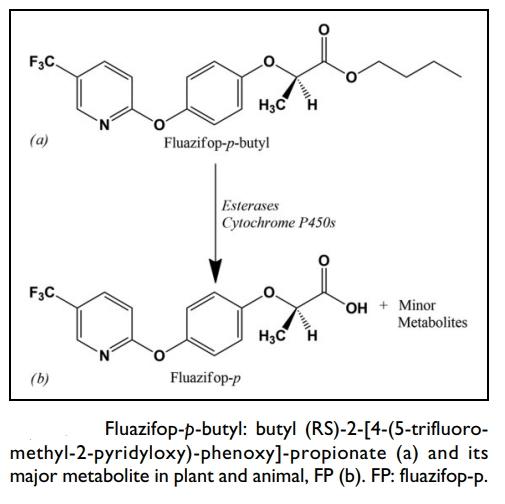
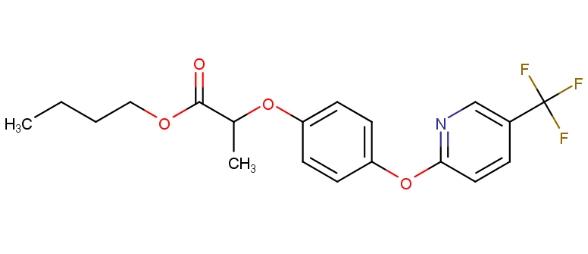
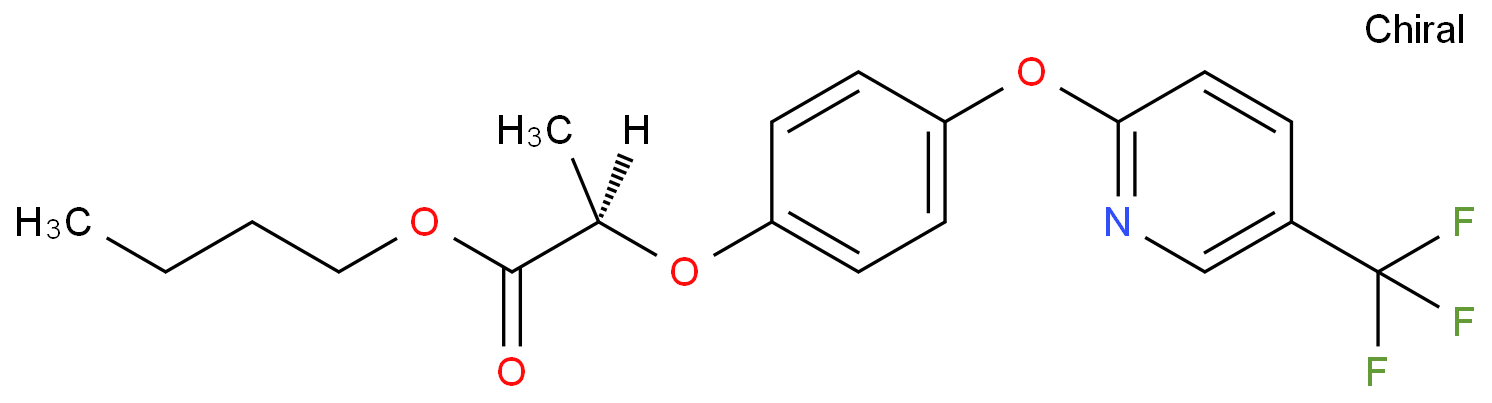
Fluazifop-p-butyl, also known as fluazifop-p-butyl, is an aryloxyphenoxypropionate herbicide with an R configuration. It is an active enantiomer and is used as a post-emergence herbicide for controlling various broadleaf weeds. It acts as an inhibitor of agricultural chemicals, herbicides, and EC 6.4.1.2 (acetyl-CoA carboxylase). It is functionally related to fluazifop-P. It is the enantiomer of (S)-fluazifop-butyl. Fluazifop-p-butyl is a selective phenoxy herbicide used for pre-emergence control of annual and perennial grasses. It is used in soybeans and other broadleaf crops such as carrots, spinach, potatoes, and ornamental plants.
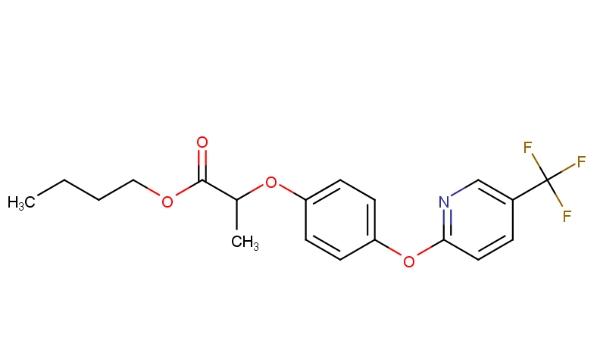
Glyphosate, also known as glyphosate, is a broad-spectrum systemic herbicide that can effectively kill the most stubborn weeds, especially hard-to-control perennial plants. Currently, it is the most widely purchased and used herbicide in the United States, with an average annual use of about 5 to 8 million pounds on residential and commercial lawns and yards and 85 to 90 million pounds for agricultural purposes. Glyphosate is used to kill weeds in fences, trees, driveways, flower beds, sidewalks, shrubs, and weed lawns inside and outside the lawn, preparing for renovation and gardening. The product is called a non-selective herbicide, which means it does not discriminate against what it comes into contact with. In this case, when using glyphosate, care must be taken not to spray valuable and desirable plants. Glyphosate was initially developed by the company Monsanto under the trade name Roundup. However, since the expiration of the patent held by the company Monsanto in 2003, various companies and manufacturers have produced generic brands of RoundUp.
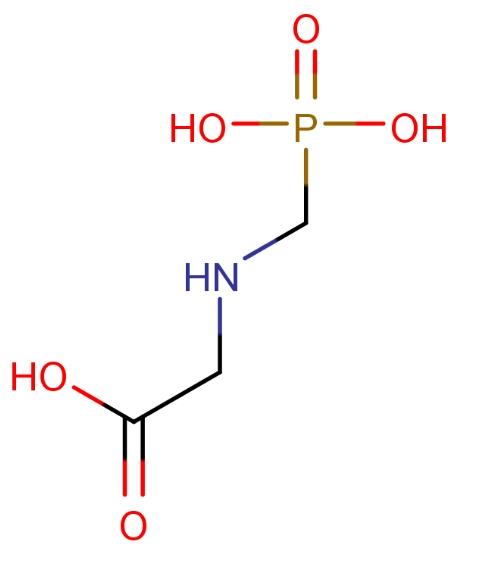
The mode of action of fluazifop-p-butyl is that it is a lipid synthesis inhibitor. Lipids are important components of cell membranes. By inhibiting these lipids, plants die in actively growing areas. Fluazifop-p-butyl is rapidly absorbed into the leaf surface and moves throughout the plant, accumulating in the rhizomes and stolons of perennial grasses and the meristems of annual and perennial grasses. Fluazifop-p-butyl also has an adverse effect on a plant enzyme called acetyl-CoA carboxylase (ACCase). Fluazifop-p-butyl essentially disrupts internal processes in plants it comes into contact with, leading to complete collapse of the plants.
Glyphosate is a systemic herbicide, which means once sprayed, it is absorbed into the leaves and spreads throughout the plant system. When glyphosate is sprayed on plants, it interferes with the plant's ability to produce key proteins necessary for plant growth.
Glyphosate inhibits certain amino acids necessary for plant protein development. Its form is isopropylamine salt. Glyphosate has received attention for its low toxicity, and this chemical can quickly degrade in the soil without continuing to cause damage. Nevertheless, glyphosate grows in plant tissues, leading to plant damage and death, which may be a problem for trees and shrubs that are not suitable for the chemical. The death of annual weed plants is rapid, taking only two to four days, while the eradication of perennial invasive weeds takes about 7 to 10 days.
Fluazifop-p-butyl and Glyphosate are two of the most widely used herbicides in the world for effectively controlling various weeds.
This selective herbicide is particularly useful in controlling weeds. Fluazifop-p-butyl is a selective post-emergence phenoxy herbicide used to control most annual and perennial weeds in cotton, soybeans, tree nuts, asparagus, coffee, and other crops. It is commonly used in:
Grains: wheat, barley, oats
Lawns: lawns, golf courses, sports fields
Non-crop areas: roadsides, railways, industrial areas
This non-selective systemic herbicide can kill a wide range of weeds, including grasses, broadleaf weeds, and woody plants. Due to its broad spectrum of activity, it is primarily used in:
Fallow land: for weed control before planting crops
Glyphosate-resistant crops: Glyphosate-resistant crops such as soybeans, corn, and cotton can control weeds without harming the crops themselves
Non-agricultural areas: parks, forests, road rights-of-way
Glyphosate is a systemic/translocated herbicide, meaning it moves downward from treated leaves, stems, etc., into the roots within plant tissues. Because glyphosate translocates throughout the weed, it is effective against most annual and perennial weeds. Additionally, Glyphosate is an ideal choice for planting beds as it has no soil activity and no residual effect. Once applied, it binds tightly to soil particles, so it does not move downward in the soil profile and can be absorbed by the roots of trees or shrubs. This also minimizes the potential for leaching or runoff to pollute the environment. Glyphosate also lacks volatility, meaning it does not turn into vapor, does not leave the treated area, and does not harm nearby ornamental plants. While glyphosate has many advantages, it also has disadvantages; it may harm landscape plants, its action is relatively slow, and it may not control certain common weeds well. While glyphosate is very effective against weeds at low doses, accidental contact with it can damage low-dose ornamental plants. Minimal overspray or misuse can cause significant damage or death to many different ornamental plants, even if only contact is made with suckers, low-growing stems, or the trunks of thin-barked trees. Another key consideration is the speed of weed control, and glyphosate has a slow onset of action.
For controlling grass weeds, several grass weed herbicides (selective herbicides that only control grass plants) are labeled for use over hundreds of ornamental plants and their surroundings. These products include clethodim (Envoy?), sethoxydim (Acclaim? Extra), fluazifop-P (Fusilade? II), and quizalofop (Segment?). These herbicides can be applied locally (around the base of plants) or, as needed, to the tops of broadleaf plants listed on individual product labels.
Adjuvants such as urea, nitrate, and sulfuric acid have been evaluated through field experiments to assess the efficacy of glyphosate (H1) and fluazifop-p-butyl (H2) herbicides with adjuvants on common reeds at an uncut and two different cutting heights (10 and 30 cm). The adjuvants include urea, nitrate, and sulfuric acid. Relative Importance Values (RIV), leaf chlorophyll content, and plant density were determined to assess the efficacy of the herbicides. On uncut reeds and at a 10 cm cutting level, only glyphosate treatment (H1a) was more effective than fluazifop-p-butyl (H2a). However, no significant differences were observed between them at the 30 cm cutting level. Plant cutting positively affected the efficacy of all herbicides used alone or mixed with adjuvants. Additionally, the 10 cm cutting level was more effective in eradicating reeds compared to the 30 cm cutting level. Adjuvants significantly enhanced the efficacy of recommended (Hb) and semi-recommended (Hc) herbicide doses compared to untreated reeds. The reduction percentages of H1b, H1c, H2b, and H2c treatments were 94.5, 86.99, 76.61, and 69.94, respectively. However, adjuvants did not improve the effectiveness of glyphosate at different cutting levels. Conversely, fluazifop-p-butyl with adjuvants (H2b) increased the reduction percentages of reeds to 92.77% and 84.62% at 10 cm and 30 cm cutting levels, respectively.
Fluazifop-p-butyl is not necessarily better than Glyphosate. They have different methods of targeting weeds. Glyphosate is a broad-spectrum herbicide that kills most plants it comes into contact with. This makes it effective against a variety of weeds, but if used carelessly, it can also damage desirable plants. On the other hand, fluazifop-p-butyl is a selective herbicide primarily targeting grasses. This makes it a good choice for controlling weeds in lawns or crops without harming broadleaf plants.
Fluazifop-p-butyl and sethoxydim are both herbicides used to control weeds, but they have some key differences. While both can be used without harming desirable broadleaf plants, fluazifop-p-butyl may damage certain ornamental plants like junipers and rhododendrons. Additionally, sethoxydim may have slightly better control over specific weeds (such as crabgrass), while fluazifop-p-butyl may be more effective against other weeds (such as wheat or barley). In some cases, using these herbicides together can provide broader control or synergistic effects, resulting in even better weed management.
After comparing the characteristics and effects of Fluazifop-p-butyl and Glyphosate, we can see that they each have advantages and are suitable for different situations. Fluazifop-p-butyl excels in controlling some grass species that Glyphosate is ineffective against, while Glyphosate is widely used for weed control. Therefore, it cannot simply be said that one is better than the other, but rather the choice of herbicide should be based on specific circumstances and needs. Farmers and agricultural experts can consider multiple factors such as crop type, weed species, climate conditions, etc., to choose the most suitable herbicide for their field operations, ensuring crop growth and yield.
[1] https://www.solutionsstores.com/glyphosate
[2] https://www.solutionsstores.com/fluazifop
[3] http://extoxnet.orst.edu/pips/fluazifo.htm
[4] https://www.plantprotection.pl/Efficacy-of-glyphosate-and-fluazifop-P-butyl-herbicides-with-adjuvants-at-different,93503,0,2.html
[5] https://awsjournal.org/wp-content/plugins/xml-to-html/include/lens/index.php?xml=2675-9462-aws-40-e020220025.xml&lang=en
[6] https://edis.ifas.ufl.edu/publication/EP580
|
 |
 |


 15YRS
15YRS

