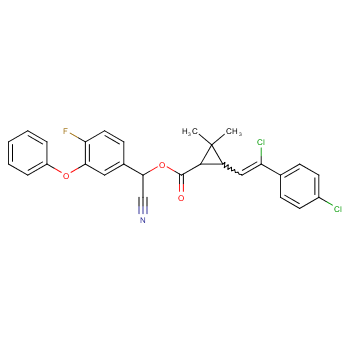
Flumethrin, an efficient insecticide, finds wide applications in agriculture, public health, and household pest control. However, as its usage extends, concerns regarding flumethrin safety have grown. This article delves into the flumethrin safety issues surrounding flumethrin, analyzing existing research data and regulatory standards to provide a basis for its scientifically rational use, ensuring its efficacy in pest control while minimizing adverse effects.
Flumethrin, known as a pyrethroid insecticide, is commonly used in veterinary medicine as an ectoparasiticide to control fleas, ticks, and mites on animals such as cattle, sheep, goats, horses, dogs, and cats. It is also employed to treat parasitic mites in beehives. Flumethrin, a synthetic compound, mimics the insecticidal properties of natural pyrethrins found in chrysanthemums. Its mode of action involves disrupting the nervous system of insects, leading to paralysis and death.

Per cutaneous and inhalation exposure generally results in no or only mild adverse reactions. In cases of significant ingestion, patients may experience coma, convulsions, and severe muscle twitching, with recovery taking days to weeks. Deaths from contact with pyrethroids are rare and usually occur following ingestion. There are no known reports of death from contact with flumethrin.
Stinging and itching sensations, blotchy erythema on the face or skin, exacerbation in other exposed areas due to sweating or contact. Severe exposure can lead to systemic toxicity.
Tearing and transient conjunctivitis may occur.
Coughing, respiratory irritation, mild respiratory distress, sneezing, and rhinorrhea. Prolonged and extensive exposure may result in systemic toxicity.
Nausea, vomiting, and abdominal pain may occur. Systemic toxicity can occur after significant ingestion.
Extensive skin contact, prolonged inhalation, or ingestion can lead to systemic symptoms. These may include headaches, dizziness, anorexia, and excessive salivation. Severe poisoning is uncommon and typically results in impaired consciousness, muscle twitching, seizures, and rare non-cardiogenic pulmonary edema. Symptoms include headaches, dizziness, anorexia, and excessive salivation.
How to use flumethrin? Flumethrin is highly effective and low in toxicity, making it suitable for animal healthcare. The acute oral LD50 of flumethrin in rats is 258mg/kg.
The acute toxicity of flumethrin spray is related to its solvent and stereochemistry. Flumethrin exists in two stereoisomers, Z1 and Z2, with Z2 being more acutely toxic than Z1. Oral administration of Z1 is not significantly toxic at a dose of 5000mg/kg bw in Wistar rats, while Z2 has a mortality rate of 4/5 at a dose of 50 mg/kg bw. Neurotoxicity of flumethrin sprays prepared with 2% aqueous emulsifiable fatty acid and corn oil as carriers was observed at doses of 5mg/kg bw in rats, with NOELS of 0.3mg/kg and 1.0mg/kg, respectively, compared to the control group.
Flumethrin sprays were administered orally to 28 pregnant rats at doses of 0, 0.5, 1, and 2mg/kg bw (using a 2% aqueous emulsifiable fatty acid as a carrier) on days 6-15 of pregnancy. Symptoms such as reduced activity, sagging faces, ataxia, and salivation were observed at doses of 1 and 2mg/kg, with significant reductions in body weight and food intake observed in the 2mg/kg dose group. The maternal NOEL was 0.5mg/kg/day, and the fetal NOEL was 1mg/kg/day.
Wistar rats were fed different doses of flumethrin in their diet for 13 weeks. Compared to the control group, a significant decrease in weight gain was observed in the 150mg/kg dose group, and ulcerative dermatitis related to the dose was observed in the 50mg/kg and 150mg/kg dose groups, with a NOEL of 10mg/kg. The 160mg/kg dose group showed decreased red blood cell values, increased white blood cell counts, increased extramedullary hematopoiesis, and decreased spleen iron stores. Feeding beagle dogs 50mg/kg of flumethrin for 13 weeks resulted in skin lesions and vomiting symptoms. Flumethrin medicated baths in sheep can cause allergic dermatitis, and intraperitoneal injection or dermal application of 2083mg/kg and 5325mg/kg in mice can cause chromosomal aberrations in bone marrow cells.
Studies by A.Anadon et al. showed that a dose of 40mg/kg reduced the activity of hepatic microsomal NADPH cytochrome C reductase, aniline hydroxylase, aminopyrine N-demethylase, UDP-glucuronosyltransferase (base), and cytochrome P450 enzymes in male rats. The clearance rate of aminopyrine in the plasma was reduced, and the elimination half-life and mean residence time were prolonged. Decreases in the excretion of deaminopyrine, 4-hydroxyaminopyrine, and 3-hydroxymethylaminopyrine were observed. This indicates that flumethrin can reduce hepatic enzyme activity, monooxygenase system catalytic activity, and aminopyrine oxidation.
Flumethrin itself is safe for dogs in specific formulations, such as flea and tick collars. However, there are controversies.
The Environmental Protection Agency (EPA) and the Food and Drug Administration (FDA) generally consider the use of flumethrin in collars as safe when used according to the label. Products like Seresto collars use flumethrin and other chemicals to control fleas and ticks.
Some studies raise concerns, particularly regarding the combined effects of flumethrin and other chemicals in flea and tick collars. Serious adverse effects on pets have been reported.
Before using any flea and tick products on your dog, it's best to consult your veterinarian. Considering factors like age, breed, and health status, they can provide the safest option for your specific pet. If you choose to use products containing flumethrin, be sure to follow instructions carefully and monitor your dog for any signs of irritation or illness.
The flumethrin safety issues surrounding flumethrin are multifaceted. While it performs well as an insecticide in controlling agricultural pests and disease vectors, its potential impacts on human health, the environment, and non-target organisms require careful consideration. Existing research suggests that flumethrin is relatively safe at appropriate dosages, but long-term exposure and high-dose usage may pose health risks and environmental hazards. Therefore, the key to ensuring its safety lies in scientifically rational use, adherence to safe application standards, and ongoing monitoring and research. By comprehensively implementing these measures, the advantages of flumethrin can be maximized while safeguarding human health and ecological integrity. Future research and regulations need to continue focusing on its potential risks to achieve more sustainable insecticide management.
[1] https://inchem.org/documents/ukpids/ukpids/ukpid66.htm
[2] https://tevrapet.com/are-flea-collars-right-for-your-dog/
[3] Su F, Liu LF, Jiang SX. Preliminary pharmacokinetic study of flumethrin in dogs. Chinese Journal of Veterinary Medicine, 2010, 44(04): 31-33+45.
[4] Su F. Preparation of Flumethrin Spray and Preliminary Pharmacokinetic Study in Dogs [D]. Nanjing Agricultural University, 2009.
 |
|
 |


 2YRS
2YRS