Fluocinonide vs triamcinolone are two commonly used topical corticosteroid medications for treating skin conditions. They both exhibit significant efficacy in alleviating inflammation, itching, and allergic reactions. However, the choice between these medications depends on various factors, including the specific type and severity of the skin condition, individual patient response, and the side effects and convenience of use. This article will compare the efficacy and characteristics of fluocinonide vs triamcinolone to assist patients and healthcare professionals in making informed treatment decisions.
Corticosteroids are a class of steroid hormones that bind to corticosteroid receptors, which are present in almost every cell of vertebrates. Topical corticosteroids, the topical form of corticosteroids, are the most commonly used medications for treating rashes and eczema. They possess anti-inflammatory properties and are classified based on their vasoconstrictive ability. There are many topical corticosteroid products, categorized into various classes with differing potencies and prices.
Weaker topical corticosteroids are used for thin and sensitive skin areas, especially occluded areas like the armpits, groin, buttock folds, and breast folds. Moderate corticosteroids are employed for conditions such as atopic dermatitis, nummular eczema, xerosis, lichen sclerosus, scabies (after scabicidal treatment), and severe dermatitis. Potent corticosteroids are utilized for conditions like psoriasis, lichen planus, discoid lupus, fissures, chronic simplex eczema, severe poison ivy exposure, alopecia areata, nummular eczema, and severe adult atopic dermatitis. To prevent a rebound reaction, topical corticosteroids are typically prescribed for once-weekly routine use. Some recommend using topical corticosteroids continuously for 3 days and then discontinuing use for 4 days. Prolonged use of topical corticosteroids can lead to secondary fungal or bacterial infections (tinea incognito), skin atrophy, telangiectasia (prominent blood vessels), skin bruising, and fragility. Long-term localized corticosteroid use may result in side effects.
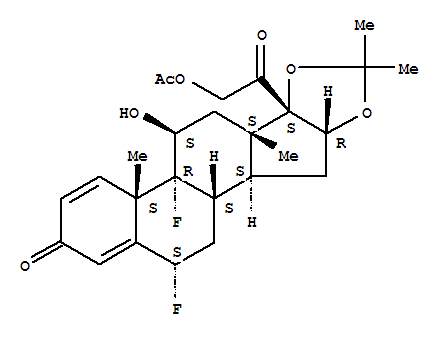
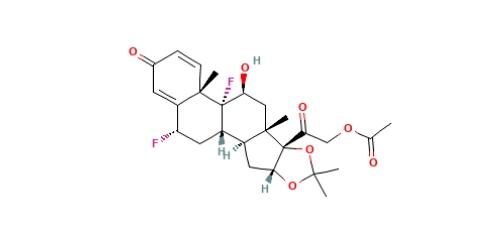
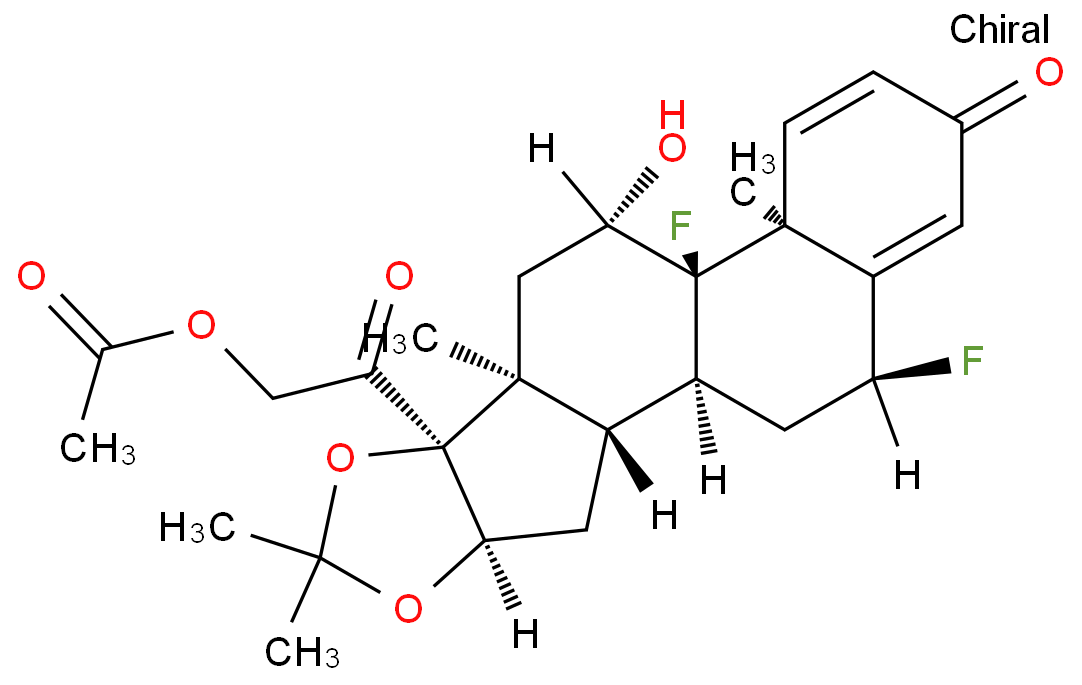
Fluocinonide is an effective corticosteroid used topically as an anti-inflammatory agent to treat conditions such as eczema and seborrheic dermatitis. It alleviates itching, redness, dryness, crusting, scaling, inflammation, and discomfort. A common potential adverse reaction is skin atrophy (thinning of the skin). In 2021, it was the 249th most commonly prescribed drug in the United States, with over 1 million prescriptions.
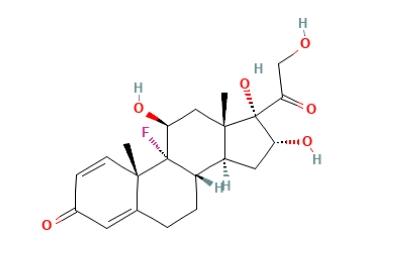
Triamcinolone is a corticosteroid used to treat certain skin conditions, allergies, rheumatic disorders, among others. It is also employed for preventing exacerbations of asthma and chronic obstructive pulmonary disease. It can be administered orally, injected into muscles, and inhaled. Common long-term side effects include osteoporosis, cataracts, aphthous ulcers, and muscle weakness. Severe side effects may include psychosis, increased risk of infections, adrenal suppression, and bronchospasm. Its use during pregnancy is typically safe. It acts by reducing inflammation and immune system activity.
Triamcinolone was patented in 1956 and introduced for medical use in 1958. It is available as a generic medication. In 2021, it was the 104th most commonly prescribed drug in the United States, with over 6 million prescriptions.
Treats various skin conditions
Minimal side effects with short-term use
Available as cream, gel, ointment, and topical solution
Provides flexibility with two different strengths depending on symptoms
Not suitable for long-term use
May require four times daily application
Higher strength (0.1%) not suitable for children under 12 years old
Not the best choice for treating facial, axillary, or groin areas (higher strength not to be used on these areas)
Cost-effective non-patented medication
Available in moderate and high strength options
Multiple formulations such as ointment, cream, and spray
May have fewer side effects compared to systemic corticosteroids
Skin thinning and hyperglycemia with prolonged use
May not be the most potent (strongest) topical corticosteroid, hence may not be suitable for severe skin conditions
Children may absorb the medication more readily, leading to side effects
Requires multiple daily applications.
Triamcinolone is used for atopic dermatitis, dermatitis, aphthous ulcers, allergies, eczema, lichen planus, psoriasis, and stomatitis. Topical triamcinolone can also be used for purposes not listed in this comparison guide.
Fluocinonide is used for dermatitis, lichen planus, sclerosing lichen, eczema, psoriasis, seborrheic dermatitis, and atopic dermatitis. Topical fluocinonide can also be used for purposes not listed in this medication guide.
Common side effects include burning sensation, itching, skin irritation, and dry skin. Warnings include adrenal function suppression, hyperglycemia, newly developed or aggravated skin infections, and skin issues.
Common side effects include burning sensation (2%) and headache (4%). Warnings include hormonal changes, skin reactions, skin infections, and allergic reactions.
On Drugs.com, Fluocinonide topical has an average rating of 9.1 out of 10 from 9 reviews. 89% of reviewers reported positive effects, while 0% reported negative effects.
On Drugs.com, Triamcinolone topical has an average rating of 7.6 out of 10 from 104 reviews. 69% of reviewers reported positive effects, while 20% reported negative effects.
No. High-potency steroids like fluocinonide are used for treating more severe skin conditions, while low-potency steroids like hydrocortisone are used for treating mild skin conditions. While topical steroids generally have fewer side effects, misuse or long-term use may increase the risk of side effects.
Due to the potency classification of fluocinonide, there are no over-the-counter (OTC) alternatives available. You would need to consult your doctor for alternatives to this cream as it requires a prescription. Hydrocortisone (brand example: Cortaid) is a topical corticosteroid available OTC, but compared to fluocinonide, its potency is very low, making it not a suitable alternative. OTC hydrocortisone is considered the weakest topical corticosteroid but is safer than more potent medications, which is why it does not require a prescription.
Fluocinonide vs triamcinolone each have their advantages and specific applications. The choice between them depends on the patient's condition and treatment needs. Fluocinonide is typically suitable for severe skin conditions requiring potent anti-inflammatory action, while triamcinolone may be more suitable for long-term use and treating milder inflammatory reactions. When deciding on medication, doctors consider the severity of the condition, medication side effects, and individual patient responses. Therefore, close collaboration with a doctor to select the most appropriate treatment plan is essential for effectively managing skin conditions.
[1]https://en.wikipedia.org/wiki/Topical_steroid
[2]https://en.wikipedia.org/wiki/Triamcinolone
[3]https://en.wikipedia.org/wiki/Glucocorticoid
[4]https://www.drugs.com/medical-answers/substitute-fluocinonide-cream-3548047/
[5]https://www.drugs.com/medical-answers/fluocinonide-antifungal-cream-3547637/
[6]https://www.drugs.com/compare/fluocinolone-topical-vs-triamcinolone-topical
[7]https://www.goodrx.com/compare/triamcinolone-vs-lidex
[8]https://www.goodrx.com/classes/corticosteroids/topical-steroid-potency-chart
[9]https://pubchem.ncbi.nlm.nih.gov/compound/
|
 |
 |


 2YRS
2YRS