Named after German scientist Gustav Giemsa, Giemsa stain is a versatile tool in microscopy for distinguishing various cell types and microorganisms. Initially used primarily for detecting malaria parasites, it has evolved into a cornerstone staining method in cytology (study of cells), histology (study of tissues), and microbiology (study of microorganisms). Giemsa and related stains rely on selective binding of dyes to specific cellular components, generating contrasting colors that reveal a wealth of information under the microscope. This enables scientists to diagnose diseases, study normal cellular processes, and classify different organisms based on their detailed structures.
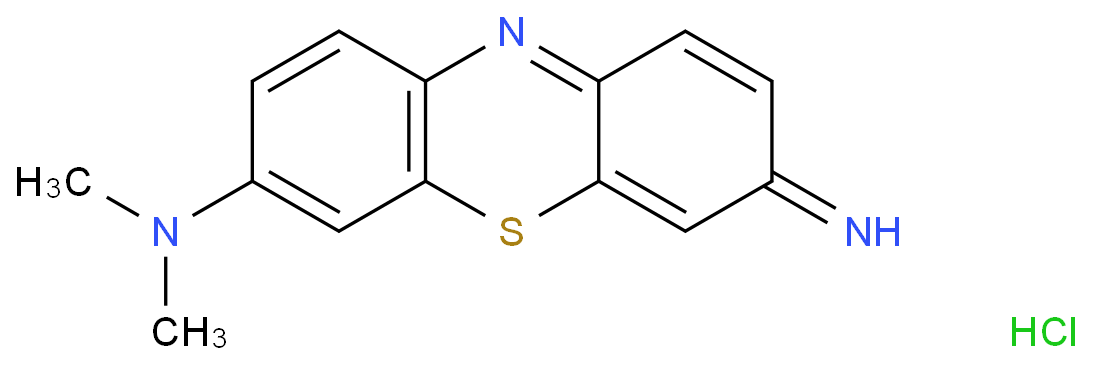
The Giemsa solution consists of Eosin Y and Azure B. Eosin Y stains parasite nuclei red, while Azure B stains the cytoplasm blue. The slides are fixed in methanol. The stain primarily comprises three main components:
These are basic dyes that stain nucleic acids (RNA and DNA) purple-blue.
This acidic dye stains cytoplasmic components (like proteins) from pink to red.
The exact proportions of Giemsa stain components may vary depending on the manufacturer and desired staining effects. While the basic components of Giemsa stain remain the same, the dilution can be adjusted for specific purposes. The specific proportions and preparation of Giemsa stain components can be referenced as follows:
(1) Dissolve 3.8g of Giemsa powder in 250ml of methanol.
(2) Heat the solution to approximately 60°C.
(3) Slowly add 250ml of glycerol to the solution.
(4) Filter the solution and let it stand for about 1-2 months before use.
Giemsa stain is renowned for its versatility, with various formulations tailored to specific applications. Blood smears typically use diluted working solutions, while tissue sections may require more concentrated stains or additional differentiation steps. These variations highlight Giemsa stain's adaptability to different cellular components and achieving desired results.
Staining protocols themselves have evolved over time. Traditional Giemsa staining involved lengthy fixation steps and phosphate buffer washes. Modern protocols often utilize shorter fixation times in methanol and simplified rinsing procedures, making the process faster and more efficient.
Compared to other common staining solutions like Wright's stain, Giemsa offers a broader range of differentiation, providing better visualization of cellular details. However, Wright's stain offers quicker results and is often the preferred initial choice for blood smear examinations. Ultimately, the choice between Giemsa and other stains depends on the specific analytical needs and desired level of detail.
Giemsa staining is one of the most well-known histological stains, staining cell nuclei deep blue based on the acidic contents of the cytoplasm, and staining the cytoplasm blue to pink.
(1) Fix the air-dried sample in methanol for 10 minutes.
(2) Air-dry until all methanol has evaporated.
(3) Stain in a staining jar containing 5% Giemsa stain (diluted with distilled water) for 20 minutes.
(4) Rinse the sample in a large beaker filled with distilled water until excess Giemsa stain is removed.
(5) Air-dry and examine under a microscope.
(1) Giemsa stain is specific for the phosphate groups of DNA, binding strongly to regions with high adenine-thymine content. It is used for Giemsa banding (often referred to as G-banding) to stain chromosomes and is frequently used in creating karyotypes. It can identify chromosomal abnormalities such as translocations and rearrangements.
(2) It stains Trichomonas vaginalis, which presents as green secretions and motile cells in wet mounts.
(3) Giemsa stain also serves as a differential stain, such as when combined with Wright's stain to form Wright-Giemsa stain. It can be used to study the adhesion of pathogenic bacteria to human cells. It stains human and bacterial cells differently, staining them purple and pink, respectively. It is used for histopathological diagnosis of blood parasites such as malaria-causing Plasmodium species and some other spirochetes and protozoan blood parasites. It is also used to stain cells of the Wolbachia in host tissues. Giemsa stain of sputum containing hyphae of Aspergillus is shown below:
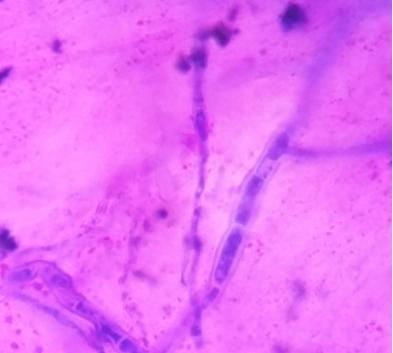
(4) Giemsa stain is a classic blood film stain for peripheral blood smears and bone marrow specimens. Red blood cells are stained pink, platelets are pale pink, lymphocyte cytoplasm is stained azure, monocyte cytoplasm is stained light blue, and white blood cell chromatin is stained magenta. It is also used to visualize the classic "safety pin" shape of Yersinia pestis in plague.
(5) The inclusion of "owl's eye" virus particles is associated with cytomegalovirus infection. Giemsa stain is also used to visualize chromosomes. This is particularly important for detecting cytomegalovirus infections, where the classic finding is "owl's eye" virus particles.
(6) Giemsa stain of fungal tissue histoplasma capsulatum, Chlamydia trachomatis, can be used to identify macrophages.
Giemsa stain is made up of alcohol and glycerol, as well as a series of special stains. The precise ratio of these components and strict control of the staining process are key to ensuring the success of Giemsa staining technology. Through this staining method, we are able to achieve clear staining effects at the cellular and tissue levels, aiding in better observation and analysis of microscopic structures within organisms.
[1] https://www.sciencedirect.com/topics/medicine-and-dentistry/giemsa-stain
[2] https://www.sciencedirect.com/science/article/abs/pii/B978012818731900152X
[3] https://en.wikipedia.org/wiki/Giemsa_stain
[4] https://www.creative-bioarray.com/support/giemsa-staining-protocol.htm
[5] https://www.macsenlab.com/blog/giemsa-stain-overview/
[6] https://www.slideshare.net/slideshow/romanowskystains180521083448-1pptx/262758250
[7] https://microbeonline.com/giemsa-stain-principle-procedure-and-results/
|
 |
 |


 2YRS
2YRS

