Hydroxylamine hydrochloride solution, an essential chemical, finds extensive applications across various fields. This article will focus on the preparation method and relevant safety guidelines for hydroxylamine hydrochloride solution. Proper preparation and storage of hydroxylamine hydrochloride solution are crucial for ensuring its quality and safety. Understanding the uses of hydroxylamine hydrochloride solution can facilitate its effective application, promoting advancements in related fields. In this article, we will delve into the preparation process of hydroxylamine hydrochloride solution and essential safety guidelines, aiming to provide comprehensive information and guidance to ensure the safe use and effective application of hydroxylamine hydrochloride solution.
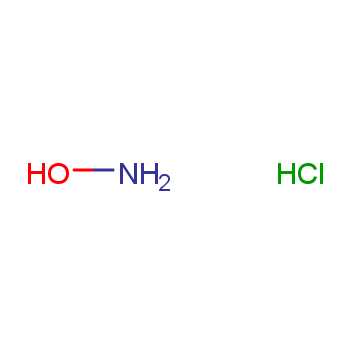
Hydroxylamine hydrochloride (NH2OH·HCl) is a white crystalline salt soluble in water. It serves as a reducing agent and a mild nucleophilic reagent. In solution, it primarily exists in ionic form (NH2OH+ and Cl-). Hydroxylamine hydrochloride solution finds applications in various fields, including chemical synthesis, metal cleaning, textile dyeing, and analytical chemistry.
To prepare hydroxylamine hydrochloride solution, concentrated nitric acid (density approximately 1.40) and concentrated hydrochloric acid (density approximately 1.18) are mixed with approximately equal volumes of water and cooled to a temperature between 20°C and 10°C. Then, under conditions requiring up to 80 pounds of chlorine, the mixture is treated for 6 hours. Approximately 33 pounds of hydroxylamine hydrochloride solution can be produced using a gas-dispersing device (such as a ceramic packed tower or a stirred vessel composed of Hastelloy C, including 6% iron, 5% chromium, 17% molybdenum, and 58% nickel).
The solution is completely distilled under reduced pressure (20 to 50 mmHg) in any suitable distillation apparatus. Approximately 20-25 pounds of unreacted chloroisopropyl acetone residue, containing about 80% iron, 14.5% silicon, 3.5% molybdic acid ethanol, and small amounts of molybdenum and nickel, can be produced using a distillation apparatus made of Durichlor (slowly added and stirred). This residue, along with the distilled solution, can be combined for further chlorination processing and distillation.
The solution is heated to its boiling point in an evaporator with a tantalum heater glass liner for 2-3 hours to complete the hydrolysis reaction of chloroisopropyl acetone, producing approximately 20 pounds of hydroxylamine hydrochloride solution. It is recommended to evaporate the solution under low pressure in the evaporator with a tantalum heater glass liner, where crystals of hydroxylamine hydrochloride with purity exceeding 99% will precipitate from the concentrated solution. Evaporating the solution to dryness yields approximately 20 pounds of about 99% pure hydroxylamine hydrochloride.

Hydroxylamine hydrochloride is a white crystalline solid with a solubility in water of 94 g/100ml at 25°C (highly soluble). Here's how to dissolve it:
It's important to note: Hydroxylamine hydrochloride is hygroscopic, meaning it can absorb moisture from the air. It is recommended to weigh out the compound quickly and store the remaining solid in a desiccator (a container that absorbs moisture from the air) to prevent decomposition. Hydroxylamine hydrochloride solution is relatively unstable and should be freshly prepared before use.
Hydroxylamine hydrochloride is a hazardous substance. Wear appropriate personal protective equipment (PPE), such as gloves, safety glasses, and lab coats, when handling the solution.
Here are some additional tips for dissolving hydroxylamine hydrochloride: Warm water dissolves the solid faster. You can also use an ultrasonic bath to aid in dissolving the solid.
Hydroxylamine hydrochloride (NH2OH·HCl) is a water-soluble salt that does not undergo vigorous chemical reaction with water. It primarily exists in ionic form (NH2OH+ and Cl-) in solution.
While hydroxylamine hydrochloride does not undergo strong reactions with water, cautious handling is still important.
In this article, we have explored the preparation method of hydroxylamine hydrochloride solution and relevant safety guidelines. Proper preparation and storage are essential to ensure the quality and safety of hydroxylamine hydrochloride solution. Understanding its applications can facilitate its effective use and contribute to advancements in related fields. Additionally, following appropriate safety guidelines is crucial to prevent accidents when working with hydroxylamine hydrochloride solution. We hope the information and guidance provided in this article will help readers better understand and apply hydroxylamine hydrochloride solution while prioritizing safety, thus promoting smooth progress in work and research.
[1]https://fscimage.fishersci.com/msds/11280.htm
[2]https://cameochemicals.noaa.gov/chemical/20501
[3]https://pubchem.ncbi.nlm.nih.gov/
[4]https://www.sciencedirect.com/topics/chemistry/hydroxylamine-hydrochloride
[5]https://patents.google.com/patent/US2319669A/en
 |
|
 |


 6YRS
6YRS

