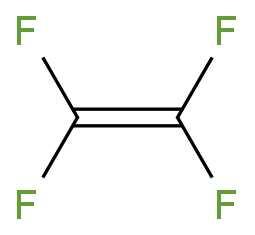
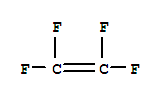
What is C2F4?
Tetrafluoroethylene, with a chemical formula of C2F4, is a colorless and odorless gas that is highly reactive and flammable. It is commonly known for its use in the production of fluoropolymers such as polytetrafluoroethylene (PTFE), which is marketed under the brand name Teflon. This compound is not naturally found in the environment and is primarily produced through industrial processes. Is C2F4 polar or nonpolar?
What is Polarity?
Polarity describes the uneven distribution of electrons in a molecule or compound. In chemistry, polarity refers to the separation of electric charge within a molecule, leading to regions of partial positive and negative charges. This phenomenon arises due to differences in electronegativity between atoms composing the molecule.
Electronegativity measures an atom's ability to attract electrons towards itself. When atoms with different electronegativities form a bond, the shared electron pair is pulled closer to the more electronegative atom, creating a dipole moment and resulting in a polar bond.
Molecules with polar bonds may exhibit overall polarity depending on their molecular geometry and the arrangement of polar bonds within the molecule. This polarity influences various physical and chemical properties of the compound, including solubility, melting point, boiling point, and intermolecular interactions.
Polarity of C2F4
Is C2F4 polar or nonpolar? Tetrafluoroethylene, despite containing four fluorine atoms, is a nonpolar molecule. Why is C2F4 nonpolar?
(1) Molecular Structure
In tetrafluoroethylene, each carbon atom forms a double bond with a fluorine atom, resulting in a linear molecular geometry. The electronegativity of fluorine (3.98) is significantly higher than that of carbon (2.55), creating polar bonds within the molecule. However, due to the symmetrical arrangement of the fluorine atoms around the central carbon atom, the dipole moments of each C-F bond cancel each other out. As a result, the molecule as a whole lacks a net dipole moment, making it nonpolar.
(2) Electronegativity Difference
| Element Electronegativity |
| C |
2.55 |
| F |
3.98 |
The electronegativity difference (3.98 - 2.55 = 1.43) between carbon and fluorine is substantial, indicating polar covalent bonds.
However, due to the symmetrical arrangement of the fluorine atoms around the central carbon atom, the molecule exhibits no overall polarity.

Therefore,
tetrafluoroethylene (C2F4) is a nonpolar molecule.
Applications of C2F4 Polarity
Tetrafluoroethylene is primarily utilized in the production of fluoropolymers, particularly polytetrafluoroethylene (PTFE), which is renowned for its non-stick and heat-resistant properties. PTFE is widely used in various applications, including non-stick cookware, electrical insulation, seals, gaskets, and bearings. Additionally, tetrafluoroethylene serves as a precursor in the synthesis of other fluorinated compounds used in industries such as electronics, pharmaceuticals, and aerospace.
Highlights of Tetrafluoroethylene
| Tetrafluoroethylene Cas 116-14-3 |
| Molecular formula |
C2F4 |
| Molecular shape |
Linear |
| Relative molecular mass |
100.02 g/mol |
| Solubility |
Insoluble in water, soluble in organic solvents |
| Melting point |
-142 °C |
| Boiling point |
-76.3 °C |