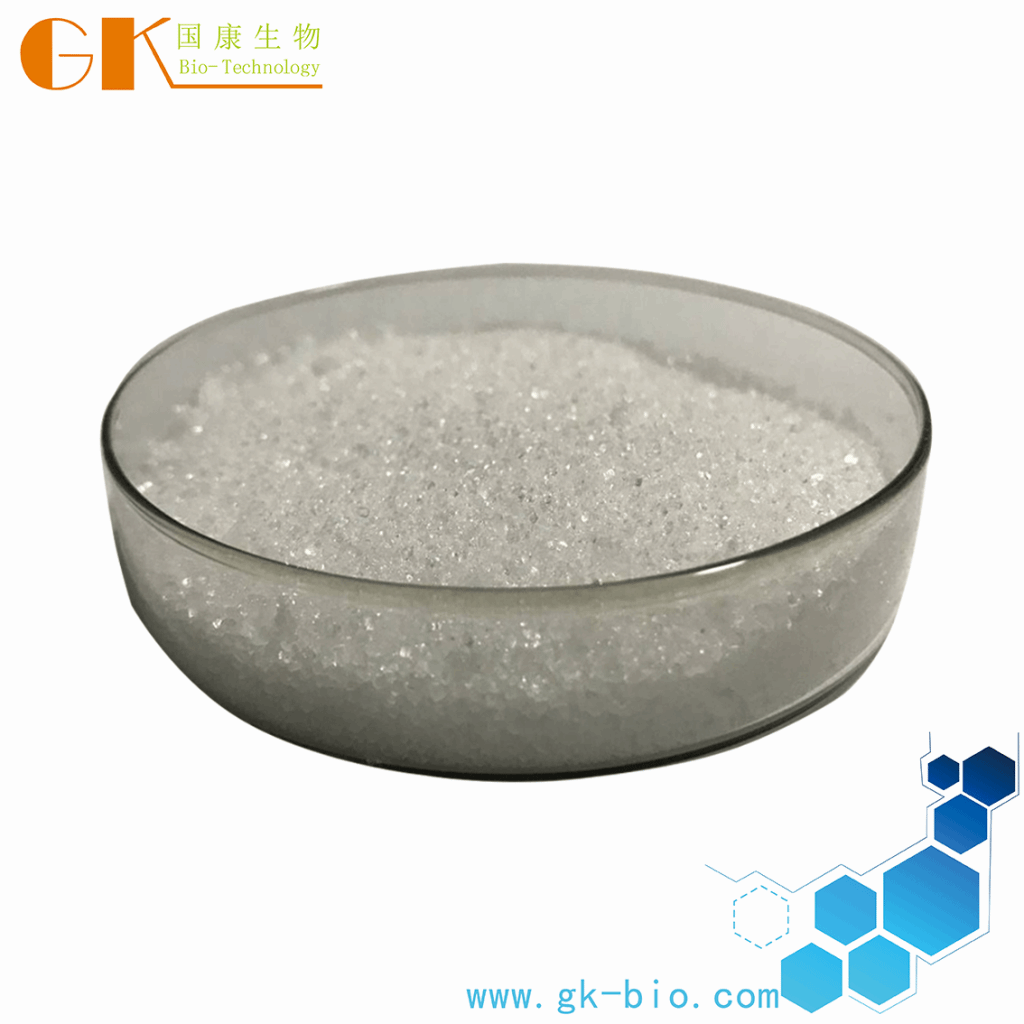
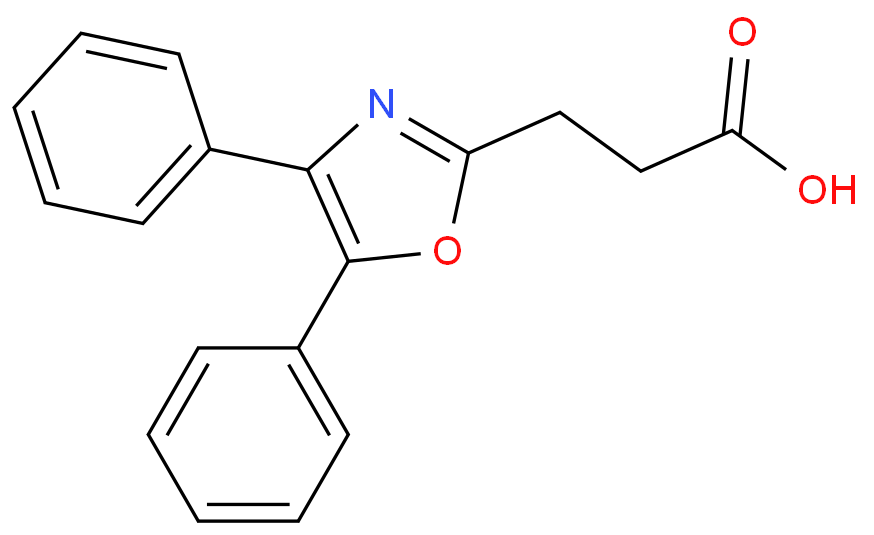
Oxaprozin, chemically known as 4,5-diphenyl-1,2-oxazole-3-propionic acid and also called oximetazoline, has the molecular formula C18H15NO3, CAS number 21256-18-8, and a molecular weight of 293.317. It appears as a white or off-white crystalline powder, odorless or slightly unpleasant-smelling, with a melting point of 161–165°C. Its solubility is as follows: it is readily soluble in N, N-dimethylformamide or dioxane, soluble in chloroform and glacial acetic acid, slightly soluble in absolute ethanol, and sparingly soluble in ether, but insoluble in water. The molecular structure of oxaprozin is illustrated below.

Oxaprozin is a propionic acid derivative NSAID with excellent anti-inflammatory, analgesic, and antipyretic effects. It works by inhibiting cyclooxygenase and prostaglandin biosynthesis, thereby reducing cyclooxygenase activity to exert its therapeutic effects. Due to its easy absorption, minimal side effects, and long-lasting effects, oxaprozin is widely used to treat ankylosing spondylitis, rheumatoid arthritis, osteoarthritis, gout, and other conditions, and is commonly used for post-injury or postoperative inflammation and pain relief. In cases of overdose, it exhibits reactions similar to other NSAIDs, with symptoms such as drowsiness, nausea, and upper abdominal pain, and should be treated with methods such as emesis or gastric lavage, oral activated charcoal, and symptomatic and supportive therapy. Its therapeutic effects are superior to those of aspirin and indomethacin; compared to other similar drugs, oxaprozin has a milder effect, a broader application range, a lower dose, and a higher potency with fewer side effects among NSAIDs.
Oxaprozin is an NSAID of the n-propionic acid class, with no chiral metabolic potential, used to treat rheumatoid arthritis (RA), osteoarthritis (OA), musculoskeletal pain, and other inflammatory conditions. Oxaprozin has been shown to be effective in various animal models of inflammation, pain, and fever, and has been proven effective and well-tolerated in the clinical management of adult rheumatoid arthritis, osteoarthritis, ankylosing spondylitis, soft tissue diseases (such as bursitis and tendinitis), and postoperative dental pain. Large-scale clinical trials have fully demonstrated the clinical efficacy of oxaprozin compared to placebo and other NSAIDs.
Oxaprozin is not a narcotic, opioid, or benzodiazepine. Oxaprozin is a non-narcotic, non-steroidal anti-inflammatory drug (NSAID).
The research on NSAIDs began in 1875 with the use of sodium salicylate. In 1898, acetylsalicylic acid, or aspirin, was synthesized to reduce gastrointestinal side effects of sodium salicylate. In 1946, the first pyrazolone anti-inflammatory drug, phenylbutazone, was synthesized for treating rheumatic diseases and gout. Since then, numerous NSAIDs like ibuprofen, diclofenac, and indomethacin have been developed. Currently, NSAIDs that act on cyclooxygenase are classified into three main categories based on their chemical structure: (1) carboxylic acids; (2) enolic acids; and (3) non-acidic drugs. Although classic NSAIDs can alleviate inflammatory symptoms, control disease, and prevent worsening of inflammation, they have been found to cause significant side effects on the digestive, urinary, and blood systems. Therefore, researchers continue to seek new NSAIDs with fewer side effects and stronger effects.
Is oxaprozin a painkiller? Oxaprozin is effective in models of inflammation, pain, and fever. It has strong analgesic properties, especially suitable for treating painful musculoskeletal conditions like frozen shoulder, due to its effects on inhibiting COX-1 and COX-2 isoenzymes, suppressing NF-κB and matrix metalloproteinase nuclear translocation, and modulating the endocannabinoid system.
Oxaprozin is a long-acting NSAID and is available only by prescription, used for treating chronic arthritis.
Schedule 4 (S4) drugs, also known as prescription medications, are substances and preparations used for therapeutic purposes. Many Schedule 4 substances are subsidized by the Australian government through the Pharmaceutical Benefits Scheme (PBS) if prescribed by an authorized prescriber. Some drugs may require PBS authorization.
Cardiovascular Thrombotic Events: NSAIDs increase the risk of serious cardiovascular thrombotic events, including myocardial infarction and stroke, which can be fatal. Oxaprozin is contraindicated in coronary artery bypass graft (CABG) surgery.
Gastrointestinal Bleeding, Ulceration, and Perforation: NSAIDs increase the risk of serious gastrointestinal (GI) adverse events, including bleeding, ulceration, and perforation of the stomach or intestines, which can be fatal.
Although oxaprozin is used to relieve pain and inflammation, it is not a narcotic but rather a non-steroidal anti-inflammatory drug (NSAID). To ensure the correct use of this medication and avoid potential side effects, especially when treating different types of pain, it is crucial to consult a physician. A doctor can provide professional advice based on individual health conditions and needs to ensure the safety and effectiveness of the drug.
[8] https://dailymed.nlm.nih.gov/dailymed/lookup.cfm?setid=d9b0ca6c-4c53-4f6e-918b-02a8c472a194
 |
 |
 |


 4YRS
4YRS