
What is H3PO4?
Phosphoric acid, with the chemical formula H
3PO
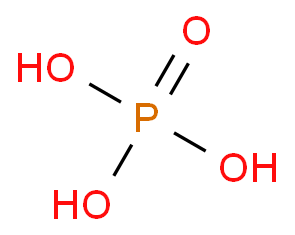
4, is a mineral acid that appears as a colorless, odorless, and viscous liquid. It is a non-volatile and non-flammable compound, highly soluble in water, and can also dissolve in ethanol. Phosphoric acid is widely used in various industries due to its acidity and its ability to act as a chemical intermediate. Its molecular structure consists of one phosphorus atom centrally bonded to four oxygen atoms, with three of these bonds connected to hydrogen atoms. Is PO4 polar or nonpolar?
What is polarity?
Polarity describes the uneven distribution of electrons in a molecule or compound. In chemistry, the polarity of a molecule refers to the uneven distribution of positive and negative charges, resulting in the molecule having positive and negative poles. This uneven distribution is typically due to differences in electronegativity between atoms.
Electronegativity is a measure of an atom's ability to attract electrons. The polarity or non-polarity of a bond between two atoms is determined by the electronegativity of the constituent elements. When there is a significant difference in electronegativity between two atoms, with an electronegativity difference ranging from 0.5 to 2, one atom will attract the shared electron pair more strongly, causing the electron pair in the covalent bond to be skewed toward one atom, giving it a partial negative charge, while the other atom carries a partial positive charge. In this case, the molecule exhibits polarity. Is PO4 polar or nonpolar?
Polar molecules display unique behaviors in chemical reactions and physical properties such as solubility, melting point, boiling point, etc. These properties make polar molecules important in many chemical and biological processes.
Polarity of H3PO4
Is PO4 polar or nonpolar? Phosphoric acid is a polar molecule due to its asymmetric molecular structure and the presence of polar bonds. Why is H3PO4 polar?
(1) Dipole Moment
Phosphoric acid contains three hydrogen atoms, each bonded to an oxygen atom, and one phosphorus atom bonded to an oxygen atom through a double bond. The oxygen atoms are highly electronegative, creating polar covalent bonds by attracting shared electron pairs toward themselves. This results in the hydrogen atoms having a partial positive charge and the oxygen atoms having a partial negative charge. The molecular structure of H
3PO
4 is tetrahedral but not symmetrical due to the different bond types (single and double bonds) and the lone pairs on the oxygen atoms. These factors cause the dipole moments of the bonds to not cancel out, resulting in a net dipole moment for the molecule, indicating that it is polar.
(2) Electronegativity
| Element Electronegativity |
| P |
2.19 |
| O |
3.44 |
The difference in electronegativity (3.44 - 2.19 = 1.25) is significant enough to create polar bonds.
Phosphoric acid's phosphorus and oxygen atoms have a considerable difference in electronegativity, leading to polar bonds within the molecule. The asymmetric distribution of these bonds results in an overall polar molecule.
The EN value of phosphoric acid is indicative of significant polarity.
Therefore,
phosphoric acid, H3PO4, is a polar molecule.
Application of H3PO4 Polarity
Phosphoric acid's polarity plays a crucial role in its applications in various industries. It is widely used as an acidifying agent in the food and beverage industry, particularly in soft drinks.
Its polarity allows it to dissolve well in water, enhancing its effectiveness as an acidulant. In the pharmaceutical industry, phosphoric acid is used as an intermediate in the production of certain drugs. Its polar nature also makes it suitable for use in dental products to clean and etch teeth before the application of fillings or sealants. Additionally, phosphoric acid is utilized in fertilizers, detergents, and cleaning agents due to its chemical properties, influenced by its polarity.
Highlight of Phosphoric Acid
| Phosphoric acid Cas 7664-38-2 |
| Molecular formula |
H3PO4 |
| Molecular shape |
Tetrahedral |
| Relative molecular mass |
98.00 g/mol |
| Solubility |
Highly soluble in water and ethanol |
| Melting point |
42.35 °C |
| Boiling point |
213 °C |





 1YR
1YR


