Isovaleraldehyde, as a chemical substance, poses potential hazards primarily concerning its impact on human health and the environment. This article will explore its possible toxic effects and relevant safety precautions.

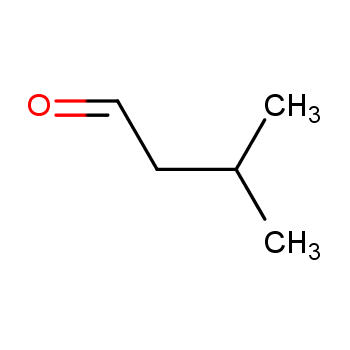
Isovaleraldehyde is a permitted edible flavoring in China, used in various fruit-flavored essences. Its derivatives such as isovaleric acid, isovaleramide, and isovalerate compounds are also employed in fragrance and personal care products. Additionally, isovaleraldehyde serves as a crucial raw material in the synthesis of various pharmaceutical intermediates, including Vitamin E and Pregabalin. The structural formula of isovaleraldehyde is as follows:
H225—Highly flammable liquid and vapor, Chemical hazard warning
H317—May cause an allergic skin reaction, Chemical hazard warning
H319—Causes serious eye irritation, Chemical hazard warning
H335—May cause respiratory irritation, Chemical hazard warning
H411—Toxic to aquatic life with long-lasting effects
Swallowing the liquid may result in inhalation into the lungs, posing a risk of chemical pneumonia and potentially severe consequences.
Although ingestion may not have adverse effects, the substance can still harm personal health, particularly upon contact with existing organs (e.g., eyes). Evidence suggests the substance may irritate some people's eyes, causing eye damage for 24 hours or longer after instillation.
Moderate inflammation with redness and swelling may occur; prolonged exposure may lead to conjunctivitis.
Direct contact or prolonged exposure may cause mild but severe skin inflammation. Repeated exposure can lead to contact dermatitis, characterized by redness, swelling, and blistering.
Skin contact may not harm health, but the substance can still cause damage if it enters the bloodstream through cuts, lesions, or abrasions.
Open cuts, abrasions, or inflamed skin should not come into contact with the substance. Bloodstream entry through cuts, abrasions, or lesions may result in systemic harm and adverse effects. Check skin before material use to ensure appropriate protection of any external damage.
This material may cause respiratory irritation in some people. The body's response to such irritation may result in further lung damage. Inhalation of vapors may lead to drowsiness and dizziness. This may be accompanied by anesthesia, decreased alertness, reflex loss, lack of coordination, and dizziness. Aldehyde contact can cause neurological symptoms such as headaches, drowsiness, dizziness, seizures, depression, and coma.
Cardiovascular involvement may lead to increased heart rate, fainting, and low blood pressure; respiratory system effects include throat spasms, irritation, swallowing difficulty, pulmonary edema, and asthma-like symptoms.
(1) Long-term exposure to respiratory irritants may cause respiratory diseases, including breathing difficulties and related systemic problems.
(2) Limited evidence suggests repeated or prolonged occupational exposure may accumulate health effects on organs or biochemical systems.
(3) Limited evidence suggests contact with this product is more likely to cause sensitization reactions in some people than the general population.
(4) Contact with aliphatic aldehydes can cause skin irritation.
(5) Long-term inhalation of solvents may cause damage to the nervous system as well as liver and blood changes.
Isovaleraldehyde is toxic to aquatic organisms, including fish, algae, and invertebrates. This is because it can disrupt their respiratory systems and other critical functions. Even small amounts of isovaleraldehyde can have negative impacts on aquatic ecosystems.
A. Toxicity to Fish:
LC50; Species: Pimephales promelas (fathead minnow, 30 days old, average length 20.4 mm, average weight 0.127 g); Conditions: flow-through, 23.9°C pH 7.58, hardness 49.3 mg/L CaCO3, alkalinity 47.8 mg/L CaCO3, dissolved oxygen 6.9 mg/L; Concentration: 3.25 mg/L, 96 hours (95% confidence limit: 2.98-3.54 mg/L) / 97.3% purity.
B. Toxicity to Water Fleas and Other Aquatic Invertebrates:
EC50; Species Daphnia magna (water flea); Concentration: 210.0 mg/L, 24 hours; Effect: immobilization / no specific biological test conditions detected in the detected source.
C. Toxicity to Algae:
EC50; Species Scenedesmus subspicatus (algae); Concentration: 80.0 mg/L, 72 hours; Effect: growth inhibition / no specific biological test conditions specified in the detected source.
When isovaleraldehyde is released into the air, it causes smoke formation. It also irritates the eyes, nose, and throat of the inhaler.
When sprinkled on soil, isovaleraldehyde pollutes the soil and harms plants and other organisms living there.
Consult a doctor. Present the safety data sheet to the attending physician.
Breathe fresh air, rest.
Rinse thoroughly, then wash skin with water and soap.
Rinse with plenty of water (if possible, remove contact lenses).
Rinse your mouth. Do not induce vomiting.
Inhalation can cause chest discomfort, nausea, vomiting, and headache. Liquid contact with eyes or skin causes irritation. Ingestion causes irritation of the mouth and stomach. (U.S. Coast Guard, 1999)
Immediate first aid: Ensure thorough decontamination. If the patient is not breathing, start artificial respiration, preferably using demand valve resuscitator, bag-valve-mask device, or pocket mask, trained. If necessary, perform cardiopulmonary resuscitation. Immediately rinse contaminated eyes with gently flowing water. Do not induce vomiting. If vomiting occurs, the patient should lean forward or to the left (if possible, head down) to maintain an open airway and prevent aspiration. Keep the patient calm and maintain normal body temperature. Medical treatment.
Safety glasses with side shields meet EN166 standards. Use eye protection devices tested and approved according to appropriate government standards (e.g., NIOSH (U.S.) or EN 166 (EU)).
Wear impermeable clothing. The type of protective equipment must be selected according to the concentration and quantity of hazardous substances in specific workplaces. Handle with gloves. Gloves must be checked before use. Use appropriate glove removal technique (do not touch the outer surface of gloves) to avoid skin contact with this product. After use, dispose of contaminated gloves according to applicable laws and good laboratory practices. Wash hands and dry them. Selected protective gloves must comply with EU Directive 89/686/EEC and its derivative standard EN 374.
Wear dust masks when handling large quantities of items.
Avoid contact with skin and eyes. Avoid the formation of dust and aerosols. Avoid exposure. Provide appropriate exhaust ventilation in places where dust is formed.
Fireproof. Sealed. Stored in a place without drainage or sewerage. Store toxic or decomposable substances into toxic components. It should be stored in a cool, well-ventilated place, away from direct sunlight, fire-prone areas, and should be checked regularly. Incompatible materials should be isolated.
Isovaleraldehyde, as a chemical substance, has potential skin irritant and respiratory system irritant properties that may have adverse effects on human health. Therefore, strict adherence to safety operating procedures, effective protective measures must be taken during production and use to minimize isovaleraldehyde hazards and ensure the safety of operators and the environment.
[1] https://oq.com/api/product/chemical/download?id=3c2f6002-f06c-4bad-becc-50d690ccf3a1
[2] https://www.acs.org/molecule-of-the-week/archive/i/isovaleraldehyde.html
[3] https://datasheets.scbt.com/sc-250204.pdf
[4] http://www.vikit.cn/msds/590-86-3.html
[5] Jiangsu Hongbang Chemical Technology Co., Ltd. A method for preparing isovaleraldehyde by rearranging 3-methyl-3-buten-1-ol. 2023-09-05.
 |
|
|



 3YRS
3YRS