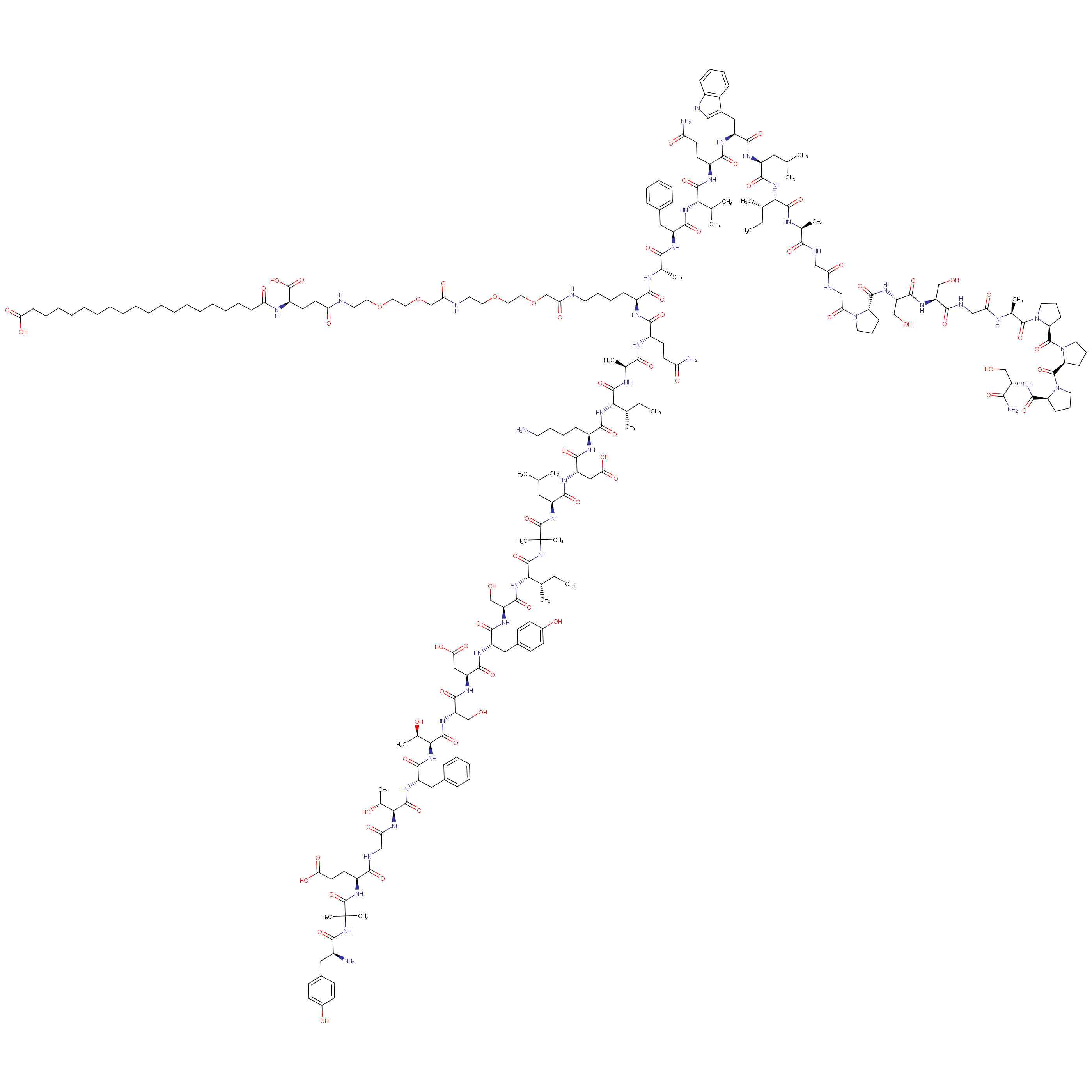
Tirzepatide (Tizepatide, abbreviated TZP) is a dual agonist of glucose-dependent insulinotropic peptide (GIP) receptor and glucagon-like peptide-1 (GLP-1) receptor, developed by Eli Lilly. It was approved by the U.S. FDA as a weight loss drug in November 2023. Tirzepatide is currently the most effective weight loss drug on the market and has repeatedly set new records for weight loss effectiveness in clinical trials.
On April 8, 2025, researchers from Eli Lilly and the Pennington Biomedical Research Center published a research paper in the journal Cell Metabolism titled: "Tirzepatide did not impact metabolic adaptation in people with obesity, but increased fat oxidation." This study comprehensively reveals the weight loss mechanism of Tirzepatide in terms of caloric intake, energy expenditure, and macronutrient utilization.
This latest study is the first to comprehensively uncover the weight loss mechanisms of Tirzepatide in caloric intake, energy expenditure, and macronutrient utilization.

In this study, the research team conducted a preclinical study and a Phase 1 clinical trial to understand the potential mechanisms of Tirzepatide-induced weight loss in obese mice and humans.
In obese mice with caloric intake restriction, long-term use of Tirzepatide significantly reduced the decrease in energy expenditure observed in placebo-treated and pair-fed mice, suggesting that Tirzepatide may alleviate metabolic adaptation. The respiratory exchange ratio (the ratio of CO? output per minute to O? consumption per minute) in Tirzepatide-treated mice also decreased, indicating an increase in fat oxidation.
In the clinical trial, Tirzepatide appeared to have no effect on metabolic adaptation, but it increased fat oxidation during free-feeding meal tests and reduced appetite and caloric intake (compared to placebo).
The key findings of this study include:

This study is the first to fully reveal the weight loss mechanism of Tirzepatide in terms of caloric intake, energy expenditure, and macronutrient utilization.
Eric Ravussin, Guillermo Sanchez-Delgado, Corby K. Martin, Robbie A. Beyl, Frank L. Greenway, Libbey S. O’Farrell, William C. Roell, Hui-Rong Qian, Jing Li, Hiroshi Nishiyama, Axel Haupt, Edward J. Pratt, Shweta Urva, Zvonko Milicevic, Tamer Coskun, Tirzepatide did not impact metabolic adaptation in people with obesity, but increased fat oxidation, Cell Metabolism, 2025, ISSN 1550-4131, https://doi.org/10.1016/j.cmet.2025.03.011. (https://www.sciencedirect.com/science/article/pii/S1550413125001147)
Abstract:
Summary
Keywords: adaptive thermogenesis; energy balance; energy expenditure; fat oxidation; GIP; GLP-1; obesity; sleeping metabolic rate; energy intake; weight loss
|
 |



 2YRS
2YRS


