Methyltrimethoxysilane (MTMS) plays a crucial role in scientific research and industrial applications as an important organosilicon compound. Its unique chemical structure and properties give it a wide range of uses in areas such as coatings, sealants, and adhesives. However, the hydrolysis of methyltrimethoxysilane is a topic of significant interest, as it affects its properties and application effectiveness. Understanding the secrets of methyltrimethoxysilane and delving into its hydrolysis mechanism will help us better understand the characteristics and application potential of this compound.
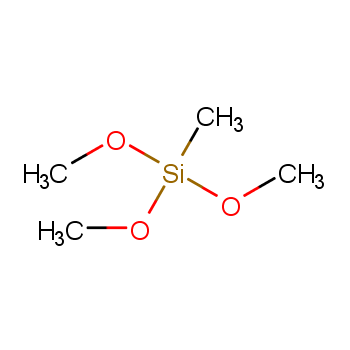
Methyltrimethoxysilane (MTMS) is not only highly valuable itself but also enriches the variety of silane coupling agent products due to the diversity of its derivatives. MTMS is an important silane coupling agent product, characterized by a central silicon atom bonded to one methyl (CH3) and three methoxy (CH3O-) groups. This combination makes MTMS a versatile precursor, facilitating chemical transformations. In industries like construction and pharmaceuticals, MTMS is used to create waterproof coatings, modify surfaces for enhanced adhesion, and even serve as a precursor to synthetic silica materials.
However, there is a paradox when it comes to water solubility. Is methyltrimethoxysilane soluble in water? Although methoxy groups exhibit affinity for water, the entire molecule undergoes hydrolysis (reacts with water) to form solid materials. Essentially, MTMS is insoluble in water but readily reacts with it, transforming into a new, typically waterproof material.

At the core of hydrolysis is the decomposition reaction of water (H2O) molecules. In the presence of methyltrimethoxysilane (MTMS), each methoxy group (CH3O-) bonded to the silicon atom is susceptible to attack by water molecules. This reaction replaces the methoxy group with a hydroxyl group (OH-), ultimately converting liquid MTMS into solid materials containing silanol (Si-OH) bonds.
The oxygen atoms in water act as nucleophilic reagents, attracted to the positive charge of the silicon atom. This attraction weakens the silicon-methoxy bonds, causing the methoxy group to detach and be replaced by a hydroxyl group from water. Each methoxy group can undergo this hydrolysis, resulting in partially, singly, or fully hydrolyzed silanol groups, depending on reaction conditions.
Environmental factors play a crucial role in influencing the rate and extent of hydrolysis. Higher temperatures typically accelerate reactions by increasing molecular kinetic energy. More acidic or alkaline environments (lower or higher pH, respectively) can enhance reaction rates compared to neutral conditions. Additionally, catalysts (usually acids or bases themselves) can significantly expedite the hydrolysis process by providing an alternative reaction pathway with lower activation energy. By manipulating these factors, scientists can control the extent of hydrolysis and adjust the properties of the final material.
Hydrolysis, the reaction of methyltrimethoxysilane (MTMS) with water, yields a range of valuable properties. The most fundamental benefit is the conversion of MTMS (a liquid precursor) into a solid form. This transformation allows for the creation of films, coatings, and even intricate structures. Compared to the starting liquid, these solid materials exhibit greater stability, making them an ideal choice for applications requiring durability.
By controlling the hydrolysis process, scientists can tailor the properties of materials for specific applications. For example, altering hydrolysis conditions can influence the porosity, flexibility, or even hydrophobicity of the final product. This ability to fine-tune properties makes MTMS hydrolysis a powerful tool across various fields, from creating waterproof coatings to designing microporous materials for filtration.
Progress has been made in ensuring environmentally friendly practices in MTMS hydrolysis. Researchers are exploring alternative catalysts and reaction conditions to minimize waste and environmental impact. This ongoing pursuit of sustainable hydrolysis methods ensures responsible use of MTMS while maximizing its potential benefits.
Research on MTMS hydrolysis is continually evolving. Scientists are exploring innovative processes utilizing alternative catalysts (such as enzymes) to achieve more selective hydrolysis and minimize waste. Additionally, there is a growing focus on environmentally friendly approaches driven by sustainability concerns. This may involve using bio-based solvents or optimizing reaction conditions to reduce energy consumption. Looking ahead, these advancements hold the promise of unlocking new applications for MTMS hydrolysis. We can expect to see more sophisticated coatings, next-generation medical implants, and potential new materials in fields like electronics and energy storage. With ongoing refinement of this technology, the potential of MTMS hydrolysis seems limitless.
While MTMS itself is a relatively affordable starting material, the overall cost-effectiveness of hydrolysis depends on several factors. The choice of catalysts, reaction conditions, and desired product purity all play a role. However, the potential for customized properties and the durability of the final material often outweigh the initial investment.
Compared to other silanes like tetramethoxysilane (TMOS), MTMS hydrolysis offers a key advantage: faster reaction rates. The presence of methyl groups in MTMS slightly hinders the formation of Si-O-Si bonds, leading to faster hydrolysis. This characteristic makes MTMS particularly suitable for applications requiring precise control over the structure and performance of the final product.
For optimal results, experts recommend carefully considering the desired properties of the final material. Customizing hydrolysis conditions, such as the ratio of water to MTMS and reaction temperature, allows precise control over the extent of hydrolysis and the formation of specific silanol structures. Adopting well-defined reaction schemes and using appropriate analytical techniques to monitor progress are essential for achieving consistent and high-quality results.
Understanding and mastering the hydrolysis mechanism of methyltrimethoxysilane will help us better harness the potential of this compound. By optimizing the hydrolysis process, we can more efficiently release the active groups of methyltrimethoxysilane, thereby providing more possibilities for its application in coatings, sealants, adhesives, and beyond. This not only helps improve the performance and quality of products but also contributes to cost reduction and promotes sustainability.
[1]https://link.springer.com/article/10.1134/S0020168516060108
[2]https://www.britannica.com/science/hydrolysis
[3]https://www.mdpi.com/2310-2861/9/9/720
[4]https://en.wikipedia.org/wiki/Methyltrimethoxysilane
[5]Du H W, Yao Z P, Xin Z J, et al. Research Progress on the Synthesis of Methyltrimethoxysilane[J]. Silicone Materials, 2023, 37(01):85-87.
|
 |
 |


 15YRS
15YRS