
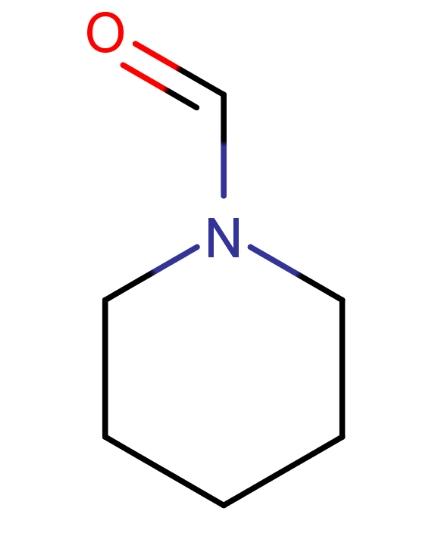
N-Formylpiperidine is an organic compound with a unique structural feature. N formylpiperidine chemical formula is C6H11NO. Its molecular framework consists of a six-membered piperidine ring made up of one nitrogen atom and five carbon atoms, with the nitrogen atom bonded to a formyl group. The basicity of the piperidine ring and its hydrogen bonding capability, along with the polarity of the formyl group, confer unique physical and chemical properties to N-Formylpiperidine. The steric hindrance of the six-membered ring impacts the reactivity of the formyl group, making it behave differently in chemical reactions compared to simpler amides.
N-Formylpiperidine has a wide range of applications:
N-Formylpiperidine can be used as a polar aprotic solvent with better hydrocarbon solubility than other amide solvents like dimethylformamide (DMF). It is also used to transfer the formyl group to Grignard reagents:
PhCH2CH2MgCl + C6H11NO → PhCH2CH2CHO
In certain formylation reactions involving organolithium compounds, N-Formylpiperidine yields higher than DMF. In formylation reactions, N-Formylpiperidine acts as a formylating agent, transferring the formyl group to the target molecule. The specific target molecule and reaction pathway vary depending on the chemical reaction or biological application.
Na Zhang and colleagues utilized pure N-Formylpiperidine as a novel solvent for the facile and surfactant-free synthesis of polyhedral Pt-Ni alloy nanoparticle electrocatalysts. Unlike the widely used surfactant-based colloidal synthesis, nanoparticles made from pure N-Formylpiperidine have a directly accessible surface for electrocatalytic reactions, making it an attractive alternative solvent. Region-specific oxygen reduction reaction (ORR) activity is significantly higher than the commercial Pt/C catalyst reference value, reaching as high as 1.12 mA cm -2 for Pt-Ni alloy nanoparticles.
N-Formylpiperidine is involved in the synthesis of drug molecules containing a piperidine moiety, one of the most important synthetic fragments in drug design. Piperidine cycles are very common in pharmaceuticals. Its derivatives are used in over 20 drugs, including anticancer drugs, Alzheimer’s disease treatments, antibiotics, analgesics, antipsychotics, and antioxidants.
Additionally, piperidine is part of many biologically active alkaloids. For example, atropine (clinically used to treat vomiting, nausea, and bradycardia, and as an effective drug for slowing the progression of myopia) and morphine (an analgesic for relieving severe pain, used as a third-line therapy for neuropathic pain) contain a fused piperidine ring.
N-Formylpiperidine is used in the production of polymers, resins, and other industrial chemicals. N-Formylpiperidine finds multiple uses in the processing of polymers such as polyacrylonitrile, nylon, and polysulfone.
Anil Suri and colleagues reported an improved and elegant method for the covalent formylation of single-walled carbon nanotubes (SWNT) through formyl group transfer from N-Formylpiperidine, potentially opening the door to more extensive chemical modification of carbon nanotube (CNT) walls than possible through other reported functionalization methods. Unlike the currently used carboxylation routes, the formylation reaction does not damage the original CNT structure and involves fewer steps and requires less time than most other reported routes. UV-visible near-infrared spectroscopy suggests limited disruption of the inherent electronic structure of single-walled carbon nanotubes. TGA-MS functionalization degree estimates confirm this, suggesting it could be as low as 2% (atomic).
N-Formylpiperidine is used in the synthesis of bioactive compounds, including drugs and agrochemicals. Piperidine derivatives have insecticidal bioactivity and can be used to prepare various pesticides and insecticides.
N-Formylpiperidine is highly toxic, posing hazards if ingested, and is toxic upon skin contact. It can cause severe eye irritation and may irritate the respiratory system. N-Formylpiperidine's flammability is marked as 2 on the NFPA 704 scale, indicating moderate flammability. When handling this compound, it is recommended to wear full protective gear, including protective clothing, goggles, face shields, and gloves, to avoid skin and eye contact. Dust and aerosol generation should be avoided, and it should be stored in a cool, dry, and well-ventilated place, ensuring the container is tightly sealed.
N-Formylpiperidine is a derivative of the cyclic secondary amine piperidine. Compared to similar compounds such as N-methylpiperidine, the introduction of the formyl group (CHO) adds a carbonyl functional group, significantly altering its chemical properties and applications. The presence of the carbonyl allows for reactions such as condensation, hydrolysis, and reduction, which are not possible with N-methylpiperidine. Due to these differences, N-Formylpiperidine is often used as a precursor in the synthesis of various compounds, including pharmaceuticals, agrochemicals, and materials.
[7] Frolov NA, Vereshchagin AN. Piperidine derivatives: recent advances in synthesis and pharmacological
|


 1YR
1YR

