
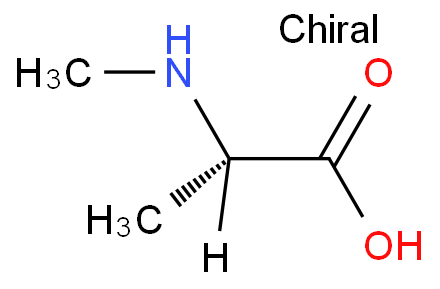
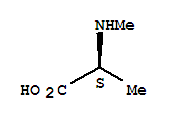
N-Methyl-L-alanine is a chemical substance with the formula C5H11NO and a molecular weight of 101.15. Many physiologically active natural products are composed of optically pure N-Methyl-L-alanine, which plays a crucial role in the conformational and physiological activity information of peptide molecules. N-methylation can reduce the number of isomeric forms by restricting the flexibility of the peptide backbone. This structural modification not only affects the interaction between peptide molecules and receptors, but also significantly enhances biological activity compared to non-N-methylated peptides. Additionally, peptides containing N-Methyl-L-alanine and its analogs exhibit greater resistance to protease degradation. N-Methyl-L-alanine can also inhibit viral proliferation, suppress tumor cell growth, and enhance immune response. Furthermore, this compound has been identified as a biological product and can be synthesized through enzymatic methods.

Polymeric N-methyl amino acid series products are considered green chemistry products. Low molecular weight poly-N-methyl amino acids can be widely used in detergents, developing solutions, and various other industrial applications. They are characterized by their biodegradability in natural environments, non-toxicity, and ability to replace traditional chemical cleaners and developing agents. There are also amino acid series products used in cosmetics, which are non-irritating to the skin and can replace chemical matrices in cosmetics. In summary, N-methyl amino acid products are extensively used in various industrial sectors and are recognized as green chemistry products in everyday production and life.
In the pharmaceutical field, N-Methyl-L-alanine and its derivatives are actively used in clinical research for treating liver diseases, cardiovascular diseases, ulcers, neurological disorders, inflammation, and more. Numerous types of N-Methyl-L-alanine and its derivatives are employed in pharmaceuticals. Additionally, N-Methyl-L-alanine and its derivatives can act as antibiotics and antimicrobial enhancers.
N-Methyl-L-alanine is a non-proteinogenic amino acid with a non-polar side chain, where one amino hydrogen of L-alanine is replaced by a methyl group. It has been identified as one of the amino acids present in meteorites. N-Methyl-L-alanine is used in the preparation of angiotensin II and ephedrine for medical purposes.
N-Methyl-L-alanine infusions for infants are designed considering their high nitrogen and energy retention needs due to their rapid growth, incomplete kidney function, and poor nutrient processing capability of liver and other tissues. High-content branched-chain N-methyl amino acids and N-methyl arginine, combined with appropriate amounts of glucose, vitamins, and electrolytes, are used. For kidney disease, N-Methyl-L-alanine infusions produce little to no nitrogen, improve nutritional and metabolic status, alleviate uremia symptoms, achieve positive nitrogen and potassium balance, and enhance serum protein levels to improve kidney function.
A variant of this compound, β-Methylamino-L-alanine (BMAA), is a non-proteinogenic amino acid that can induce long-term cognitive deficits in adult rodents following short-term exposure, as well as neurodegenerative and intracellular fibrous formation increases in the hippocampus and long-term exposed macaque brains. It is also believed to be associated with the etiology of human neurodegenerative diseases. Studies suggest that BMAA can interfere with metabolic pathways involved in neurotransmission in human neuroblastoma cells.
According to the 2012 OSHA Hazard Communication Standard (29 CFR 1910.1200), this chemical is classified as non-hazardous. However, caution should still be exercised when handling N-Methyl-L-alanine. Dust formation, ingestion, inhalation, and direct contact with skin, eyes, and clothing should be avoided. Appropriate personal protective equipment should be used, and the work area should be well-ventilated. If the chemical contacts the skin, it should be washed immediately with plenty of water for at least 15 minutes. If skin irritation persists, medical attention should be sought promptly.
N-Methyl-L-alanine shows significant potential in biochemistry and drug development, particularly in modulating neurotransmission and promoting cellular function. We encourage further exploration of the various applications of this compound and suggest using the Guidechem platform to find reliable N-Methyl-L-alanine suppliers for your procurement needs.
[1]Li Yue. Study on the synthesis process of chiral n-methylalanine[D]. Shandong: Qingdao University of Science and Technology, 2015. DOI:10.7666/d. Y2774129.
[2]https://baike.baidu.com/item/N-%E7%94%B2%E5%9F%BA-L-%E4%B8%99%E6%B0%A8%E9%85%B8
[3]https://www.fishersci.com/store/msds
[4]Neeman E M, Leon I, Alonso E R, et al. The effect of N-methylation on the conformational landscape of alanine: the case of N-methyl-l-alanine[J]. Physical Chemistry Chemical Physics, 2018, 20(46): 29159-29165.
[5]Engskog M K R, Ersson L, Hagl?f J, et al. β-N-Methylamino-l-alanine (BMAA) perturbs alanine, aspartate and glutamate metabolism pathways in human neuroblastoma cells as determined by metabolic profiling[J]. Amino Acids, 2017, 49: 905-919.
|


 15YRS
15YRS


