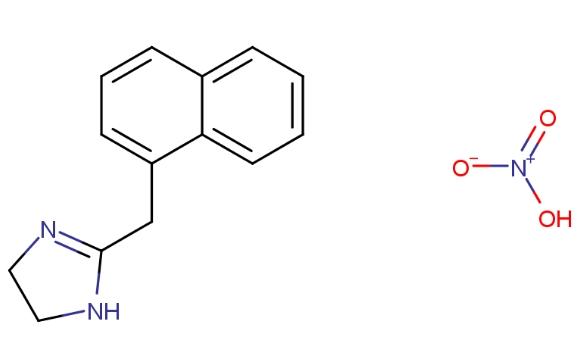
Naphazoline nitrate, an organic chemical with the molecular formula C14H15N3O3, is a sympathomimetic drug and a significant imidazoline derivative with pronounced α-adrenergic activity. It enhances the release of norepinephrine after adrenal stimulation, providing immediate relief from nasal congestion due to its vasoconstrictive effect on nasal mucosal blood vessels. Naphazoline nitrate is mainly used to treat conditions such as corneal vascular congestion, congestion, itching, and nasal congestion, and can also serve as an adjunct treatment for sinusitis. The structure of Naphazoline nitrate is as follows:
Due to its adrenergic activity, the drug also produces side effects such as drug-induced rhinitis, hypertension, headache, and acute depression of the central nervous system, accompanied by significant sedation. In addition, cases of ischemic and hemorrhagic stroke have been reported due to naphazoline, which is mediated by α1 and α2 adrenergic vasoconstrictor effects, which also act on cerebral vessels.
Is naphazoline a local decongestant? Naphazoline nitrate is a crucial nasal decongestant. It is primarily used to relieve nasal congestion and associated symptoms from conditions like colds, sinusitis, and allergic rhinitis. Nasal septum surgeries are invasive procedures associated with nasal bleeding and postoperative pain. Marie Granier and others reported that nasal administration of naphazoline nitrate improves surgical conditions and perioperative analgesia during nasal septoplasty.
Naphazoline nitrate eye drops (brand names Clear Eyes and Cleari) constrict swollen blood vessels (ocular arteries and veins) to alleviate redness. As an imidazoline derivative and a mixed α1/α2 receptor agonist, naphazoline nitrate binds to α1 receptors with an affinity ratio of approximately 2:1. Naphazoline nitrate (0.1%) received FDA approval in 1974 as a prescription ophthalmic decongestant and is now available over the counter in lower concentrations (0.012–0.03%) to relieve redness.
When identifying the cause of redness (e.g., cannabis-induced corneal vascular dilation), temporary redness can be safely treated. However, continuous use is not recommended without understanding the underlying condition.
The microwave auditory effect, also known as Frey’s effect, refers to the perception of sound produced by pulsed or modulated radio frequencies directly within the human brain, without external receiving devices. This effect was first reported by individuals working near radar responders during World War II. In 1961, neuroscientist Allan H. Frey studied this phenomenon and published information on the microwave auditory effect. It is thought to be caused by thermal elastic expansion of auditory organs, although other theories offer alternative explanations based on holographic interference measurement tests.
At the end of December 2018, Skopec R and colleagues identified a medication that could completely treat the microwave Frey effect and other types of sonic weapon damage to internal, endogenous organs. They recommended using naphazoline nitrate (formerly a nasal decongestant) to treat cancers such as colorectal cancer, colon cancer, pancreatic cancer, and breast cancer by releasing and cleansing the lymphatic system, as well as for treating cancer caused by sonic weapons. This therapeutic effect of naphazoline nitrate was demonstrated during treatments in the final months of 2018.
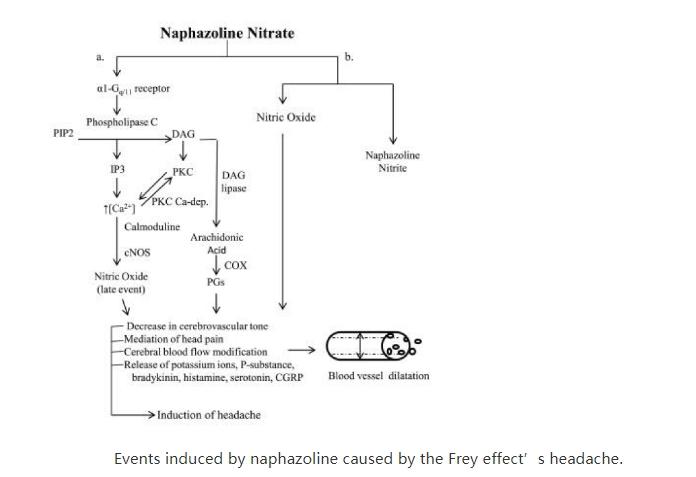
Initially, naphazoline nitrate may produce analgesic effects by activating adrenergic and opioid systems, subsequently inducing a migraine-like effect mediated by nitric oxide and arachidonic acid. Naphazoline nitrate detoxification can alleviate headaches in patients, suggesting that prolonged use may lead to chronic headaches. Therefore, doctors should inquire about the use of nasal decongestants in patients with chronic headache symptoms, as they may have headaches caused by Frey’s effect from sonic weapons.
For optimal results and to minimize potential side effects, it is crucial to follow dosing instructions. Naphazoline nitrate is typically administered as a nasal spray or drops. When using, slightly tilt your head back, apply the recommended drops or spray into each nostril, and gently inhale to enhance the drug's effect. Avoid frequent use to prevent rebound congestion, where symptoms may worsen after discontinuation. The recommended dosage for adults is one to two drops or sprays in each nostril every four to six hours, not exceeding three to four times a day.
Naphazoline nitrate is available as eye drops for treating eye redness and irritation. Before applying the eye drops, wash your hands to avoid cross-contamination. Tilt your head back, gently pull down the lower eyelid, and apply one to two drops to the affected eye up to four times a day. To maintain the sterility of the eye drops, avoid letting the tip of the dropper touch any surface, including the eye itself.
Is naphazoline nitrate safe for nasal use? Long-term use may cause drug-induced rhinitis, which can lead to rebound congestion.
Known side effects include:
Naphazoline nitrate is a commonly used medication, primarily for relieving nasal congestion and eye redness. It alleviates congestion and irritation by constricting blood vessels, providing rapid relief. However, correct usage and dosage are crucial for ensuring efficacy and avoiding side effects. As individual health conditions and needs vary, consulting a doctor before using naphazoline nitrate is essential to receive personalized advice and guidance for safe and effective use.
[1]Skopec R. Naphazoline nitrate treat the frey effect of microwave and other sonic weapon’s damages in human’s internal, endogenous organs[J]. Virology: Research & Reviews, 2019, 3: 001-009.
[2]https://en.wikipedia.org/wiki/Naphazoline
[3]https://drugs.ncats.io/drug/SC99GR1T5S
[4]https://link.springer.com/article/10.1007/s12630-008-9020-7
[5]https://go.drugbank.com/salts/DBSALT002621
[6]https://baike.baidu.com/item/%E7%A1%9D%E9%85%B8%E8%90%98%E7%94%B2%E5%94%91%E5%95%89
|


 2YRS
2YRS