
Sweeteners are additives that give food or beverages a sweet taste.
With societal development and improved living standards, the demand for sugar has increased, making the sweetener industry crucial within the additives sector. Sweeteners can be classified based on their nutritional value into nutritive and non-nutritive sweeteners; by caloric content into sugar-based and non-sugar sweeteners; and by origin into natural and artificial sweeteners. In China, over 20 sweeteners are approved for use, detailed as follows:
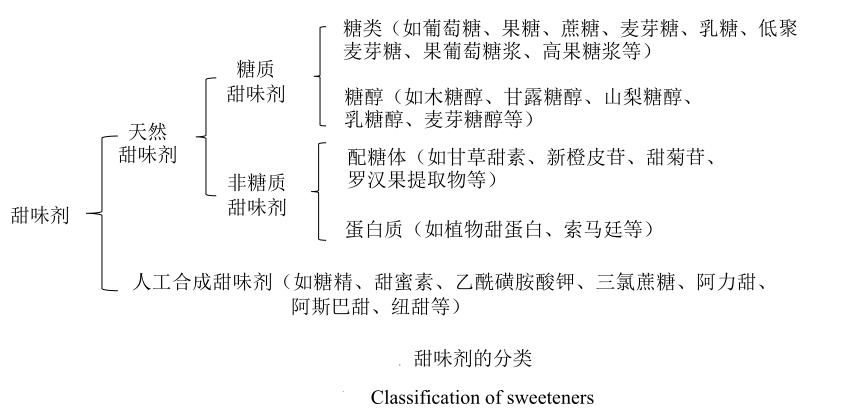
Sucrose, a traditional nutritive sweetener, has long been favored by the food processing industry due to its pure taste, safety, and ease of dissolution. Historically, it has been widely used. However, due to its high caloric content and nutritional richness, excessive intake can lead to health issues such as obesity and high blood pressure, especially for diabetic patients. Therefore, developing low-calorie and higher-sweetness alternatives is of significant practical importance.
Low-calorie sweeteners are often highly sweet, low in calories, tooth-friendly, and generally do not participate in metabolic processes, meeting the consumer demand for low-calorie foods. Non-nutritive sweeteners with sweetness equivalent to sucrose but with less than 2% of its caloric value are known as non-nutritive sweeteners. These include both non-nutritive natural sweeteners such as Neo-hesperidin, Stevioside, Glycyrrhizin, and Monk Fruit Extract, and artificial sweeteners like Saccharin, Sweet One, Ace-K, Sucralose, Alitame, Aspartame, and Neotame.
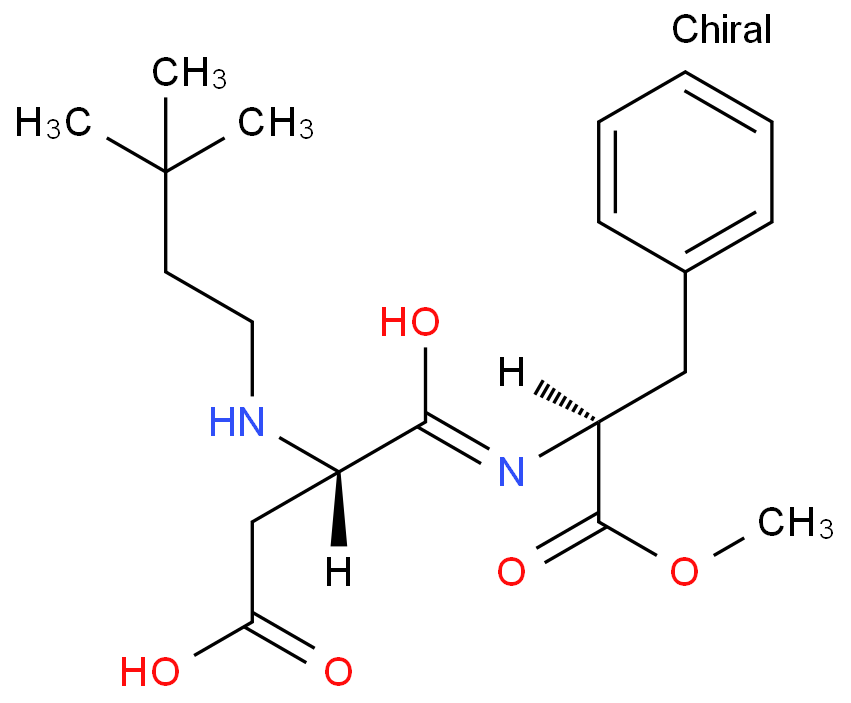
Neotame, chemically known as N-[N-(3,3-dimethylbutyl)-L-α-aspartyl]-L-phenylalanine 1-methyl ester, is abbreviated as NTM. The structural formula of Neotame is shown below:
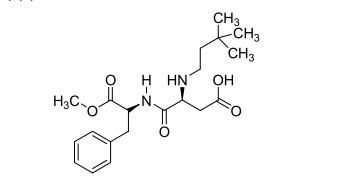
Neotame is a new-type sweetener and flavor enhancer characterized by its lack of energy, absence of off-tastes, and sugar-like taste. It appears as a white crystalline powder. Neotame's sweetness is 8,000 times that of sucrose and 30–40 times that of Aspartame.
Aspartame, chemically known as L-aspartyl-L-phenylalanine methyl ester, commonly referred to as sweetener or aspartame, is abbreviated as APM. The chemical structure of Aspartame is shown below:
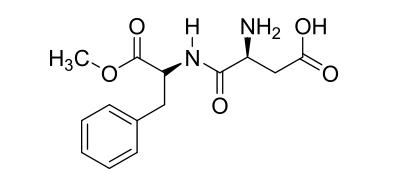
Aspartame appears as a white crystalline powder and is an artificial high-efficiency sweetener. Composed of two amino acids, Aspartame is completely metabolized in the body. Due to its high sweetness, the daily allowable intake of Aspartame is 2g, equivalent to 400g of sucrose, and is considered safe for the body.
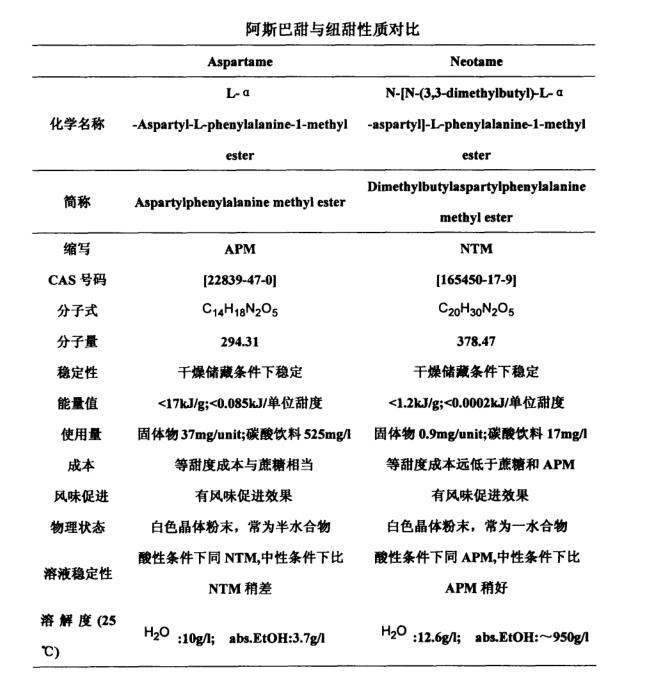
Aspartame has a rich sweetness, and its diluted sweetness resembles that of sucrose, without any bitter or metallic aftertaste, enhancing fruity flavors in beverages. How much sweeter is Neotame compared to Aspartame? Neotame is 30-40 times sweeter than Aspartame. Neotame provides a clean sweetness without bitterness or metallic taste and can enhance other flavors. Reports suggest that Neotame extends the sweetness of chewing gum and prolongs the perception of other flavors compared to other high-efficiency sweeteners. When used with nutritive and other non-nutritive sweeteners, it can produce a synergistic sweetness (for instance, a mixture of Neotame and Saccharin can be up to 14%-24% sweeter than the combined predicted sweetness of the two sweeteners).

Aspartame has poor stability to acid and heat; it hydrolyzes in acidic or high-temperature environments, generating bitter-tasting phenylalanine or diketopiperazine, making it unsuitable for baked goods above 150°C and highly acidic foods.
Furthermore, since Aspartame can be broken down into phenylalanine, aspartic acid, and methanol in the gastrointestinal tract, it is not suitable for individuals with phenylketonuria (PKU). Labels must indicate "Not suitable for individuals with phenylketonuria."
Neotame exhibits five excellent characteristics of non-nutritive sweeteners: high sweetness, strong solubility, good stability, high safety, and relatively low cost.
Scientific research continually supports the FDA's conclusion that Aspartame is safe for the general population under good manufacturing practices and specified conditions. The FDA's acceptable daily intake (ADI) provides effective protection for public health. However, individuals with phenylketonuria should avoid or limit Aspartame intake due to their inability to metabolize phenylalanine effectively.
The FDA regulates Neotame as a food additive. In 2002, the FDA approved Neotame for use as a general sweetener and flavor enhancer in food (excluding meat and poultry) under specific conditions. Neotame is heat-stable, meaning it maintains its sweetness even during baking, making it suitable as a sugar substitute in baked goods.
To ensure Neotame's safety, the FDA reviewed data from over 110 animal and human studies to assess potential toxic effects, including impacts on the immune, reproductive, and nervous systems.
While sweeteners and flavor enhancers can replace caloric sugar and maintain sweetness in various products, their impact on appetite and endocrine responses in solid foods with reduced or no sugar remains controversial. Recent studies suggest that some artificial sweeteners, such as Saccharin, may disrupt gut microbiota and further affect host health, such as inducing glucose intolerance.
With its excellent features, such as high sweetness, pure taste, good stability, and non-cariogenic properties, Neotame can be used alone or in combination with other non-nutritive and nutritive sweeteners in a variety of food and beverage products. Neotame is expected to be widely used in the food, beverage, hygiene, personal care, cosmetics, pharmaceutical, and veterinary product industries.
Aspartame is approved for use in over 130 countries and regions, widely used in the food and pharmaceutical industries. In China, Aspartame was approved for use in the food industry in 1986. The FDA first authorized Aspartame as a tabletop sweetener, for gum, cold breakfast cereals, and some dry food bases (e.g., beverages, instant coffee and tea, gelatin, pudding and fillings, and dairy products and ingredients) in 1974. Since then, the FDA has approved Aspartame for other uses, including as a general sweetener, in 1996.
When selecting a sweetener, its suitability for specific applications should be considered. For example, Aspartame is unsuitable for high-temperature baking due to its poor heat stability. Highly acidic foods also do not suit Aspartame because of its poor stability in acidic conditions. Additionally, Aspartame is not suitable for individuals with phenylketonuria, so its use should be avoided in foods intended for these individuals. Given these characteristics, other sweeteners may be more appropriate.
[1]Cao Ying. Synthesis of neotame intermediate neohexanal[D]. Southwest University of Science and Technology, 2018.
[2]Li Yanbo. Synthesis and characterization of a new type of neotame analogue[D]. Jinan University, 2018.
[3]Jiang Yaqin. Research on the synthesis process of new sweetener neotame[D]. Hebei University of Technology, 2017.
[4]Yu Xiaoying. Synthesis and application of new sweetener neotame[D]. Shandong University, 2016.
[5]Shu Xiaokang. Development of a new strong sweetener - neotame[D]. Jinan University, 2006.
[6]https://www.ncbi.nlm.nih.gov/pmc/articles/PMC6017827/
[7]https://www.fda.gov/food/food-additives-petitions/aspartame-and-other-sweeteners-food
[8]https://www.sciencedirect.com/topics/agricultural-and-biological-sciences/neotame
[9]https://www.ncbi.nlm.nih.gov/pmc/articles/PMC11026940/
|
 |
 |


 13YRS
13YRS


