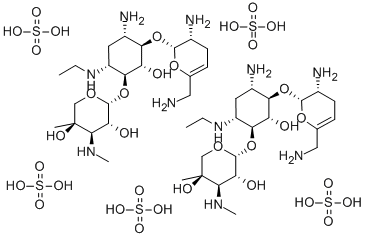
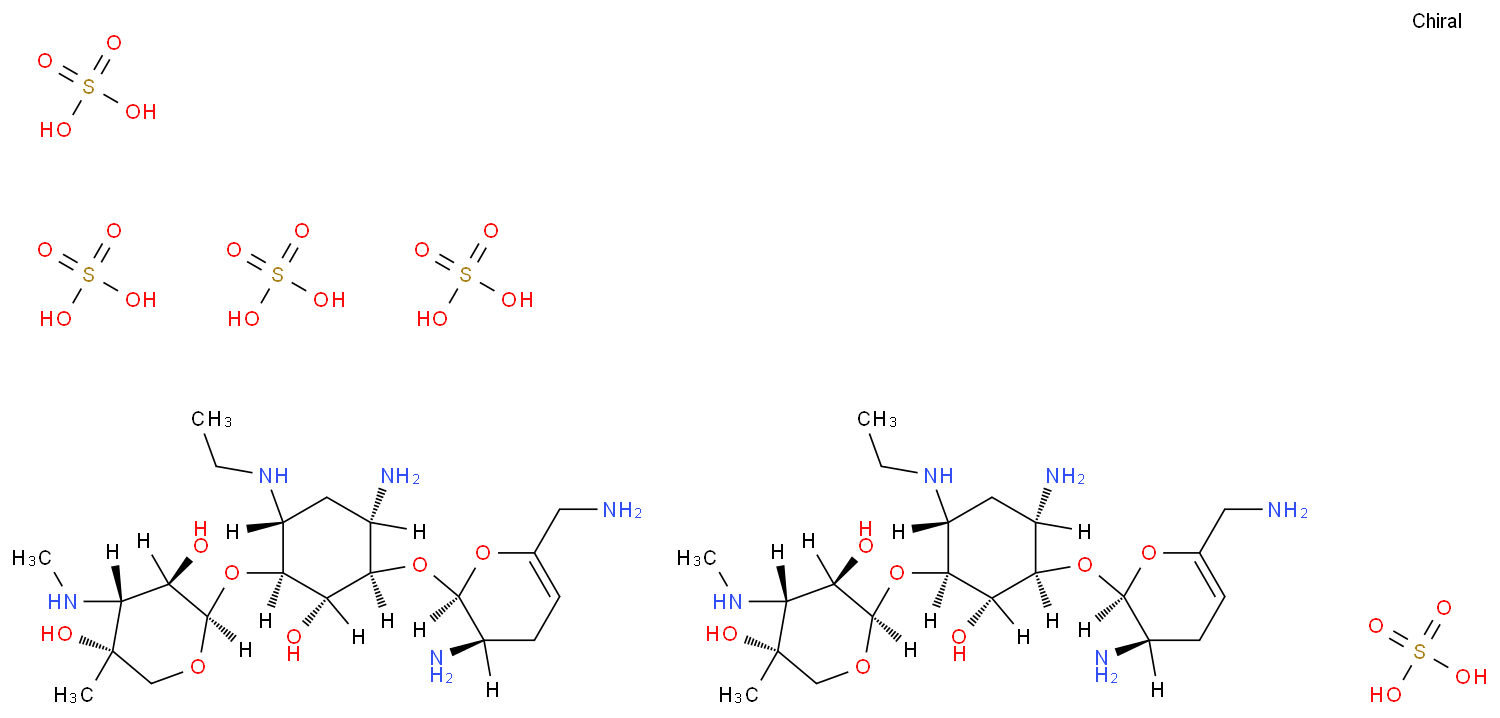
Netilmicin sulfate is the sulfate form of netilmicin, a semisynthetic, water-soluble aminoglycoside antibiotic.
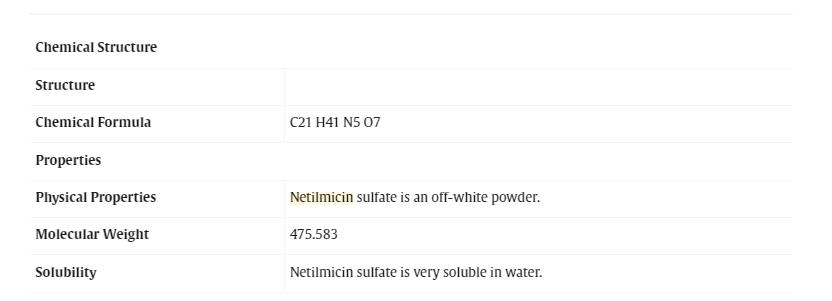
Netilmicin is a new generation of semi-synthetic aminoglycoside antibiotics with good antibacterial activity against both Gram-positive and Gram-negative bacteria, and has fewer adverse reactions than similar drugs. Netilmicin is derived from the aminoglycoside antibiotic sisomicin, which is a natural antibiotic produced by fermentation of Micromonospora inuiensis. Netilmicin inhibits the initiation of protein synthesis by irreversibly binding to the 16S rRNA and S12 protein of the bacterial 30S ribosomal subunit, interfering with the assembly of the initiation complex between mRNA and ribosomes. In addition, it also triggers misreading of the mRNA template and translation frameshift, leading to premature termination of the translation process and ultimately bacterial cell death. Netilmicin is mainly used to treat serious infections, especially those resistant to gentamicin. Netilmicin was patented in 1973 and approved for medical use in 1981. The drug was approved for medical use in the UK in December 2019 for the treatment of external ocular infections. The drug is included in the World Health Organization's list of essential medicines.
Netilmicin sulfate is a semi-synthetic, broad-spectrum aminoglycoside antibiotic. Its mechanism of action is by inhibiting the normal protein synthesis of sensitive microorganisms. This product is suitable for the short-term treatment of severe or life-threatening bacterial infectious diseases caused by sensitive bacteria, including patients of all ages such as newborns, infants, and children. These infectious diseases include: 1) complicated urinary tract infections; 2) sepsis; 3) skin and soft tissue infections; 4) intra-abdominal infections; 5) lower respiratory tract infections, etc.
Netilmicin sulfate is a semi-synthetic, water-soluble aminoglycoside antibiotic produced by fermentation of the bacterium Streptomyces micromonospora. Aminoglycosides are primarily used to treat infections caused by aerobic Gram-negative bacteria, such as Pseudomonas, Acinetobacter, and Enterobacter. It is effective at low concentrations against a wide range of pathogens. In vitro, Netilmicin is also effective against Haemophilus influenzae, Salmonella, Shigella, and penicillinase-producing and non-producing strains of Staphylococcus (including methicillin-resistant strains). Some strains of Providencia, Acinetobacter, and Aeromonas are also sensitive to Netilmicin. Many of these strains are resistant to other aminoglycosides (such as Kanamycin, Gentamicin, Tobramycin, and Sisomicin) but are sensitive to Netilmicin in vitro. Occasionally, strains resistant to Amikacin but sensitive to Netilmicin are found. The combination of Netilmicin and Penicillin G has synergistic bactericidal effects against most strains of Enterococci. The combination of Netilmicin and Carbenicillin or Ticarcillin has synergistic effects against many strains of Pseudomonas aeruginosa. In addition, the synergistic combination of Netilmicin and Carbenicillin, Azlocillin, Mezlocillin, Cefotaxime, or Cefoperazone can inhibit many multi-antibiotic-resistant Serratia isolates. Aminoglycosides are largely ineffective against anaerobic bacteria, fungi, and viruses.
Aminoglycosides like Netilmicin sulfate irreversibly bind to specific 30S subunit proteins and 16S rRNA. Specifically, Netilmicin binds to four nucleotides of 16S rRNA and one amino acid of protein S12. This binding interferes with the decoding site in the 16S rRNA of the 30S subunit near nucleotide 1400, where it interacts with the wobble base of the tRNA anticodon. As a result, the initiation complex is disrupted, mRNA is misread, leading to the incorrect insertion of amino acids into polypeptide chains, producing non-functional or toxic peptides, and simultaneously, polysomes are broken down into non-functional monosomes, ultimately causing the bacteria to fail to synthesize essential proteins for growth.
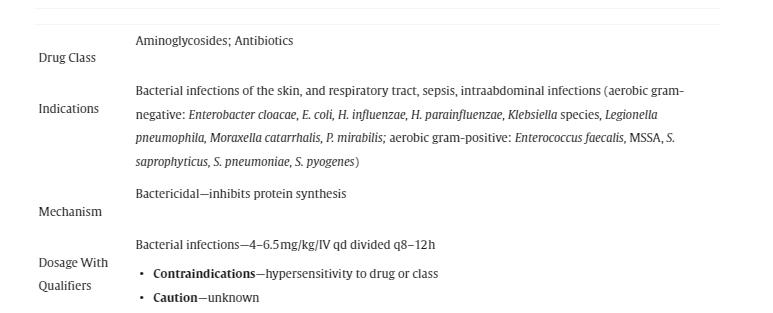
These include nephrotoxicity, ototoxicity, rash, neuromuscular blockade, hypomagnesemia, thrombocytosis, pain at the injection site, tinnitus, nystagmus, hearing loss, and elevated liver enzymes, bilirubin, and alkaline phosphatase.
There are no adequate and well-controlled studies in pregnant women. It is unknown whether Netilmicin sulfate crosses the human placenta. While there is no evidence that Netilmicin is a human teratogen, some aminoglycosides (e.g., streptomycin) have been associated with irreversible deafness when exposed in utero. Teratogenicity studies have not been conducted in rodents. Transplacental passage in term rats appears to be minimal. In guinea pigs, the cochlear effects of Netilmicin were significantly less than those of gentamicin. In rats, the renal effects of in utero exposure to Netilmicin were similar to those of gentamicin and greater than those of amikacin.
There is currently no published experience in breastfeeding women. A small amount of Netilmicin sulfate is excreted into human milk, but its pharmacokinetics remain to be elucidated.
The risk of auditory toxicity increases when used with loop diuretics. The risk of nephrotoxicity increases when used with cephalosporins, enflurane, methoxyflurane, and vancomycin.
Netilmicin sulfate is an effective aminoglycoside antibiotic used to treat various severe bacterial infections, especially those resistant to other antibiotics. Due to its potency and potential side effects, it is essential to consult a doctor before using Netilmicin sulfate to ensure its appropriateness and safety. A doctor can provide professional advice based on the specific type of infection and the patient's condition to help manage the treatment effectively and minimize potential risks.
[1]https://en.wikipedia.org/wiki/Netilmicin
[2]https://go.drugbank.com/drugs/DB00955
[3]https://pubchem.ncbi.nlm.nih.gov/compound/Netilmicin sulfate
[4]https://www.sciencedirect.com/topics/medicine-and-dentistry/netilmicin
[5]https://www.sciencedirect.com/science/article/pii/B9780323428743000136
[6]https://www.sciencedirect.com/science/article/abs/pii/B9780080552323622627
[7]Gu Ye, Du Yuan, Jin Xin. Determination of Netilmicin Sulfate by HPLC [J]. Science and Technology Communication, 2012, 4 (16): 80-81.
[8]Shi Jinsong, Li Xingmiao. Study on the formulation and process of Netilmicin sulfate for injection [J]. Chinese Journal of New Drugs, 2005, (09): 1155-1156.
|


 6YRS
6YRS