
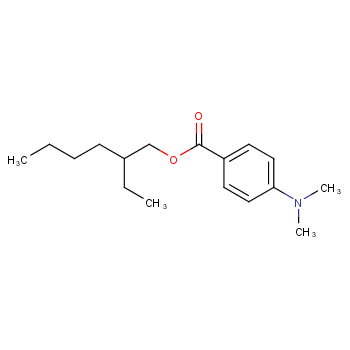
Padimate O is an organic compound related to the water-soluble compound PABA (para-aminobenzoic acid), which is used in some sunscreens. This light yellow, oil-like liquid is formed by the esterification of 2-ethylhexanol with para-dimethylaminobenzoic acid. What are the other names for Padimate O? Include octyl dimethyl PABA, Escalol 507, and OD-PABA. The structure of Padimate O is as follows:

The safety of Padimate O has been a concern. The substance has been banned or strictly regulated in Canada and parts of the European Union due to potential health risks. The Ministry of Food and Drug Safety (MFDS) and the U.S. Food and Drug Administration (FDA) stipulate that the concentration of Padimate O in any cosmetic product should not exceed 8%. The primary health risks associated with Padimate O include:
Endocrine Disruption
Studies have suggested that Padimate O may have weak anti-estrogenic effects, potentially disrupting the normal endocrine system.
Phototoxicity
Under UV exposure, Padimate O may exacerbate skin damage and increase the risk of skin cancer, primarily due to potential DNA damage. Although there is currently insufficient human research data, this potential risk should not be ignored.
Environmental Impact
As a lipophilic substance, Padimate O tends to accumulate in the environment and bioaccumulate in the food chain. Studies have found that Padimate O accumulates in fish. Guanghua Lu and colleagues investigated the bioaccumulation and biomagnification of Padimate O in two aquatic species, the midge (Chironomus riparius) and goldfish larvae, and assessed the metabolic enzyme responses in fish liver. Padimate O in midge larvae reached a steady state within 10 days of sediment exposure. The biota-sediment accumulation factor ranged from 0.10 to 0.54, inversely related to the exposure concentration. Larvae exposed to Padimate O were used to feed goldfish. Within 28 days of feeding exposure, Padimate O levels in fish tissues increased with the exposure concentration, showing significant concentration and time dependencies. The liver and kidneys were the primary accumulation organs, with Padimate O biomagnification factors of 8.97–11.0 and 6.44–10.8, respectively. Furthermore, Padimate O significantly increased the activity of cytochrome P450 (CYP) 1A, CYP3A, and glutathione S-transferase in fish livers. Our results suggest that Padimate O may pose a risk of biomagnification in aquatic environments and affect the biological processes of exposed organisms.
Common Side Effects
Some sunscreens containing Padimate O (such as those with aminobenzoic acid or para-aminobenzoic acid/PABA) may stain clothing. Certain sunscreen ingredients can make the skin more sensitive. If a sunscreen causes redness or irritation, wash it off and stop using it. Discuss with your doctor or pharmacist about using sunscreens with different ingredients.
padimate o allergy
At food-grade concentrations, Padimate O rarely causes allergic reactions. Severe allergic reactions to this compound are uncommon. However, if you experience any severe allergic symptoms such as rash, itching/swelling (especially of the face/tongue/throat), severe dizziness, or difficulty breathing, seek medical attention immediately.
Hazard Identification
Single and repeated dose toxicity studies of Padimate O have revealed various toxicities, including skin irritation, reproductive toxicity, genetic toxicity, and phototoxicity. Repeated dosing in experimental animals has led to organ toxicity and organ pigmentation. The main mechanism of Padimate O toxicity is DNA damage caused by photomodified Padimate O.
General Toxicity
In acute toxicity studies, the LD50 for Padimate O in rats was 14,900 mg/kg. In human patch tests using 8% Padimate O mixed with white petrolatum, no irritation was observed.
Reproductive and Developmental Toxicity
According to Erol et al., skin contact with OD-PABA does not affect puberty development or thyroid function in female or male rats. Therefore, OD-PABA is not classified as an endocrine-disrupting chemical.
Mutagenicity/Genetic Toxicity
Chromosome aberration tests were conducted in human lymphocytes. The test was based on the metabolic activation of the S9 mix. Padimate O was dissolved in ethanol at concentrations ranging from 315 to 5,010 μg/mL. No chromosomal aberrations were observed.
Carcinogenicity
The International Agency for Research on Cancer (IARC), American Conference of Governmental and Industrial Hygienists (ACGIH), National Toxicology Program (NTP), and Occupational Safety and Health Administration (OSHA) do not consider Padimate O to be carcinogenic.
Eye Irritation
A 2% Padimate O mixture with mineral oil was applied to rabbits' eyes. After rinsing, no irritation symptoms were reported.
Skin Irritation
A patch test using Padimate O in 4% white petrolatum applied to adult volunteers did not cause skin sensitization.
Phototoxicity/Phot sensitization
No phototoxicity was observed in 26 subjects tested with 3% oxybenzone and 7% Padimate O. Additionally, no phototoxicity was observed when using 5% Padimate O in ethanol with 30 J irradiation.
Although Padimate O is a common sunscreen ingredient, concerns about its potential health risks have led many to seek safer alternatives. Other effective sunscreen ingredients include zinc oxide and titanium dioxide, which are considered safer options. These mineral sunscreens provide broad-spectrum protection against UVA and UVB rays. Unlike chemical sunscreens like Padimate O, they sit on the skin's surface, forming a physical barrier that blocks harmful solar rays. This reduces the risk of potential side effects as they are less likely to be absorbed into the bloodstream.
[1]https://en.wikipedia.org/wiki/Padimate_O
[2]Lu G, Zhou R, Li S, et al. Bioaccumulation and biomagnification of 2-ethylhexyl-4-dimethylaminobenzoate in aquatic animals[J]. International Journal of Environmental Research and Public Health, 2018, 15(11): 2395.
[3]https://www.ncbi.nlm.nih.gov/pmc/articles/PMC6831754/
[4]Sung C R, Kim K B, Lee J Y, et al. Risk assessment of ethylhexyl dimethyl PABA in cosmetics[J]. Toxicological Research, 2019, 35: 131-136.
[5]https://www.ewg.org/skindeep/ingredients/704392-PADIMATE_O/
[6]https://www.webmd.com/drugs/2/drug-162050/lip-balm-padimate-o-topical/details
 |
|



 1YR
1YR

