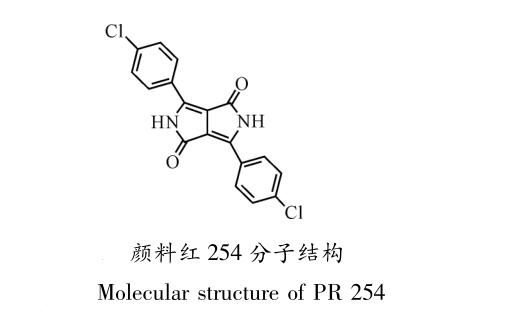
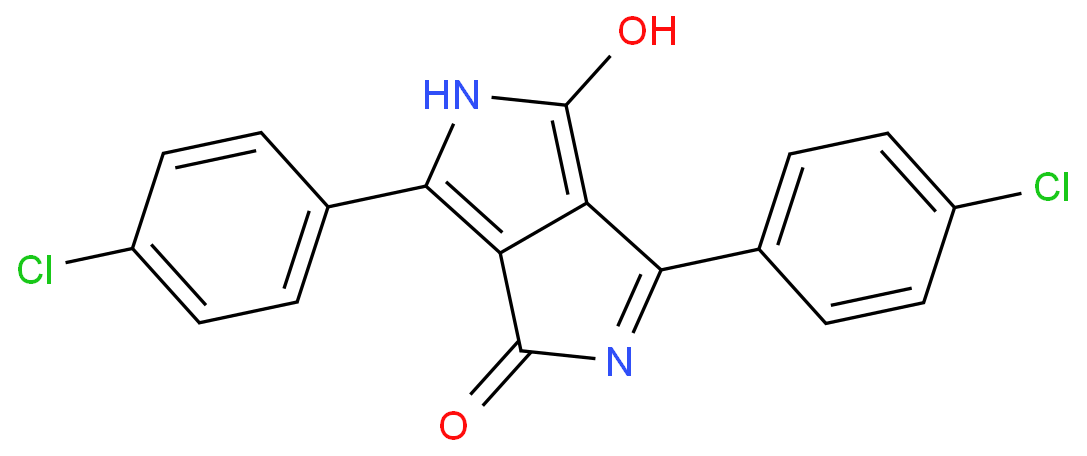
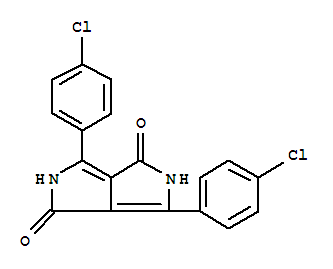
Pigment Red 254 (PR254) is a high-performance organic pigment of the diketopyrrolopyrrole (DPP) class, known for its high color strength and vivid hues. It is primarily used in inks, paints, and plastics. Among the diketopyrrolopyrrole (DPP) pigments available on the market, Pigment Red 254 plays a crucial role. This commercially available pigment is extensively used in industrial coatings, such as automotive finishes and high-temperature processed plastics. Pigment Red 254 provides a medium red shade across the full color spectrum, with a slightly bluish-red hue when made into a reduced color with white paint. The pigment exhibits excellent resistance to organic solvents and weather conditions, along with good color and fastness properties. It also demonstrates good opacity and high coloring power.
Industrial organic pigment C.I. Pigment Red 254 (DPP254) is used as a sensitizer. Through solvent thermal methods, it is modified with pure TiO2 to obtain the composite photocatalyst DPP254-TiO2. Using Rhodamine B (RhB) as a target degradation substance, the photocatalytic degradation performance of DPP254-TiO2 under visible light on organic pollutants was studied. The effects of DPP254 content, reaction time, initial RhB concentration, and catalyst concentration on the degradation rate of RhB were also examined. The results indicate that the modified catalyst's light response range extends from the ultraviolet region to the visible light region. The photocatalytic reaction mechanism was explored. The catalyst showed no significant decrease in activity after four cycles, indicating good stability.
Color filters are essential components for achieving color display in liquid crystal displays. The mainstream method for producing color filters in the LCD industry today involves the use of color resist pigment dispersion methods. Pigment resist is a key raw material for producing color filters by pigment dispersion, where the effective dispersion and stability of the organic pigments are crucial for ensuring high-quality pigment resists and significantly impact the performance of color filters. Thus, the preparation of pigment dispersion liquids is of great importance.
Lu Yanying and others used diketopyrrolopyrrole-based C.I. Pigment Red 254 with polystyrene-polyacrylic acid diblock copolymer (PS-PAA) as the dispersion resin, adding modified silicon surfactants. The dispersion was stirred and ground in an organic solvent. With a ball-to-material ratio of 1 to 1.2 and a grinding time of 4 hours, a pigment dispersion system with an average particle size of less than 100 nm and a narrow particle size distribution was obtained. The pigment dispersion liquid was mixed with a photosensitive composition in a specific ratio to produce pigment resists for color filters.
Pigments are the cornerstone of color in the plastic world, enabling us to achieve the hues we see around us through their various combinations. Among these building blocks, red pigments are particularly important. Ian Christensen from the specialty chemicals textile effects division discusses the requirements for general-purpose red pigments in plastics, highlighting that Pigment Red 254 is closest to this “universal red pigment.”
Pigment Red 254 exhibits excellent opacity, high color saturation, and weather resistance. It also has outstanding thermal stability, resistance to acids, alkalis, and solvents. Pigment Red 254 is suitable for many high-end coatings.
Tone, chroma, gloss, and transparency are the most crucial color properties in printing inks and color filters. The tone must correspond to very specific values but also be as color-saturated as possible to achieve a broad color palette in multicolor printing.
EP1411092B1 reports a new form of Pigment Red 254 with higher coloring strength, color saturation, and excellent performance in other applications. This pigment is obtained by mixing amorphous forms with inorganic salts in the presence of organic liquids, making it particularly suitable for printing inks.
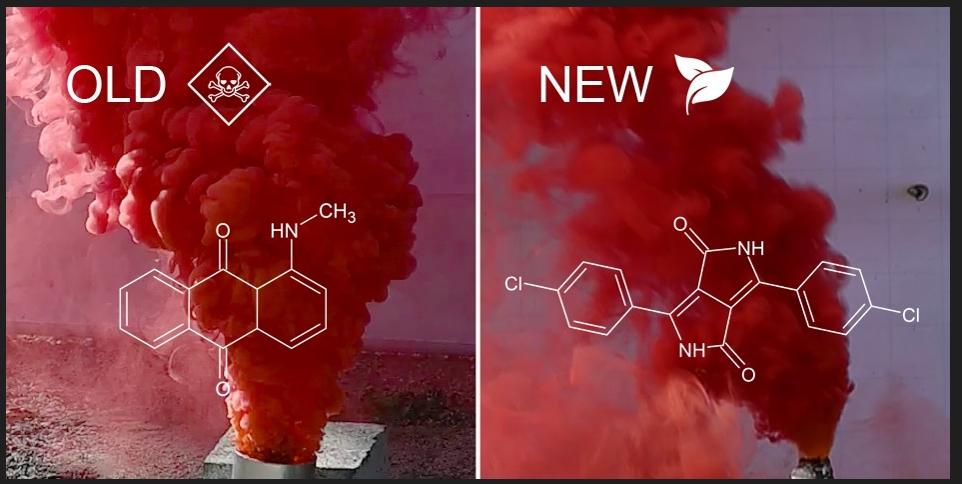
Red smoke from torches on roads warns drivers to be cautious, but the anthraquinone dyes currently used to produce this smoke are considered harmful to human health. Researchers in ACS Sustainable Chemistry & Engineering have identified a less toxic, “greener” alternative—an organic dye called Pigment Red 254 (PR254). They claim it also forms red smoke clouds more effectively than current dyes.
For signaling smoke, Vojtech Pelikan and colleagues chose DPP dye PR254, which has a vivid red color and is less toxic than anthraquinone dyes. In experiments, the red smoke yields from compositions containing PR254 reached 51%, compared to just 48% from conventional anthraquinone dyes. According to researchers, PR254 also has better thermal stability than the reference dyes, potentially making it suitable for less toxic pyrotechnic systems.
Pigment Red 254 is widely used in textile printing, providing fabrics with vibrant red colors. This pigment is commonly used in the production of textile inks and is transferred onto various fabrics through screen printing, digital printing, and other techniques. Textiles using Pigment Red 254 show exceptional color saturation and durability, maintaining color stability even after multiple washes.
In the automotive industry, Pigment Red 254 is the preferred pigment for automotive paints and trims due to its excellent light fastness and weather resistance. This pigment is added to automotive paints to provide a long-lasting and attractive red coating, enhancing the durability and visual appeal of vehicle exteriors.
[1]Christensen, I. Pigment technology: searching for a ‘universal red for plastics’[J]. Plastics, Additives and Compounding, 2002, 4(3): 14-17.
[2]https://patents.google.com/patent/EP1411092B1/en
[3]Zeman O, Pelikan V, Pachman J. Diketopyrrolopyrrole─ A Greener Alternative for Pyrotechnic Smoke Compositions[J]. ACS Sustainable Chemistry & Engineering, 2022, 10(14): 4788-4791.
[4]https://www.acs.org/pressroom/newsreleases/2022/april/a-greener-alternative-for-red-colored-smoke.html
[5]Zhang Zhaojuan, Li Changhai, Shang Xili, et al. Photocatalytic degradation of Rhodamine B in wastewater by Pigment Red 254-TiO_2[J]. Chinese Journal of Environmental Engineering, 2014, 8(06): 2335-2341.
[6]Ivashevskaya S N. Crystal structure of Pigment Red 254 from X-ray powder diffraction data[J]. Structure Reports, 2017, 73(4): 507-510.
[7]Yan Yang, He Chaoxiong, Zhou Qixiong, et al. Evaluation of shear resistance of pigment red 254 in injection molding materials based on Moldflow[J]. Plastics Industry, 2019, 47(10): 69-72.
[8]Almod?var V A S, Tomé A C. A convenient synthesis of Diketopyrrolopyrrole dyes[J]. Molecules, 2021, 26(16): 4758.
|
 |


 15YRS
15YRS


