
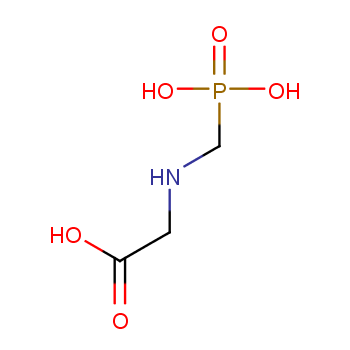
53.8 Glyphosate, with the chemical formula C3H8NO5P and CAS number 1071-83-6, is a highly effective herbicide used for broad-spectrum weed control in various agricultural systems. This form of glyphosate is often used in more concentrated formulations, offering a highly efficient solution for controlling unwanted vegetation.
41 Glyphosate, also known as glyphosate 41%, is another common formulation of glyphosate, with a 41% concentration of active ingredient. It is a popular herbicide used in agricultural and non-agricultural settings for weed and grass control. This formulation also includes a surfactant, which helps improve the herbicide's effectiveness by enhancing its spread and absorption into plant tissues.
Both 53.8 Glyphosate and 41 Glyphosate serve similar purposes but differ in their composition. The primary distinction lies in their concentration of glyphosate and the presence of surfactant in the 41% formulation. The presence of the surfactant in 41 Glyphosate can enhance its effectiveness by ensuring better adherence to plant surfaces, whereas 53.8 Glyphosate requires an additional surfactant for optimal performance.

Both 53.8 Glyphosate and 41 Glyphosate are effective for weed control, but 41 Glyphosate benefits from the inclusion of a surfactant, which helps the herbicide penetrate plant tissues more effectively. This makes the 41% formulation ideal for applications requiring lower volumes or when dealing with more challenging weeds.
Glyphosate is a widely used herbicide in agriculture, industrial, and non-crop applications. Both 53.8 Glyphosate and 41 Glyphosate are effective in controlling a broad spectrum of weeds and grasses, but their applications vary slightly due to the difference in concentration and the inclusion of surfactants.

53.8 Glyphosate is particularly effective for large-scale weed management in agricultural environments, such as crop fields, pastures, and rangelands. Its higher concentration of active ingredient allows for more efficient coverage, requiring less product to treat larger areas. Often, 53.8 Glyphosate is mixed with a separate surfactant, which aids in better adhesion to plant surfaces and helps the herbicide penetrate the leaf cuticle, ensuring thorough weed control.
This formulation is ideal for managing weeds in crops like corn, soybeans, and cotton during the period between planting and harvest. It is also commonly used in non-crop areas, including roadsides, industrial sites, and around farmsteads, to control invasive species and unwanted vegetation. The high concentration of active ingredient in 53.8 Glyphosate makes it especially suitable for large-scale agricultural operations and broad applications where efficiency and cost-effectiveness are key.
41 Glyphosate is commonly used in situations where ease of application and convenience are prioritized. Its inclusion of a surfactant in the formulation eliminates the need for an additional additive, making it a go-to choice for smaller-scale applications or areas with dense weed growth. The surfactant enhances the herbicide's spread and penetration, making it more effective at a lower concentration compared to higher concentration formulations like 53.8 Glyphosate.
This formulation is well-suited for residential areas, gardens, lawns, and for spot treatments in both agricultural and industrial settings. The pre-mixed surfactant ensures that 41 Glyphosate is particularly efficient in smaller, more localized applications where targeted weed control is needed. Additionally, it’s ideal for use around fences, driveways, building perimeters, and other areas requiring precise, effective weed management without the need for large quantities of herbicide. Whether managing a small garden or treating localized weed outbreaks in agricultural fields, 41 Glyphosate offers convenience and reliability.
This paper addresses the question of glyphosate 41 vs 53.8. In conclusion, both 53.8 Glyphosate and 41 Glyphosate are highly effective herbicides with specific advantages. 53.8 Glyphosate is more concentrated and suitable for large-scale applications where higher volumes are not required. On the other hand, 41 Glyphosate is easier to apply due to its built-in surfactant, making it an excellent choice for smaller or more localized areas. Both formulations are highly effective for broad-spectrum weed control, and the choice between them depends largely on the scale and type of the application.
| Side Effect |
53.8 Glyphosate |
41 Glyphosate |
|---|---|---|
| Digestive Issues | Rare, no surfactant included | Common, may cause mild irritation due to surfactant |
| Application Complexity | Requires separate surfactant | Ready to use, no additional mixing required |
| Environmental Impact | Potentially higher due to concentration | Lower risk, as it uses less active ingredient |
When deciding between 53.8 Glyphosate and 41 Glyphosate, it’s essential to understand their distinct applications and the context in which they are used. The 53.8% glyphosate is a more concentrated version, which may be preferred for larger-scale agricultural applications, requiring less volume for effectiveness. It’s ideal for farmers or large landowners looking for powerful weed control, especially in commercial settings. However, it may require careful handling due to its higher concentration.
On the other hand, 41% Glyphosate is often favored for residential or smaller-scale uses due to its lower concentration and the added surfactant, which makes it easier to apply without additional mixing. It’s a good choice for homeowners or garden enthusiasts looking for a convenient solution to weed control. However, its slightly lower potency means larger applications may require more product.
Ultimately, if you're managing large-scale weed control and require higher potency, 53.8% Glyphosate may be the better choice. However, for smaller, more localized tasks, 41% Glyphosate offers a more convenient and user-friendly option while still providing effective results, particularly for non-commercial users.
*It is always important to follow safety instructions and local guidelines when handling glyphosate products, as misuse can lead to environmental or health risks.
If you're looking to purchase these compounds, Guidechem is your go-to platform for sourcing high-quality raw materials and reliable suppliers. With our extensive global network, we connect you to a wide range of Glyphosate suppliers, ensuring you find the right products to meet your specific research or production requirements. Whether you're in pharmaceuticals, food additives, or other industries, Guidechem simplifies the sourcing process, offering verified supplier information, competitive pricing, and seamless communication.
[1]Glyphosate: The World's Most Widely Used Herbicide by D. P. McCarthy.
[2]Comparative Effectiveness of Glyphosate Formulations by A. L. Thompson.
[3]Glyphosate and Its Environmental Impact in Journal of Environmental Management.
[4]The Health Impacts of Glyphosate Exposure in Environmental Health Perspectives.
 |
|
 |


 13YRS
13YRS

