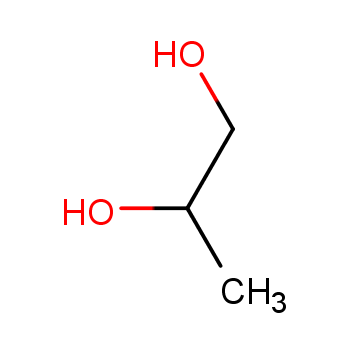
Propylene Glycol, with the chemical formula C3H8O2 and CAS number 57-55-6, is a versatile compound widely used in food, cosmetics, and pharmaceuticals. It is known for its low toxicity and ability to be metabolized into non-harmful byproducts.
Ethylene Glycol, with the chemical formula C2H6O2 and CAS number 107-21-1, is commonly employed in industrial applications, particularly as an antifreeze and coolant due to its excellent heat transfer properties. However, its toxicity limits its use in consumer products.
Propylene Glycol and Ethylene Glycol are two different types of glycols, each with unique properties and applications. The primary distinction between the two lies in their toxicity—Propylene Glycol is safe for human consumption in small amounts, while Ethylene Glycol is highly toxic and unsuitable for food-grade applications.


The synthesis of these compounds reflects their intended applications: Propylene Glycol prioritizes safety and versatility, while Ethylene Glycol focuses on industrial efficiency and heat transfer capabilities.
Both Propylene Glycol (PG) and Ethylene Glycol (EG) are widely used across various industries, but their unique properties and safety profiles set them apart in terms of functionality. Their applications in industrial sectors highlight the differing priorities between safety, performance, and versatility, making them essential components in a broad range of processes.

Propylene Glycol is well-regarded for its low toxicity and versatility, making it a preferred choice in the production of consumer goods. In the food and beverage industry, PG is commonly used as a humectant, solvent, and preservative. Its ability to retain moisture helps to maintain the texture and shelf-life of processed foods, while also acting as a stabilizer in certain beverage formulations. Because it is recognized as safe for human consumption in regulated quantities, Propylene Glycol is a trusted ingredient in the food industry, especially in products like salad dressings, flavorings, and dairy-based products.
In cosmetics, Propylene Glycol’s moisture-retaining properties make it an excellent addition to skin care products. It is widely used in moisturizers, lotions, shampoos, and deodorants, where it helps to hydrate the skin and improve product texture. Furthermore, its solubility properties allow it to act as a carrier for active ingredients in pharmaceuticals, ensuring better solubility, bioavailability, and stability of medications. PG also plays a role in the e-liquid industry, where it is an essential ingredient in vaping products. Its ability to create a smooth throat hit, as well as its safety profile, makes it a preferred carrier for nicotine and flavorings.
Beyond personal care and vaping, Propylene Glycol is used as a non-toxic antifreeze in HVAC (heating, ventilation, and air conditioning) systems. In these applications, PG helps prevent freezing and corrosion in cooling systems, particularly in environments where conventional antifreeze could pose health or environmental risks. This widespread usage underscores the adaptability and safety of Propylene Glycol in various consumer and industrial applications.
In contrast, Ethylene Glycol is predominantly employed in more industrial settings, where its performance characteristics are highly valued. One of the primary uses of EG is in the automotive industry, where it is used as an antifreeze and coolant in internal combustion engines. Ethylene Glycol’s high boiling point and low freezing point allow it to perform well under extreme temperatures, ensuring that engines operate efficiently, even in extremely cold or hot conditions. Its excellent heat transfer properties also contribute to maintaining the optimal performance of automotive engines and preventing overheating.
Beyond automotive applications, Ethylene Glycol is integral to the production of polyester fibers and resins, which are key components in the textile and plastics industries. In polyester production, EG serves as a critical raw material, allowing for the creation of fabrics used in clothing, upholstery, and carpets, as well as plastic bottles and containers. This widespread use in manufacturing processes further illustrates the industrial importance of Ethylene Glycol.
Ethylene Glycol also plays a crucial role in the production of coolants and heat transfer fluids used in industrial machinery, refrigeration systems, and power plants. The glycol’s thermal conductivity and low freezing point make it ideal for managing heat in large-scale machinery, where efficient cooling is critical to maintaining operational integrity and preventing overheating.
However, the primary challenge with Ethylene Glycol lies in its toxicity. While highly effective in these industrial applications, EG must be handled with care, and safety protocols are essential to prevent exposure. Its toxicity limits its use in certain consumer-facing products, and its handling requires stringent regulatory compliance, especially in sectors like automotive repair, chemical manufacturing, and textile production.
In summary, Propylene Glycol and Ethylene Glycol serve distinct purposes, with Propylene Glycol excelling in safety and versatility for consumer products, while Ethylene Glycol provides superior performance in industrial applications. Selecting the appropriate glycol depends on the specific needs and safety considerations of the task.
| Property |
Propylene Glycol |
Ethylene Glycol |
|---|---|---|
| Toxicity | Non-toxic | Highly toxic |
| Heat Transfer | Lower efficiency | Superior efficiency |
| Environmental Impact | Biodegradable | Potential environmental hazard |
When comparing propylene glycol and ethylene glycol in the context of health and safety, propylene glycol is widely regarded as the safer option. Due to its low toxicity and classification as "generally recognized as safe" (GRAS) by the FDA, it is commonly used in food, pharmaceuticals, and cosmetics. Propylene glycol is metabolized into non-toxic byproducts in the body, making it a suitable choice for applications involving direct human exposure, such as in food-grade antifreeze or personal care products.
In contrast, ethylene glycol is highly toxic if ingested, posing significant health risks, including kidney failure and even death. While it is effective as an industrial antifreeze and coolant, its use is strictly limited to applications where human exposure is not a concern. The toxicity of ethylene glycol necessitates strict handling procedures, making it unsuitable for any direct human contact or ingestion.
Ultimately, if health and safety are priorities, propylene glycol is the superior choice for applications involving potential human exposure. However, for strictly industrial purposes where cost and thermal efficiency are key factors, ethylene glycol may be a viable option despite its toxic nature. Proper labeling, storage, and usage guidelines are essential for ethylene glycol to minimize risks.
*For optimal results and to ensure that you are selecting the safest and most effective compound for your specific needs, it is strongly recommended to consult industry experts or relevant guidelines. Proper application and handling of these compounds are critical to health and safety.
If you're looking to purchase these compounds, Guidechem is your trusted platform for sourcing high-quality raw materials and verified suppliers. With our extensive global network, we connect you to reliable for propylene glycol suppliers and ethylene glycol suppliers, ensuring that your specific research or industrial requirements are met. Whether you're in pharmaceuticals, food production, or industrial manufacturing, Guidechem simplifies the procurement process by offering competitive pricing, verified supplier information, and seamless communication.
[1]Glycol Applications and Safety Considerations by R. T. Edwards.
[2]Industrial Uses of Ethylene Glycol in Chemical Engineering Journal.
[3]Advances in Propylene Glycol Production by L. P. Brown.
[4]Environmental Impact of Glycols in Green Chemistry Reviews.
 |
|
 |



 1YR
1YR