On July 15, ExxonMobil's Huizhou Ethylene Project held its commencement ceremony in the Daya Bay Economic and Technological Development Zone (referred to as "Daya Bay Development Zone"). This is one of the nation's major foreign investment projects and the first major petrochemical project wholly owned by an American company in China. Its high-end chemical products will effectively meet the demands of the domestic market.
As a globally renowned energy and petrochemical company, ExxonMobil has actively expanded into the Guangdong-Hong Kong-Macao Greater Bay Area. From holding the "cloud groundbreaking" ceremony in 2020, to launching the ExxonMobil Daya Bay Research and Development Center in 2023, and successfully achieving the trial production of the ethylene unit this year, the high efficiency and speed of the project’s construction reflect China’s speed and Guangdong’s speed, under the strong cooperation between government and enterprises.

Currently, Daya Bay Development Zone insists on an entity-based economy and prioritizes manufacturing. Its refining and chemical integration scale ranks among the top in China, and it has been ranked as the number one chemical industrial park in China for six consecutive years. ExxonMobil’s Huizhou Ethylene Project will inject strong momentum into Huizhou’s goal of becoming a global petrochemical industry hub and provide strong support for Guangdong’s construction of a world-class green petrochemical industrial cluster.
ExxonMobil, a global petrochemical giant, is no stranger to many people. As early as 1892, ExxonMobil’s predecessor, Standard Oil, began selling kerosene in China. Today, ExxonMobil is deeply involved in many fields of China's energy industry.
On April 22, 2020, ExxonMobil held the "cloud groundbreaking" ceremony for its Huizhou Ethylene Project. Phase I of the project includes a flexible feedstock steam cracking unit with an annual capacity of 1.6 million tons of ethylene, two sets of high-performance linear low-density polyethylene (LLDPE) units with a total annual capacity of 1.2 million tons, the world's largest single-unit low-density polyethylene (LDPE) unit with an annual capacity of 500,000 tons, and two sets of differentiated high-performance polypropylene (PP) units with a total annual capacity of 950,000 tons. Notably, the 1.6 million tons per year ethylene production capacity of ExxonMobil's Huizhou project is the largest capacity for a single unit in China.

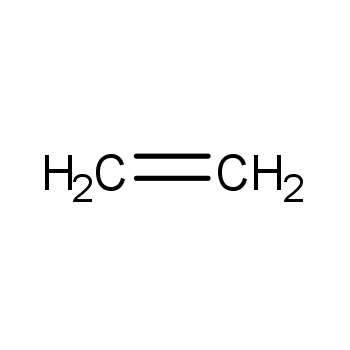
Ethylene is known as the "mother of the petrochemical industry" and is the most important basic material for organic chemicals. The ethylene, polyethylene, polypropylene, and other high-value-added basic chemical raw materials produced in Phase I will be widely used in consumer product packaging, industrial packaging, sanitary products, automobiles, home appliances, and other fields. With the completion of the project, it will further reduce dependence on imports of high-performance polyolefins and provide key support for industries such as plastics, clothing, electronics, and biomedicine in the Guangdong-Hong Kong-Macao Greater Bay Area.
For example, products made from polyethylene using ExxonMobil’s proprietary technology exhibit excellent strength, durability, toughness, heat-sealability, and outstanding optical properties. The product portfolio of Phase I covers a range from general-purpose to high-performance engineering plastics, meeting the diverse needs of Chinese customers in terms of lightweight, environmental protection, and safety. Some products are made with recyclable materials, supporting applications for products with lower carbon emissions, and helping customers achieve sustainable development goals.
In terms of green development, the project adopts an external pre-treatment mode, a first in China. The supporting integrated energy station can receive process off-gases from the project for combustion, achieving comprehensive recycling of clean energy.
From manufacturing to R&D innovation, ExxonMobil's industrial layout in Huizhou continues to intensify and optimize. In February 2023, ExxonMobil’s Daya Bay R&D Center began construction. The center is equipped with the first polypropylene pilot unit outside North America, which will accelerate the development of differentiated high-performance polypropylene and focus on basic chemical R&D and product process development. In December last year, the administrative building of ExxonMobil's Daya Bay R&D Center was put into use. The completion of the R&D center will further empower Huizhou and even Guangdong’s petrochemical industry to enhance technological self-reliance and support high-quality development in Guangdong's petrochemical industry.
"The Daya Bay R&D Center will strengthen local industry chain coordination and promote the wider application of high-end chemical new materials in China's manufacturing industry," said Li Xingjun, Chairman of ExxonMobil (Huizhou) Chemical Co., Ltd. He expressed hopes to share future opportunities and assist the development of modern petrochemical industry clusters in South China, jointly promoting the upgrading of the Guangdong-Hong Kong-Macao Greater Bay Area's industrial chain and pushing China's petrochemical industry value chain to higher-end development.
Due to the large scale, long process, and strong system of major petrochemical projects, high-quality services are indispensable. The governments at all levels in Guangdong Province, Huizhou City, and Daya Bay Development Zone have provided full-process, efficient support for the project, establishing a special task force for the ExxonMobil project, offering professional services in land approval, customs coordination, construction permits, and more, and speeding up the project construction with “acceleration.”

For example, from May 2017, when ExxonMobil’s senior management first visited Huizhou, to the signing of the strategic cooperation framework agreement between the two parties, it only took four months, setting a new record in Huizhou's investment attraction history. The project completed the park’s planning revision in four months, the zoning revision in 11 months, and construction began in a year and a half, achieving the "Huizhou Speed" and "Guangdong Speed."
ExxonMobil senior executives highly affirmed the Huizhou project, praising the project for being “built faster than expected, costing less than anticipated, and achieving the fastest trial production.”
"From the initial contact and investigation to negotiations, from project approval to construction, the task force was well-prepared, and approval documents were counted by the box," said a relevant official from the Daya Bay Development Zone Administrative Committee. The task force provided comprehensive services for the project. For example, due to time zone differences, the task force proactively arranged communication with the foreign party at night, ensuring "24-hour availability."
The task force transformed the project management from a “serial” process to a “parallel” process, working together to solve practical problems in the project’s settlement. For example, ExxonMobil’s Huizhou Ethylene project completed negotiations, national reserve project conversion to planning project, approvals, and construction commencement in just 18 months—work that would normally take five years.
After the project settled, construction accelerated. The task force recruited professionals from petrochemical, environmental protection, safety, engineering, construction, planning, approval, and other fields, organizing key department personnel and industry experts to systematically sort out the core issues related to the key aspects of the project construction, clarify timelines, specific measures, and responsible units to resolve practical problems.
"The professional and efficient services reflect the high-quality administrative environment and pragmatic business philosophy," said Li Xingjun. Guangdong’s strong manufacturing foundation, complete industrial chain, and high market openness make it one of the world’s leading manufacturing centers. ExxonMobil will continue to cooperate with the Guangdong Provincial, Huizhou City, and Daya Bay governments to seize more opportunities and contribute to Guangdong’s high-quality development.
Openness is a distinctive feature of Huizhou, a coastal city. In the late 1980s, Huizhou started striving for the first phase of the China National Offshore Oil Corporation (CNOOC) and Shell petrochemical project (formerly South China Petrochemical). After efforts from several leadership teams, in November 2002, the CNOOC-Shell project broke ground, marking the formal landing of China’s largest Sino-foreign joint venture project at the time.
The "Banyan Tree Effect" of large projects quickly emerged. The area has attracted leading global companies such as BASF, Clariant, and Mitsubishi Chemical, with numerous upstream and downstream enterprises in the industrial chain gathering. “Good foundation, high starting point, and fast development” is the industry's evaluation of the Daya Bay Petrochemical Zone.
In its pursuit of world-class standards, the Daya Bay Petrochemical Zone actively learns from the advanced experiences of places like Singapore’s Jurong, Rotterdam in the Netherlands, and Antwerp in Belgium. It has grown into one of the seven major national petrochemical industry bases (the only one in Guangdong Province) and has ranked first for six consecutive years in the “Top 30 Chinese Chemical Parks.” It has also twice been awarded as a national five-star demonstration base for new industrialization.
10 kilometers from the Daya Bay Petrochemical Zone, the Huizhou New Materials Industrial Park is accelerating its construction.
Market demand is a development opportunity. The Guangdong-Hong Kong-Macao Greater Bay Area is one of the most important manufacturing bases in China, with a full range of industries and a huge industrial scale. Industries such as automobiles, equipment manufacturing, home appliances, and building materials have long been among the top in the country, driving strong demand for petrochemical new materials. Huizhou’s petrochemical industry has a distinct advantage in terms of its industrial foundation, and the Daya Bay Petrochemical Zone provides a rich supply of raw materials. Since 2019, Huizhou has been building the Huizhou New Materials Industrial Park with high standards to further expand the space for petrochemical industry development and focus on building a new petrochemical energy materials industrial cluster.
Currently, the Huizhou New Materials Industrial Park covers an area of 30.2 square kilometers and has completed a total investment of over 18 billion RMB. The park is accelerating its development into a “national first-class new materials industrial base” and a “Guangdong-Hong Kong-Macao Greater Bay Area new materials technology innovation base.” In April of this year, the park successfully gained recognition as a provincial-level chemical industrial park, becoming the first newly recognized chemical park in the province.
"A single road and two pipelines supply through the wall." A relevant official from the Huizhou New Materials Industrial Park’s planning and construction command said that the Daya Bay Petrochemical Zone can provide over 130 varieties of basic chemical raw materials and nearly 38 million tons annually to extend the downstream industrial chain. Currently, an exclusive petrochemical channel connecting the Daya Bay Petrochemical Zone and the Huizhou New Materials Industrial Park has been established. The two zones are increasingly linked and are accelerating the formation of a deep integration development pattern featuring industrial agglomeration, mutual raw material supply, complementary advantages, and shared facilities.
In recent years, Huizhou has promoted synchronized and integrated development of the “One Park, Two Zones.” The two zones have jointly compiled the full industrial chain investment map and investment demand list, focusing on attracting leading enterprises in the industry with precise investment strategies and creating a “top-tier” club in the new materials field. Data shows that the Huizhou New Materials Industrial Park has attracted 40 industrial projects with a total investment of about 47.4 billion RMB, and 14 new industrial projects with a total investment of 11.3 billion RMB were settled in the first half of this year.
Large platforms accommodate large projects and drive large-scale development. Today’s Huizhou has even greater ambitions and a more honorable mission. In July last year, the provincial government officially issued the “Opinions on Supporting Huizhou to Accelerate the Construction of a Green, Low-Carbon Industrial System and Build a New Growth Pole for Guangdong’s High-Quality Development,” positioning Huizhou as a “global petrochemical industry hub.” The Opinions propose that by 2027, the petrochemical industry will reach an annual production capacity of 5.4 million tons of ethylene and 6.6 million tons of high-end polyolefins, with key areas achieving benchmark-level energy and water efficiency. By 2035, the petrochemical energy new materials industry will be among the world’s top, and Huizhou will become a world-class petrochemical industry hub.
 |
|
 |


 5YRS
5YRS