
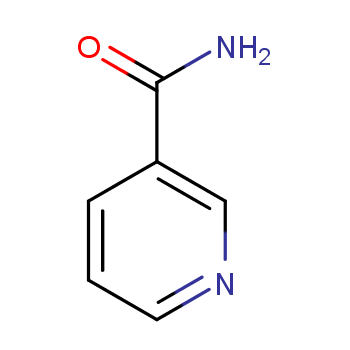
Niacinamide, also known as nicotinamide, with the chemical formula C6H6N2O and CAS number 98-92-0, is an amide form of niacin, a type of B vitamin. It plays a crucial role in cellular metabolism and is frequently used in skincare for its anti-inflammatory and skin barrier-strengthening properties.
Nicotinamide Riboside Chloride, with the chemical formula C11H15ClN2O5 and CAS number 23111-00-4, is a more recently discovered compound that is a derivative of nicotinamide. It is recognized for its ability to elevate NAD+ (nicotinamide adenine dinucleotide) levels in cells, which is crucial for energy production and various metabolic processes.
Niacinamide and Nicotinamide Riboside Chloride are both forms of niacinamide, yet they differ in their molecular structures and biological functions. Niacinamide, a vitamin B3 derivative, is primarily used in skincare and has well-established anti-inflammatory and antioxidant effects. In contrast, Nicotinamide Riboside Chloride is a precursor to NAD+, a molecule involved in cellular energy metabolism, and is studied for its potential to improve age-related metabolic decline and support neuroprotection.


Both compounds involve modifications of nicotinic acid or its derivatives. Niacinamide is produced through a simple condensation reaction, while Nicotinamide Riboside Chloride requires a more complex reaction to attach a ribose sugar, enhancing its ability to act as a precursor for NAD+.
Niacinamide and Nicotinamide Riboside Chloride are both used for health and wellness, but their applications differ significantly due to their distinct biological effects. Niacinamide is predominantly used in the skincare industry, while Nicotinamide Riboside Chloride is being researched for its potential to address metabolic and age-related health concerns.

In contrast, Nicotinamide Riboside Chloride, although still in the early stages of research in the cosmetic industry, holds great promise for future applications. Its impact on boosting NAD+ levels is anticipated to extend beyond internal health and into the realm of skin health. By improving mitochondrial function and enhancing cellular repair processes, Nicotinamide Riboside Chloride could potentially play a role in promoting skin rejuvenation, combating signs of aging, and even preventing skin damage caused by oxidative stress. Its ability to improve cellular energy and mitochondrial function may make it an important ingredient in future anti-aging skincare formulations, particularly those aimed at restoring vitality to aging skin cells.
Niacinamide (also known as Vitamin B3) has become a cornerstone ingredient in the cosmetic and skincare industries. It is particularly prized for its anti-inflammatory properties, which help calm irritated skin and reduce redness. This makes it an essential component in products aimed at sensitive skin, including those formulated to treat acne, rosacea, and general skin irritation. Niacinamide’s ability to reduce inflammation also extends to its role in addressing skin conditions linked to oxidative stress, such as signs of aging.
One of the key benefits of Niacinamide in skincare is its capacity to strengthen the skin’s natural barrier. This barrier helps retain moisture and defend against harmful environmental stressors like pollution, UV radiation, and temperature extremes. Products containing Niacinamide have been shown to significantly improve skin hydration and elasticity, making it an ideal ingredient for anti-aging formulations. It helps improve skin tone by reducing hyperpigmentation and dark spots, as it inhibits the transfer of melanin to skin cells. This action results in a more even, radiant complexion and helps fade post-inflammatory hyperpigmentation, making it a go-to for people dealing with acne scars or sun spots.
In addition to its anti-aging and anti-inflammatory properties, Niacinamide is a powerful antioxidant. It works to protect skin cells from oxidative stress, one of the primary causes of premature aging. Niacinamide has been shown to reduce the appearance of fine lines and wrinkles by enhancing skin's elasticity, promoting collagen production, and stimulating the skin’s natural repair processes. As such, it is commonly found in products aimed at reducing the visible signs of aging, making it a popular choice for both preventive and corrective skincare routines.
Nicotinamide Riboside Chloride has recently gained attention for its role in boosting NAD+ levels in cells, which is vital for energy metabolism. Studies have shown that elevating NAD+ can promote cellular health, improve mitochondrial function, and reduce the effects of aging on metabolic health. It has been researched for its potential to treat age-related diseases, including neurodegenerative disorders such as Alzheimer’s and Parkinson’s.
In animal studies, Nicotinamide Riboside Chloride has demonstrated neuroprotective effects, reducing damage to brain cells and preserving cognitive function in mice with ischemic injury. This compound is also being explored for its potential in improving heart health by stimulating short-chain dehydrogenase/reductase proteins, which can alleviate heart failure symptoms independently of mitochondrial deacetylation.
In conclusion, Niacinamide is the preferred choice for individuals seeking a skincare solution that addresses inflammation, hyperpigmentation, and skin aging. It is gentle on the skin and offers various cosmetic benefits. On the other hand, Nicotinamide Riboside Chloride is a promising compound for boosting NAD+ levels and improving cellular energy metabolism, with potential applications in treating age-related conditions and supporting brain and heart health. While both compounds offer distinct health benefits, their applications are tailored to different needs—skincare versus metabolic and neuroprotection.
| Side Effect |
Niacinamide |
Nicotinamide Riboside Chloride |
|---|---|---|
| Skin Irritation | Rare, may cause mild irritation in sensitive skin | Rare, generally well-tolerated |
| Digestive Issues | Unlikely | Possible, mild nausea or gastrointestinal discomfort |
| Allergic Reactions | Rare, could include rash or swelling | Rare, could include rash or difficulty breathing |
When deciding between Niacinamide and Nicotinamide Riboside Chloride for your health, it is important to consider your specific goals. If your main concern is skincare, Niacinamide is the better option. It provides well-established benefits in reducing inflammation, promoting a healthy skin barrier, and evening out skin tone. Niacinamide is gentler on the skin and is widely used in cosmetic products due to its proven track record for treating conditions such as acne, rosacea, and general skin aging.
On the other hand, if you're looking to support your metabolic health, improve energy production, or slow the effects of aging at a cellular level, Nicotinamide Riboside Chloride may be more beneficial. It has shown promising potential in elevating NAD+ levels, which are vital for cellular energy metabolism. This could be particularly valuable for those interested in boosting cognitive function, supporting heart health, and promoting overall vitality. While research is still ongoing, the neuroprotective and anti-aging properties of Nicotinamide Riboside Chloride make it a cutting-edge choice for those with concerns beyond skincare.
Ultimately, for skin health and anti-inflammatory benefits, Niacinamide is the superior choice. However, if your focus is on cellular health, metabolic support, and age-related concerns, Nicotinamide Riboside Chloride may offer more significant long-term benefits. Each compound offers unique advantages depending on your specific needs and health goals.
*For optimal results and to ensure you are taking the most appropriate compound and dosage, it is recommended to consult with your healthcare provider. They can help you determine which compound aligns best with your health needs and conditions.
If you're looking to purchase these compounds, Guidechem is your go-to platform for sourcing high-quality raw materials and reliable suppliers. With our extensive global network, we connect you to a wide range of Niacinamide suppliers and Nicotinamide Riboside Chloride suppliers, ensuring you find the right products to meet your specific research or production requirements. Whether you're in pharmaceuticals, skincare, or other industries, Guidechem simplifies the sourcing process, offering verified supplier information, competitive pricing, and seamless communication.
[1]The Role of Niacinamide in Skin Care by A. L. Davis.
[2]Effects of Nicotinamide Riboside on Cellular Health by J. H. Peterson.
[3]Research on NAD+ Boosters and Neuroprotection in Journal of Molecular Biology.
[4]Metabolic Benefits of Nicotinamide Riboside in Frontiers in Aging.
|
 |
 |


 4YRS
4YRS


