
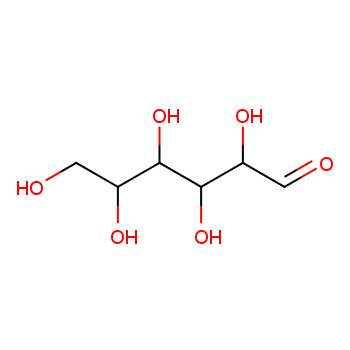
Glucose, a vital biological compound, holds paramount significance in nature, being a primary product of photosynthesis and undergoing oxidation in cellular respiration. Its polymerization gives rise to pivotal biomolecules like cellulose, starch, and glycogen. Furthermore, glucose combines with other compounds to yield common sugars such as sucrose and lactose. The specified form of glucose, D-glucose, carries the "D" designation indicating the configuration of the molecule. Specifically, in D-glucose, the hydroxyl group on the number 5 carbon resides on the right side of the molecule, while its mirror image counterpart, L-glucose, places the hydroxyl group on the left side. These designations are rooted in the configuration at the highest chiral center, carbon number 5. D-glucose is the prevalent form found in nature, and its biochemical abbreviation is Glc.
As the predominant form within the class of molecules known as carbohydrates, glucose serves as the archetype for these organic compounds ubiquitous in organisms, encompassing sugars, starches, and fats. Carbohydrates, named after glucose, have the general formula Cn(H2O)n, where n is a positive integer. While the initial notion of carbohydrates being hydrates of carbon was inaccurate, the term persisted. These compounds, also referred to as saccharides, derive their name from the Latin word "saccharon" for sugar.

Carbohydrates, comprising carbon, hydrogen, and oxygen atoms, exhibit either an aldehyde or ketone group and can be categorized as simple or complex. Monosaccharides, known as simple carbohydrates, feature a single aldehyde or ketone group and resist hydrolysis reactions. Glucose belongs to this category, being a simple carbohydrate with an aldehyde group. Disaccharides consist of two monosaccharide units bonded together, examples being maltose, cellobiose, sucrose, and lactose.
Despite often depicted in open chain structures, glucose and common sugars predominantly adopt ring structures, with the ring structure shown representing the alpha (α) form. Glucose also exists as l and d forms, and the labels "l" and "d" originate from Latin terms meaning left and right, respectively. These labels denote the direction in which solutions of glucose rotate plane-polarized light. The D and L forms represent mirror images that rotate polarized light in opposite directions.
D-Glucose, the paramount and predominant monosaccharide, was isolated from raisins in 1747 by Andreas Sigismund Marggraf, and the term "glucose" was adopted in 1838 by Jean-Baptiste-André Dumas from the Greek word "glycos," meaning sweet. In the late 19th century, Emil Fischer determined the structure of glucose. The monosaccharide is also known as dextrose, grape sugar, and blood sugar, the latter signifying its status as the primary sugar dissolved in blood. Due to its abundant hydroxyl groups, glucose exhibits high solubility in water.
Glucose serves as the primary fuel for biological respiration. In the course of digestion, complex sugars and starches undergo breakdown into glucose, as well as fructose and galactose, within the small intestine. Subsequently, glucose enters the bloodstream and is transported to the liver, where it undergoes metabolism through a series of biochemical reactions collectively known as glycolysis. Glycolysis, a universal process occurring in most organisms, culminates in the production of pyruvate. The fate of pyruvate varies based on the organism and cellular conditions. Under aerobic conditions in animals, pyruvate is oxidized, generating carbon dioxide. Conversely, under anaerobic conditions, such as in the muscles of humans and other animals, lactate is produced, contributing to muscle fatigue during strenuous activities. Certain microorganisms, like yeast, convert pyruvate to carbon dioxide and ethanol under anaerobic conditions, forming the basis of alcohol production. Additionally, glycolysis yields various intermediates vital for synthesizing other biomolecules, exhibiting diverse forms and products depending on the organism.

Glucose serves as the precursor for several common polysaccharides, including cellulose, starch, and glycogen, each possessing distinct structures. Cellulose, the predominant polysaccharide, constitutes the structural material in plant cell walls, forming an unbranched chain of several thousand glucose molecules. Notably, humans lack the requisite enzymes, cellulases, for digesting cellulose. Bacteria with cellulase found in the digestive tracts of certain animals, such as sheep, goats, and cows, enable these animals to digest cellulose. This cellulase presence in the digestive systems of insects, like termites, allows them to utilize wood as an energy source. Although indigestible by humans, cellulose, categorized as fiber or roughage, plays a crucial role in the human diet. Fiber-rich foods, including fruits, vegetables, and nuts, contribute to intestinal cleansing, potentially reducing the risk of colon cancer. Fiber also aids in water retention in the digestive system, facilitating the overall digestion process. Additionally, fiber is believed to help lower blood cholesterol, mitigating the risk of heart and arterial diseases. Starch, an α-glucose polymer, represents a major energy storage form in plants, found abundantly in grains, potatoes, and seeds.

In animals, glucose is primarily produced from starch, which is stored as glycogen when not immediately needed for energy. Serving a function akin to plant starch, glycogen, often termed animal starch, exhibits a structure similar to amylopectin but with increased glucose branching. During periods of low blood glucose, glycogen stored in the liver and muscles undergoes conversion into glucose through a process known as glycogenolysis, providing energy to cells. Stress-induced release of the hormone epinephrine (adrenaline) during fasting or physical exertion further prompts the release of glucose from glycogen reserves. Conversely, when blood glucose levels are elevated, such as post-meal consumption, excess glucose is converted into glycogen and stored in the liver and muscles through glycogenesis. In situations where glycogen stores are depleted and blood glucose levels are low, noncarbohydrate sources, such as pyruvate, glycerol, lactate, and various amino acids, can be synthesized into glucose through gluconeogenesis.
The interconversion of glucose to glycogen and glycogen back to glucose is a vital mechanism that allows humans to modulate their energy requirements throughout the day. This intricate process encounters disruptions in individuals diagnosed with diabetes mellitus, a medical condition characterized by insufficient insulin production by the pancreas or impaired cellular responsiveness to insulin (see Insulin). Insulin, a hormone responsible for instructing the liver and muscles to store glucose as glycogen, plays a pivotal role in this regulation. In the case of Type 1 diabetes, also referred to as insulin-dependent diabetes mellitus, insufficient insulin production occurs, primarily affecting individuals under the age of 20 (constituting approximately 10% of diabetes cases). Management of Type 1 diabetes involves insulin injections and careful dietary control. Conversely, Type 2 diabetes, identified as insulin-independent diabetes mellitus, is the predominant form, commonly observed in older individuals, typically over the age of 50, who are overweight. In this variant, individuals produce sufficient insulin, but their cells fail to recognize the insulin signal, leading to the inability to uptake glucose from the bloodstream. Management of Type 2 diabetes involves medications and adherence to a rigorously controlled diet.
Richard L. Myers (2009). The 100 Most Important Chemical Compounds: A Reference Guide. Greenwood Publishing Group. October 1, 2009. https://doi.org/10.1021/ed086p1182
 |
 |
 |



 1YR
1YR


