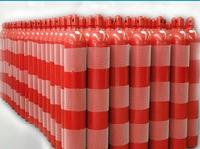
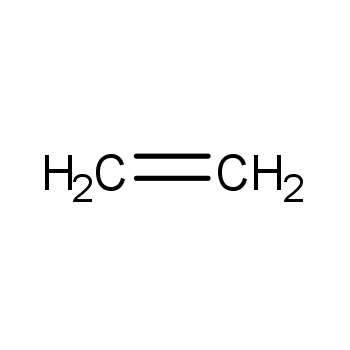
Ethylene is an important organic chemical raw material and one of the indicators to measure the development level of a country's chemical industry. Ethylene is primarily used to produce basic chemicals such as polyethylene (PE), ethylene glycol (EG), styrene (SM), ethylene oxide (EO), and polyvinyl chloride (PVC), and further produces various synthetic materials and fine chemicals. These products are widely used in fields such as home appliances, construction, agriculture, automobiles, and daily goods.
With the rapid entry of private and foreign enterprises, existing refineries seeking to transform into chemical industries, and large-scale refining-chemical integration rapidly expanding, the ethylene industry is still in a phase of rapid expansion. However, there is a notable overproduction problem in the downstream of ethylene, with intense competition in homogeneous products. Facing global energy transitions, stricter environmental policies, and industrial upgrading demands, the supply-demand relationship in the ethylene and downstream industries has undergone structural changes, making the transformation and upgrading of the ethylene industry chain imperative.
In 2023, China's total ethylene production capacity surged to 51.74 million tons per year (t/a), maintaining its position as the world’s largest producer of ethylene. Currently, there are many planned ethylene projects in China, with an additional 4.45 million t/a of capacity scheduled to be added in 2024, indicating that the country is still in a peak period of capacity expansion. The production capacity of enterprises is large, with most concentrated in integrated refining and chemical enterprises.
As private and foreign-funded companies continue to join the market, existing refineries are seeking to transition to petrochemicals, and large-scale refining and chemical integration is rapidly expanding, the ethylene industry remains in a phase of high-speed development. The situation of existing and planned large-scale refining/ethylene bases, with capacities of tens of millions of tons and millions of tons, is shown in Table 1. From Table 1, it can be seen thatSinopec and PetroChina have planned to build or upgrade ethylene projects in their existing large refineries, with 9 ethylene production bases (including joint ventures) over 1 million tons and 7 bases in refineries with over 10 million tons. These two energy giants are poised for a significant leap in ethylene production capacity, industry chain scale, and comprehensive business strength in the future. The private refining and chemical sector also shows strong momentum, with leading companies such as Hengli Petrochemical, Rongsheng Petrochemical, and Dongfang Shenghong occupying important positions in the industry with their excellent refining and integration capabilities.
At the same time, international petrochemical giants such as BASF (1 million t/a), ExxonMobil (1 million t/a, under construction), and others are actively investing in the Chinese market through wholly-owned petrochemical projects. Shell, INEOS, SABIC, and Saudi Aramco, among other internationally renowned energy companies, are adopting cooperative strategies to advance with domestic petrochemical companies, all striving to secure a position in China's key refining market. The competition in the ethylene market is intensifying.
Industrial scale and refining integration are currently key strategies for refining enterprises to achieve profit growth, having become an industry standard. Refining integration and upstream-downstream integration in the petrochemical value chain allow for flexible production operations, enabling a focus on oil, aromatics, or olefins depending on market conditions. This approach effectively integrates resources, strengthens the entire industrial chain from crude oil extraction to end-product output, significantly increases crude oil added value and intermediate product utilization, and expands market breadth and depth, enhancing enterprise competitiveness. It will effectively promote the elimination and integration of outdated production capacity, and foster the reasonable optimization and reshaping of the ethylene industry chain.

Table 1: The situation of existing and planned large-scale refining/ethylene bases, with capacities of tens of millions of tons and millions of tons
In 2023, China's ethylene import volume was 2.13 million tons, export volume was 160,000 tons, and apparent consumption reached 33.87 million tons, with a year-on-year growth of 9.65%. The self-sufficiency rate reached 94.18%. From the perspective of downstream consumption structure, polyethylene (PE) is the dominant product in China's ethylene equivalent consumption, accounting for 65%, followed by ethylene glycol (EG), styrene monomer (SM), ethylene oxide (EO), and polyvinyl chloride (PVC), which account for 15%, 6%, 6%, and 4%, respectively.
Table 2 shows the consumption satisfaction rate of key products in the domestic ethylene industry chain. Most ethylene downstream units are integrated, and production enterprises are primarily focused on self-use of ethylene. In 2023, the supply and demand for ethylene were mainly in balance, with an overall positive trend. In 2023, large-volume general products such as SM and its downstream products (ABS, PS, EPS, SBR), PVC, EO, and EG were all in surplus. The surplus of SM and its downstream products, PVC, and others was exacerbated by weak demand in end-user sectors like real estate and the substantial capacity expansion in the industry, intensifying competition. Although EG's production capacity expanded, the industry faced environmental pressure and sluggish downstream demand, leading to worsening losses. Additionally, fierce international market competition for EG products and the impact of upstream ethylene supply conditions in China led to a domestic self-sufficiency rate for EG of only 70.1%, with a significant net import volume of 7.046 million tons. EO, limited by regional restrictions, cannot be imported or exported, resulting in a low capacity utilization rate. However, many future projects are expected to be integrated with ethylene and downstream derivatives, promoting industry chain consolidation. PE (including HDPE, LDPE, and LLDPE) and EVA are both in short supply. The PE industry generally faces overcapacity competition for low-end general-purpose grades, while high-end specialized products are in short supply and reliant on imports, with a domestic self-sufficiency rate for PE of only 69%. EVA, as a new chemical material, has ushered in a new growth point.

Table 2: Consumption satisfaction rate of major products in the domestic ethylene industry chain
Industry policies are a key driving factor in the development of China's ethylene industry. Table 3 presents the relevant national policies for the ethylene industry chain. The content is mainly divided into four major sectors: industrial structure layout, carbon peak goals, high-end polyolefins, and new energy. It involves the following five aspects:

Table3: National policies related to the ethylene industry chain
Ethylene, as a cornerstone raw material in the petrochemical industry, has a broad range of applications in end products, including construction, electronics, packaging, automotive, medical, agriculture, machinery, textiles, energy, daily chemicals, and other sectors. As of 2023, China's per capita ethylene consumption is only 33.4 kg/a, which is significantly lower than the per capita consumption of 76 kg/a in North America (2021). This indicates a substantial gap, and there is significant potential for growth in China's per capita ethylene consumption, suggesting a huge market demand for the domestic ethylene industry.
In recent years, the growth rate of ethylene demand has slowed, and the development of end-use industries has become increasingly sluggish. The real estate industry entered a phase of low growth in 2015, and the "housing for living, not for speculation" policy, along with a decline in birth rates, has led to a market turning point. Although the home appliance industry leads globally in scale, overall demand is approaching saturation, and smart and green appliances may bring new opportunities. The automotive industry, after rapid development, is now entering the later stage of its popularization period, with growth rates slowing down. However, automotive lightweighting has driven a certain increase in plastic usage. The plastic packaging industry has grown due to the rise of e-commerce and the takeout industry, increasing demand for materials like PE, while at the same time, environmental pressures have led to a reduction in agricultural film usage. Due to serious plastic pollution issues, domestic policies promoting a circular economy have enhanced plastic recycling, with China's waste plastic recycling rate higher than the global average.
Driven by the dual-carbon goals and policies from various countries, the new energy and environmental protection industries have risen rapidly and are quickly changing the global economic landscape. Furthermore, with the transformation and upgrading of China's manufacturing industry, high-end manufacturing sectors such as aerospace, rail transportation, and medical devices have extremely high requirements for the performance, precision, and reliability of materials, which has created new development opportunities for the high-end new material fields downstream of ethylene. Crucially, the process of domestic substitution for high-end materials such as high-density polyethylene is experiencing an unprecedented demand boom. Due to foreign monopolies on key core technologies, materials like high-density polyethylene still rely on imports, and improving the self-sufficiency rate of high-end materials is a key driving force for the demand side of the ethylene industry chain to expand.
In conclusion, under the expansion of demand, the period of high growth for the market demand of general-purpose products in China's ethylene industry chain has ended, and the high-end new materials sector is ushering in a new growth point.
Under the guidance of policies such as supply-side structural reform, carbon neutrality, and new materials, large refining and chemical enterprises are actively building comprehensive industrial chain systems. They focus on strategic paths such as "large ethylene + high-end polyolefins" or "large ethylene + chemical new materials," striving to transition from traditional upstream sectors like petroleum refining and light hydrocarbon cracking to downstream fields such as new energy and new materials. At the same time, with the technological innovations and industrial applications of ethane cracking, olefin catalytic cracking (OCC/OMT), catalytic cracking/cracking (DCC/CPP), heavy oil efficient catalytic cracking (RTC), direct crude oil cracking, and ethanol dehydration to ethylene, ethylene feedstocks are gradually becoming more diversified and lighter. In summary, the ethylene industry chain is generally trending toward diversification of ethylene feedstocks and the high-end development of downstream products, as shown in Table 4.

Table 4: Schematic diagram of ethylene industry chain

Table 5: Ethylene production capacity process distribution trend chart

Table 6: Domestic high-end polyethylene industry situation in 2023
In the market resource allocation, adhere to demand-driven and industry-led strategies, strengthen the precision of government macro-control, and effectively address the structural supply-demand imbalance in the ethylene industry chain. In response to the phenomenon of both shortages and surpluses within the industry chain, advocate for a scientific planning of the industry chain layout based on comprehensive competitiveness assessment, crude oil import risk considerations, and the development potential of downstream industries. This will guide enterprises to implement targeted investments. At the same time, establish and improve the energy efficiency regulatory system to ensure that new projects meet domestic energy efficiency benchmarks and stimulate energy efficiency improvement throughout the industry. Additionally, capacity layout should emphasize strategic balance, rather than merely pursuing rigid indicators like domestic self-sufficiency. Under the premise of overcoming technical bottlenecks, ensuring energy security, and avoiding price control by external forces, reasonable imports of low-cost bulk chemicals from abroad can effectively alleviate resource shortages and environmental pressures caused by large-scale, integrated industry development.
The existing assets of the ethylene industry chain are large, and structural contradictions are prominent. It is necessary to accelerate the transformation and upgrading of traditional industries and optimize the technological transformation of existing assets. Following national policy guidance, gradually advance the replacement of outdated equipment and enhance the modernization level of equipment. At the same time, establish and improve the capacity exit mechanism, increase efforts to eliminate inefficient and outdated capacity, promote healthy market competition, and consolidate and enhance the competitiveness of traditional industries.
For the petrochemical industry, refining enterprises should be guided to focus on digital transformation and intelligent upgrading. They should make full use of cutting-edge technologies such as 5G, cloud computing, big data, artificial intelligence, and the industrial internet to build a data-driven intelligent production system. Through these technological means, not only can safety production management be strengthened, but environmental performance can also be optimized, emergency supply chain response speed and overall operational efficiency can be improved, and deep integration of core business and information technology can be achieved. Further promote the wide application and large-scale development of "5G + Industrial Internet" to create a number of industry clusters with national and even global influence, leading the industry to a higher quality and higher-efficiency development stage.
Strengthen the collaborative innovation system of the ethylene industry chain and the key core technology research system. Focus on innovation along the industry chain layout, enhance open cooperation between research institutes, universities, and upstream and downstream enterprises, solve key common scientific problems, strengthen patent layout, and break through forward-looking production processes. Focus on core technological innovation and equipment upgrading in the ethylene industry, with a focus on developing crude oil direct cracking ethylene technology, low-energy ethylene recovery technology, and new cracking separation technologies. Accelerate the development of core technologies for polyolefins, focusing on the development of catalyst technology, process technology, high-end product technology, processing application technology, and waste resource utilization technology. Special efforts should be made in joint research and the construction of industrial production units in materials such as COCs (high-transparency cyclo-olefin copolymers), EVOH, etc.
In the context of global carbon reduction, international chemical giants such as ExxonMobil, Shell, and BP are undergoing aggressive transformations through mergers and acquisitions, divestments, or shutdowns of refining businesses. However, chemical demand will continue to grow, providing good opportunities for domestic refining enterprises to expand overseas. Against the backdrop of domestic "dual carbon" goals and energy transformation, refining enterprises are increasingly shifting toward new materials, new energy, CCUS, and other fields. Intense homogenization competition exists in traditional chemical fields, while investment in high-end sectors has surged. Refining enterprises' overseas project layout can achieve resource optimization and accelerate the internationalization of refining enterprises, promote the transformation of the domestic petrochemical industry, and mitigate the uncertainty brought by international trade.
On one hand, strengthen cooperation by laying out petrochemical projects in resource-rich countries with stable political situations. In such countries, collaborate with local refining companies to jointly build low-cost, export-oriented refining projects that leverage resource advantages and enhance international competitiveness. On the other hand, seize opportunities by laying out petrochemical projects in countries with large market potential. Based on international trade dynamics and the trend of manufacturing transfer, actively lay out petrochemical projects in densely populated and high-potential markets in South Asia, Southeast Asia, and Central Asia to create domestic-demand-oriented refining bases that flexibly match regional demand and seize the opportunities in emerging markets.
Reference:
https://www.xdhg.com.cn/CN/10.16606/j.cnki.issn0253-4320.2025.01.001
 |
 |
 |


 5YRS
5YRS