Hypertension is a prevalent cardiovascular disease and one of the major chronic illnesses affecting public health. Hypertensive patients often have comorbidities such as blood sugar and lipid abnormalities, making individualized medication crucial for hypertension management. In China, β-blockers remain a first-line treatment for hypertension.
β-receptors, or β-adrenergic receptors, are divided into three subtypes: β1, β2, and β3, located in different parts of the body. β1 receptors are primarily found in cardiac tissue, β2 receptors in the lungs, and β3 receptors in adipose tissue and the heart. β-blockers selectively bind to β-receptors, blocking the agonistic effects of neurotransmitters and catecholamines on these receptors. β-blockers are classified into three generations based on their biochemical and pharmacological characteristics: First-generation (e.g., Propranolol, Sotalol) are non-selective and target both β1 and β2 receptors, potentially causing adverse effects such as bronchoconstriction and metabolic disturbances; Second-generation (e.g., Metoprolol, Atenolol, Bisoprolol) are selective for β1 receptors, primarily affecting the heart; Third-generation (e.g., Nebivolol, Carvedilol, Labetalol) have higher selectivity for β1 receptors and additional vasodilatory properties, offering better hemodynamic profiles and fewer side effects. Key drugs and their effects are summarized in the table below.

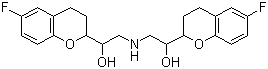
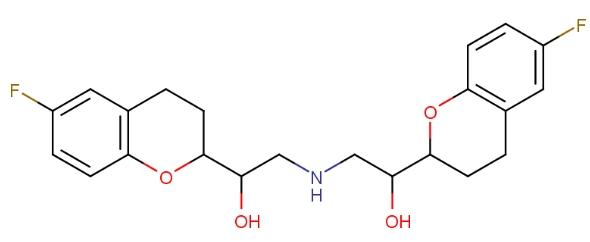
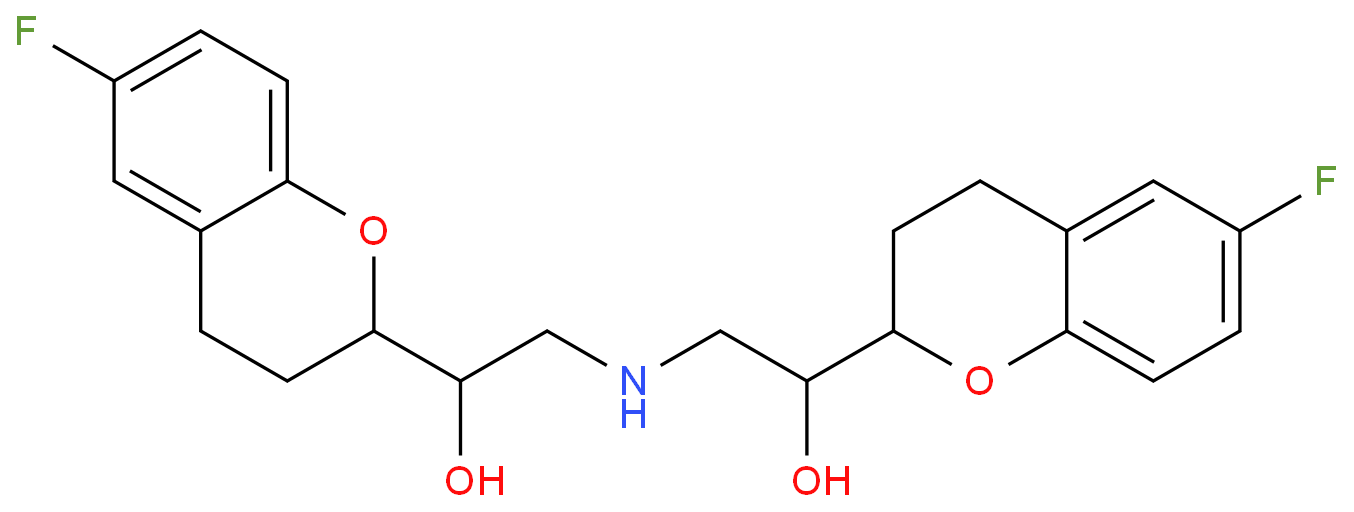
Nebivolol has a 321-fold higher affinity for human cardiac β1 receptors compared to β2 receptors, making its selectivity for β1 receptors greater than that of other similar drugs. Nebivolol's selectivity for β1-adrenergic receptors is 3.5 times higher than that of Bisoprolol.
Research by Iana Ivaylova Simova and others investigated the effects of two β-blockers, Nebivolol and Bisoprolol, on endothelial function in patients with newly diagnosed hypertension. The study involved 25 hypertensive patients, with an average age of 45.3±11.5 years, who were randomly assigned to receive either Nebivolol or Bisoprolol for 8 weeks in an open-label crossover design. Blood flow-mediated endothelial-dependent dilation (FMD) was measured at baseline and at the end of each 8-week treatment period. Additionally, 24-hour ambulatory blood pressure (BP) monitoring was conducted at the end of each treatment period.
The impact on blood pressure was similar for both β-blockers. The average FMD before treatment was 4.14±3.55%. After Nebivolol treatment, FMD increased to 8.99±4.21%, showing a statistically significant difference from baseline (P<0.001).
S. E. Brett and others compared the hemodynamic effects of Bisoprolol and Nebivolol in a double-blind, randomized, crossover study conducted in an outpatient setting. The study included 15 patients with uncomplicated mild primary hypertension (11 men, 4 women, aged 29 to 69 years). Patients were randomly assigned to receive Nebivolol (5 mg orally daily) or Bisoprolol (10 mg orally daily) for 2 weeks, followed by a 2-week washout period and 2 weeks of alternative treatment. Measurements were taken at baseline and at the end of each active treatment period (using a mercury sphygmomanometer and bioimpedance).
During active treatment, the average heart rate decreased (Bisoprolol treatment: from 65 ± 2 beats/min to 53 ± 3 beats/min, p < 0.05; Nebivolol treatment: from 64 ± 3 beats/min to 59 ± 3 beats/min). The reductions in systolic/diastolic blood pressure were similar for both treatments (Bisoprolol: 143 ± 3/90 ± 2 mmHg to 127 ± 3/80 ± 2 mmHg; Nebivolol: 144 ± 4/92 ± 2 mmHg to 131 ± 4/83 ± 3 mmHg; each p < 0.01). In contrast, systemic vascular resistance index decreased during Nebivolol treatment (from 2854 ± 201 to 2646 ± 186 dyn·sec·cm?5·m2, p < 0.05) but did not change significantly during Bisoprolol treatment (baseline 2848 ± 177, after treatment 2787 ± 159 dyn·sec·cm?5·m2).

Common side effects of Bisoprolol include headache, fatigue, and diarrhea. Additionally, interactions with alcohol may worsen dizziness and increase the risk of fainting, so it is advised to avoid alcohol while using Bisoprolol.
Common side effects of Nebivolol include dizziness and fatigue. Alcohol should also be avoided when taking Nebivolol, as it can exacerbate dizziness. Compared to other β-blockers, Nebivolol (Bystolic) is less likely to cause erectile dysfunction and weight gain.
Erectile dysfunction (ED) can result from various causes, and some antihypertensive medications are known to increase the risk of ED. β-blockers are among the antihypertensive drugs associated with a higher risk of ED.
Sulastri and others conducted a PRISMA (Preferred Reporting Items for Systematic Reviews and Meta-Analyses) search for articles published over the past 20 years on "β-blockers" and "erectile dysfunction" in PubMed, Cochrane Library, and Medline databases. The review included 1578 participants across 6 studies, involving 5 β-blockers: Atenolol (17.8%), Bisoprolol (31.1%), Carvedilol (10.8%), Metoprolol (9.8%), and Nebivolol (30.5%).
The study found that Nebivolol is recommended to avoid ED due to its lower risk compared to other β-blockers. Bisoprolol was associated with a higher risk of ED, followed by Atenolol, Metoprolol, and Carvedilol.
β-blockers are key medications for cardiovascular diseases, but blocking β2 receptors in the airways can lead to severe, sometimes fatal bronchoconstriction in asthma patients. Although selective β1-blockers may be safer than non-selective β-blockers, they are still relatively contraindicated and under-prescribed.
Initial dose: 5 mg orally once daily
Dose titration: If the desired effect is not achieved, the dose can be increased to 10 mg and then to 20 mg as needed
Maximum dose: 20 mg daily
Initial dose: 5 mg orally daily
Dose adjustment: Increase dose every two weeks as needed, up to 40 mg daily
Maximum dose: 40 mg daily
Both bisoprolol and nebivolol are effective in treating hypertension and heart failure. Nebivolol's additional vasodilatory properties can improve blood flow and may reduce side effects such as erectile dysfunction. Some individuals might consider switching from bisoprolol to nebivolol. Consult your doctor: they will assess your medical history and current condition to determine if nebivolol is a suitable alternative. To minimize any side effects, your doctor may recommend gradually reducing the dose of bisoprolol while gradually increasing the dose of nebivolol. Additionally, monitor any new or worsening symptoms during the transition period.
Combining bisoprolol and nebivolol may produce additive effects, leading to severe bradycardia (low heart rate) and hypotension (low blood pressure). If you have any concerns or doubts, consult your doctor. Your doctor may prescribe alternative options that do not interact. Be sure to inform your doctor about all other medications you are taking, including vitamins and herbs. Do not stop taking any medications without first consulting your doctor.
Both bisoprolol and nebivolol play important roles in treating hypertension and cardiovascular diseases. Since each person's health condition is different, the effects and side effects of these medications may vary. Therefore, always consult your doctor when choosing or switching medications. Your doctor will provide professional advice based on your specific situation to ensure the best treatment plan and effectively manage potential side effects.
[1]https://www.ncbi.nlm.nih.gov/pmc/articles/PMC7917232/
[2]https://www.medscape.com/viewarticle/441228_4
[3]https://www.ncbi.nlm.nih.gov/pmc/articles/PMC2827212/
[4]https://www.drugs.com/dosage/
[5]https://www.tandfonline.com/doi/pdf/10.1080/03007995.2024.2318058
[6]https://pubmed.ncbi.nlm.nih.gov/16491268/
[7]https://link.springer.com/article/10.2165/00044011-200222060-00002
[8]https://www.ncbi.nlm.nih.gov/pmc/articles/PMC6977581/
[9]https://en.wikipedia.org/wiki/
[10]Li Ping, Liu Chang, Gu Xiaoce, et al. Clinical advantages of nebivolol in the treatment of hypertension[J]. Chinese Pharmacy, 2023, 34(16): 2044-2048.
[11]https://journals.lww.com/jhypertension/abstract/2022/05002/44_beta_blocker_treatment_options_and_risk_of.44.aspx
[12]https://www.drugs.com/drug-interactions/bisoprolol-with-nebivolol-393-0-2788-0.html
 |
 |
|


 4YRS
4YRS