Digitonin, as an important natural product, plays a significant role in biochemistry and research. This article aims to delve into various aspects of digitonin, including its mechanisms in biochemistry and its application value in research. Digitonin garners attention and significance due to its multifunctionality in various applications. Through a deep understanding of digitonin, we can uncover its potential roles in biochemistry and research, providing more insights and possibilities for future studies and applications.
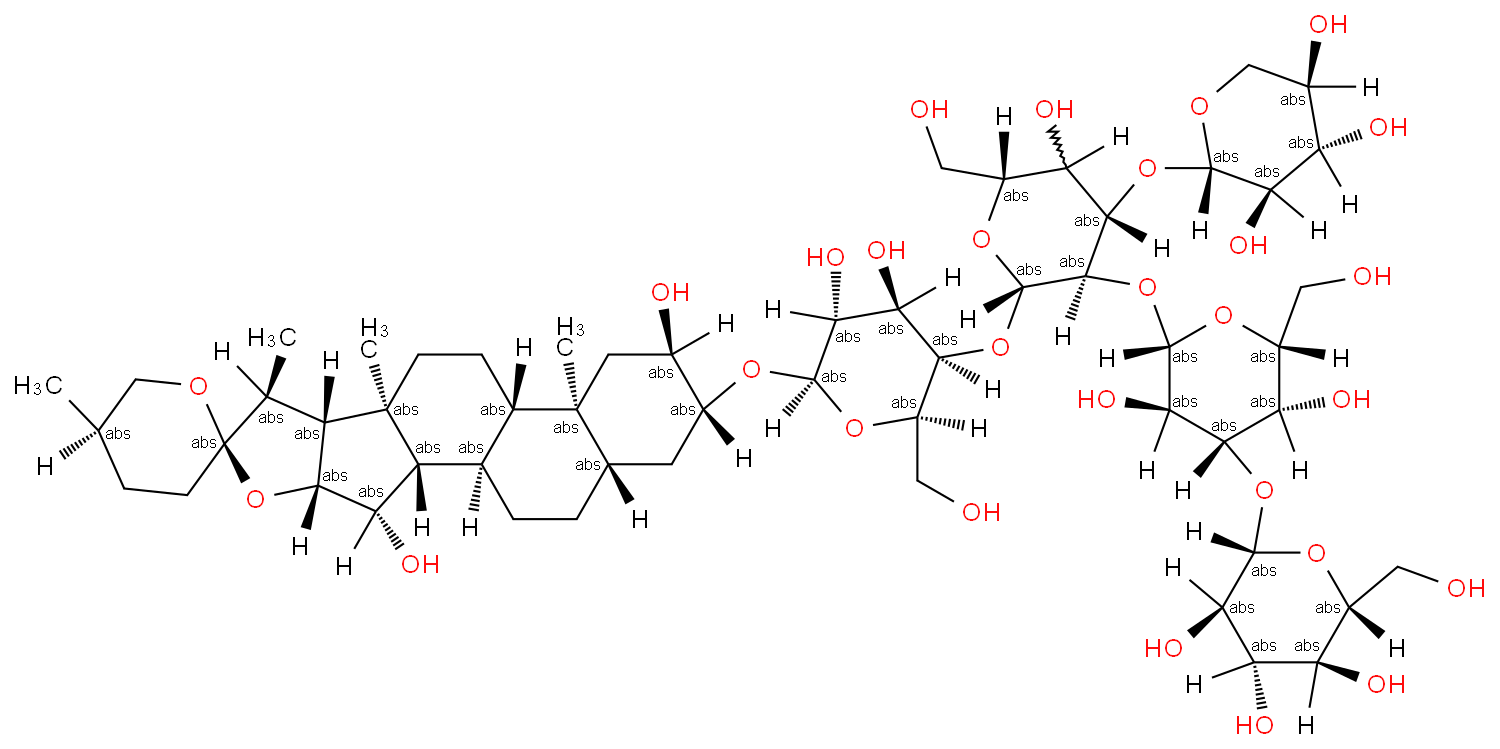
Digitonin is a steroidal saponin obtained from the plant Digitalis purpurea. Its aglycone is digitoxigenin, a spirostanoid steroid. Is digitonin a detergent? It has been studied as a detergent because of its effective lipid-dissolving properties. Therefore, it has various potential membrane-related applications in biochemistry, including solubilizing membrane proteins, precipitating cholesterol, and permeabilizing cell membranes. Scientists utilize digitonin's ability to permeabilize cell membranes to create pores for extracting cellular components for further research. Digitonin is sometimes confused with cardiac drugs digoxin and digitoxin, all of which can be extracted from the same source. The structural formula of digitonin is as follows:

Due to its unique structure with a hydrophilic head and a hydrophobic tail, digitonin acts like a detergent, interacting with various cellular structures and breaking them down, especially cell membranes. Here are some key functions of digitonin:
Digitonin can interact with cholesterol, forming pores on the outer leaflet of the cell membrane. This allows molecules that usually cannot pass through the cell membrane to enter or leave the cell. Scientists can utilize this property to study the internal workings of cells.
Digitonin can help dissolve proteins embedded within the cell membrane. This aids in the separation and purification of these proteins for further study.
In the past, digitonin was used to measure cholesterol levels in blood and tissues. However, more specific methods are now preferred.
It should be noted that digitonin may have some limitations. For example, it can affect the functionality of some cellular components, and the quality of commercially available digitonin may vary.
Digitonin has a specific effect on mitochondria. Mitochondria are cytoplasmic organelles (approximately 2 μm in size) involved in several crucial processes in the cell, including generating cellular ATP through oxidative phosphorylation. They are present in almost all eukaryotic cells and are surrounded by two membranes - the outer membrane and the inner mitochondrial membrane, with a large surface area enclosing the matrix space. Unlike some detergents that can disrupt mitochondrial function, digitonin's action is more precise:
Digitonin can pass through the outer mitochondrial membrane at low concentrations without significantly affecting the inner mitochondrial membrane. This creates pores on the outer layer, allowing researchers to introduce specific molecules into the intermembrane space for study.
Due to this selective permeability, digitonin is a valuable tool in isolating mitochondria from cells while retaining their functionality. This enables scientists to study mitochondrial processes such as ATP production or enzyme activity in a controlled environment.
At higher concentrations, digitonin can disrupt both the outer and inner mitochondrial membranes, separating them for further analysis. This may aid in understanding the unique composition of each membrane.
In summary, digitonin is a useful research tool for studying mitochondria, targeting the outer mitochondrial membrane and preserving mitochondrial function.
The plasma membrane acts as the gatekeeper of the cell, tightly regulating what goes in and out. Digitonin disrupts this control by forming pores in the membrane, a process known as permeabilization. These pores are specifically targeted to cholesterol-rich regions, allowing researchers to introduce molecules or extract cellular components for further analysis. This targeted permeability makes digitonin a valuable tool for cell fractionation, a technique for separating different cellular components. By carefully controlling the concentration of digitonin, scientists can selectively permeabilize the plasma membrane without affecting the integrity of other organelles. This allows them to study the specific contents of the cytoplasm, the fluid inside the cell, without disrupting the cell's complex organization.
The cell membrane is studded with proteins responsible for various cellular functions such as communication and transport. Digitonin's interaction with cholesterol-enriched regions of the cell membrane also affects these membrane proteins. At low concentrations, digitonin can solubilize or dissolve specific membrane proteins without denaturing them. This enables researchers to isolate and purify these proteins for further study, such as determining their structure or function. Additionally, digitonin-permeabilized cells can be used to study interactions between cytoplasmic and membrane proteins. This technique provides valuable insights into cellular processes that rely on these interactions.
Digitonin is a valuable research tool but requires careful handling due to its potential health hazards. It can irritate the skin, eyes, and respiratory system. When working with digitonin, personal protective equipment (PPE) such as gloves, safety goggles, and lab coats must be worn. Work in well-ventilated fume hoods to avoid inhalation and ingestion. If contact with skin or eyes occurs, immediately rinse the affected area with water for at least 15 minutes and seek medical attention. Due to digitonin's detergent properties, it can also disrupt biological samples. Handle with clean utensils and avoid excessive contact, as this can denature proteins or damage membranes.
To achieve the expected results in your experiments, optimizing your use of digitonin is crucial. Since the quality of commercially available digitonin may vary, consider testing different brands or batches to find the one most suitable for your specific application. Start from the lowest effective concentration to minimize harmful effects on cellular components. Preliminary experiments are recommended to determine the optimal digitonin concentration for specific cell types and desired outcomes. Maintaining consistent experimental conditions, such as temperature and incubation time, is also important for reproducible results.
In conclusion, digitonin is a powerful tool for unlocking cellular secrets. Its selective membrane permeabilization and protein solubilization capabilities allow researchers to delve deeper into cellular processes. From isolating functional mitochondria to studying interactions between cytoplasmic and membrane proteins, digitonin offers a range of valuable applications. By understanding digitonin's effects on cell membranes and implementing safe practices, researchers can maximize its potential in biochemical research.
[1] https://www.sciencedirect.com/topics/neuroscience/digitonin
[2] https://www.ebi.ac.uk/chebi/searchId.do?chebiId=CHEBI:27729
[3] https://en.wikipedia.org/wiki/Digitonin
[4] https://bmcresnotes.biomedcentral.com/articles/10.1186/1756-0500-2-243#
[5] https://www.ncbi.nlm.nih.gov/pmc/articles/PMC8374178/#
 |
 |
|


 6YRS
6YRS

