Digitonin, as an important natural product, has long been the focus of researchers' attention and exploration due to its mechanism of action. So, what is the mechanism of digitonin? This article aims to delve into the mechanism of digitonin, exploring its principles and impact in biology, medicine, and other fields. As a compound with multiple biological activities, the mechanism of action of digitonin involves various aspects. Through in-depth study of the mechanism of digitonin, we can better understand its mode of action in different fields, providing important theoretical basis and guidance for further research and application.
Saponins are widely distributed in plants and also found in lower marine animals such as starfish or sea cucumbers. Their main function is to protect organisms from harmful effects of pathogens, thanks to their antifungal, antiviral, and antibacterial properties. The name "saponin" reflects their ability to form soap-like foam in aqueous solution. An important characteristic of saponins is their lytic action on red blood cell membranes, attributed to the affinity of the glycosidic portion for membrane cholesterol. Digitonin is naturally present in a ubiquitous plant, Digitalis.
Like most saponins, digitonin can increase the permeability of biological membranes and disperse membrane-bound proteins. Digitonin also acts as a competitive inhibitor of P-glycoprotein (P-gp), an important protein in cancer therapy; P-gp is responsible for removing many foreign substances from cells. However, the most common characteristic of digitonin is its affinity for cholesterol. One possible application of digitonin is the detection of cholesterol in cells. Raj and colleagues developed a method for detecting cholesterol using digitonin-coupled gold nanoparticles. Vermeer et al. and Fornas et al. used digitonin as a protective agent for preparing liver tissue for electron microscopy examination to avoid cholesterol loss. Augustin et al. studied the complexation of cholesterol with digitonin. Because the glycosidic moiety of digitonin is lipophilic, digitonin can spontaneously incorporate into membranes. Subsequently, a 1:1 complex of steroid glycoside-cholesterol will form and accumulate in the membrane. The mechanism of this process is not fully understood. However, Armah et al. proposed that the spatial properties of saponin-cholesterol complexes may lead to membrane curvature, potentially causing vesicle or pore formation in cell membranes.
Digitonin, as a mild detergent, has several applications in biochemistry, particularly those related to cell membranes. Here is how it works:
Digitonin has a unique structure with two distinct parts: a hydrophilic sugar head and a hydrophobic (lipophilic) sterol tail. This amphipathic nature allows digitonin to interact with both water and lipids (fats) in the cell membrane.
Crucially, digitonin specifically targets cholesterol in the cell membrane, which is a key component of membranes.
The interaction between digitonin and cholesterol can have two effects on the cell membrane, depending on the concentration used: at low concentrations, digitonin will insert into the cell membrane and form complexes with cholesterol. This creates pores in the membrane, allowing small molecules and ions to permeate. This enables researchers to study cellular contents without fully disrupting the cell. At higher concentrations, digitonin can completely disrupt the cell membrane, causing cell lysis (rupture).
It is important to note that the action of digitonin on the cell membrane largely depends on the presence of cholesterol.
If the cell membrane has almost no cholesterol, digitonin cannot form pores or cause cell lysis.
Digitonin interacts directly with cholesterol and disrupts the choline monolayer. The hydrophobic interactions between the rigid ring of digitonin and hydroxyl groups of cholesterol, as well as the hydrophilic interactions that form a hydrogen bond network between the sugar moiety and the hydroxyl groups of cholesterol, are assumed reasons for monolayer disruption. The membrane activity of digitonin is cholesterol-dependent. Membrane damage or fluidity induction occurs at high or low digitonin concentrations, respectively. Indeed, the lytic activity of digitonin is revealed using membranes rich in cholesterol. Additionally, the antiviral activity of digitonin may be related to the liquefaction of viral envelopes, indicating high rigidity due to the presence of cholesterol. In conclusion, the mechanism of action of digitonin is based on its specific interaction with cholesterol on the cell membrane. This interaction can produce pores for permeability studies or cause membrane rupture depending on the concentration used.
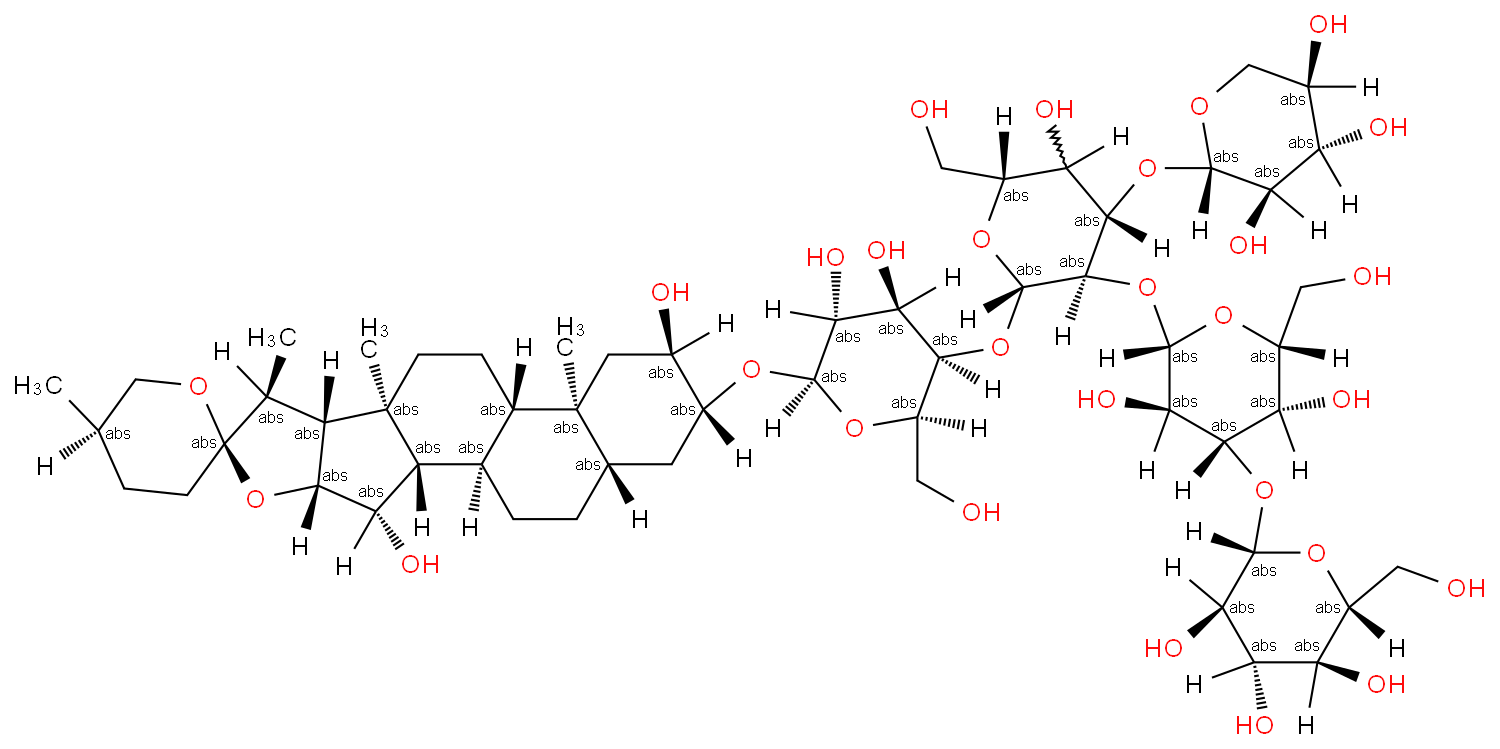
Digitonin is a steroidal monodesmosidic glycoside saponin. It consists of a pentasaccharide portion composed of two half-rhamnoses, two glucoses, and one xylose residue. The digitonin structure is as follows:

The unique structure of digitonin plays a crucial role in its interaction with cell membranes. It has two key parts:
Digitonin's amphipathicity means it has both hydrophilic and hydrophobic regions, crucial for its function. The sugar head acts as a bridge between the water surface and the lipid interior of the cell membrane, allowing the sterol tail to specifically target cholesterol. This unique structure underlies digitonin's ability to disrupt or permeate cell membranes, depending on the concentration used.
The driving force behind digitonin testing is its ability to assess the presence and function of cholesterol within cell membranes. Since digitonin interacts specifically with cholesterol in the cell membrane, this test can indirectly measure cellular cholesterol levels. By observing the extent of membrane disruption caused by digitonin, researchers can estimate how much cholesterol is present. Additionally, the test can provide insights into how cholesterol functions within the membrane. For example, if digitonin more readily disrupts the membrane of certain cell types, it may indicate that cholesterol's role in these membranes differs from other types.
This test is applicable in various analytical environments. Researchers can quantify cellular cholesterol levels by measuring the extent of membrane disruption caused by digitonin. Digitonin can also be used to study how cholesterol regulates membrane properties and functions. By observing how digitonin affects the transmembrane channels of molecules and ions, researchers can understand the role of cholesterol and other membrane components in regulating permeability. This knowledge is crucial for understanding various cellular processes dependent on controlled movement of molecules across membranes. Additionally, its membrane-dissolving ability allows researchers to isolate membrane proteins for further analysis.
The unique characteristics of digitonin extend beyond basic research and find applications in various industries. The pharmaceutical industry utilizes digitonin's ability to dissolve membrane proteins to develop new drugs. By isolating these proteins, scientists can study their structure and function, potentially leading to the creation of targeted therapies. Additionally, the food industry can utilize digitonin's cholesterol-binding properties to develop food additives or supplements that lower cholesterol.
In the field of biomedical research, digitonin remains a cornerstone tool. Its ability to permeate cell membranes while retaining some cellular functions allows researchers to study the complex workings inside cells. This controlled pathway enables the study of various cellular processes such as protein transport and signaling pathways. The role of digitonin in isolating membrane proteins is crucial for understanding the function of membrane proteins in health and disease.
The future prospects for digitonin are promising. Researchers are continually exploring its potential in new areas. For example, digitonin's ability to disrupt cell membranes can be used to develop novel strategies for targeted drug delivery within specific types of cells. Ongoing research delves into the potential role of digitonin in nanotechnology, where its interaction with lipids could be used in the design of drug delivery carriers or biosensors. As research progresses, digitonin will continue to play a vital role in unraveling the mysteries of the cell and paving the way for advancements in medicine and other fields.
While digitonin has significant application value, caution is needed due to its potential health risks. Ingestion is toxic, and prolonged exposure may lead to organ damage. Therefore, several safety measures are crucial:
The journey of digitonin from a natural product to a multifunctional scientific tool demonstrates its unique properties. Its amphipathic structure allows it to target cholesterol in cell membranes, providing researchers with a window into cellular processes. Digitonin's ability to permeate membranes, dissolve proteins, and manipulate membrane properties makes it invaluable across various fields. From studying fundamental cellular mechanisms to developing new drugs and food additives, digitonin continues to be a cornerstone tool in scientific exploration of the complexities of life.
[1] https://www.ebi.ac.uk/
[2] https://www.sciencedirect.com/topics/neuroscience/digitonin
[3] Korchowiec B, Gorczyca M, Wojszko K, et al. Impact of two different saponins on the organization of model lipid membranes[J]. Biochimica et Biophysica Acta (BBA)-Biomembranes, 2015, 1848(10): 1963-1973.
[4] https://www.researchgate.net/figure/Chemical-structure-of-digitonin_fig2_7664704
|
 |
 |


 6YRS
6YRS

