
What is CH3CO2H?
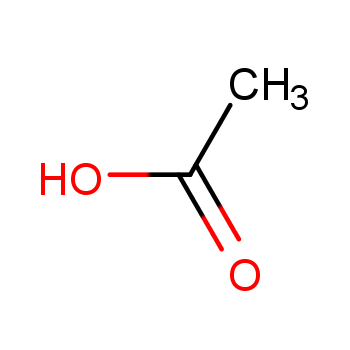
Acetic acid, with a chemical formula of CH3CO2H, is a clear, colorless liquid with a pungent odor. It is also known as ethanoic acid in the IUPAC system. Acetic acid is an organic compound classified as a carboxylic acid due to its functional group, the carboxyl group (COOH). This compound is widely recognized for its presence in vinegar, where it contributes to its sour taste and strong odor. An important aspect of molecules like CH3CO2H is their polarity, which affects their chemical behavior and interactions. So, is CH3CO2H polar or nonpolar?
What is polarity?
Polarity describes the uneven distribution of electrons in a molecule or compound. In chemistry, polarity refers to the separation of electric charge within a molecule, leading to positive and negative poles. This phenomenon arises from differences in electronegativity between atoms within the molecule.
Electronegativity measures an atom's ability to attract electrons. The polarity of a bond is determined by the electronegativity difference between atoms. When atoms with different electronegativities form a bond, the shared electron pair is pulled closer to the more electronegative atom, creating partial positive and negative charges. If the electronegativity difference is between 0.5 and 2.0, the bond is considered polar, with significant charge separation.
Polar molecules exhibit distinct properties in chemical reactions and physical characteristics such as solubility, melting point, and boiling point. These attributes make polar molecules essential in various chemical and biological processes. What about CH3CO2H? Is CH3CO2H polar or nonpolar?
Polarity of CH3CO2H
Is CH3CO2H polar or nonpolar? Acetic acid is a polar molecule due to its structure and electronegativity differences. The molecule contains a carboxyl group (COOH), where the oxygen atom is highly electronegative compared to carbon and hydrogen atoms. This results in a significant electronegativity difference, leading to polar bonds within the molecule. Why is CH3COOH polar?
(1) Dipole Moment
The carboxyl group in acetic acid contributes to its polarity. The oxygen atom pulls electron density away from hydrogen and carbon atoms, creating a dipole moment where the oxygen end is partially negative and the hydrogen-carbon end is partially positive. This dipole moment allows acetic acid to interact with water and other polar solvents through hydrogen bonding and dipole-dipole interactions.
(2) Electronegativity
| Element Electronegativity |
| O |
3.44 |
| C |
2.55 |
| H |
2.20 |
The difference in electronegativity (3.44 for oxygen and 2.55 for carbon) indicates a polar covalent bond in the carboxyl group.
Acetic acid demonstrates polarity primarily due to the carboxyl group's presence, which imparts distinct chemical and physical properties to the molecule.

Molecule Structure of CH3COOH

Electron Cloud Model of CH3COOH
Application of CH3CO2H Polarity
Acetic acid is extensively utilized in various industries and applications. It is a crucial chemical in the production of vinegar, where its sour taste and preservative properties are highly valued. In addition to its role in food processing, acetic acid serves as a vital solvent in the manufacturing of paints, adhesives, and coatings. Its polarity enables acetic acid to dissolve polar and ionic compounds effectively, making it suitable for diverse industrial processes.
Highlight of Acetic Acid
| Acetic Acid Cas 64-19-7 |
| Molecular formula |
CH3CO2H |
| Molecular shape |
Linear |
| Relative molecular mass |
60.05 g/mol |
| Solubility |
Miscible with water, soluble in organic solvents |
| Melting point |
16.6 °C |
| Boiling point |
118.1 °C |




 2YRS
2YRS


