Is citric acid strong or weak? Citric acid is a common weak acid widely used in food processing, cleaning agents, and other fields. As a weak acid, citric acid has specific chemical properties and strength that significantly influence our daily lives. This article will focus on discussing the strength of citric acid and its impacts, explaining the characteristics of citric acid as a weak acid and its applications in different fields. By understanding the strength and effects of citric acid, we can better appreciate its role and significance in our lives.
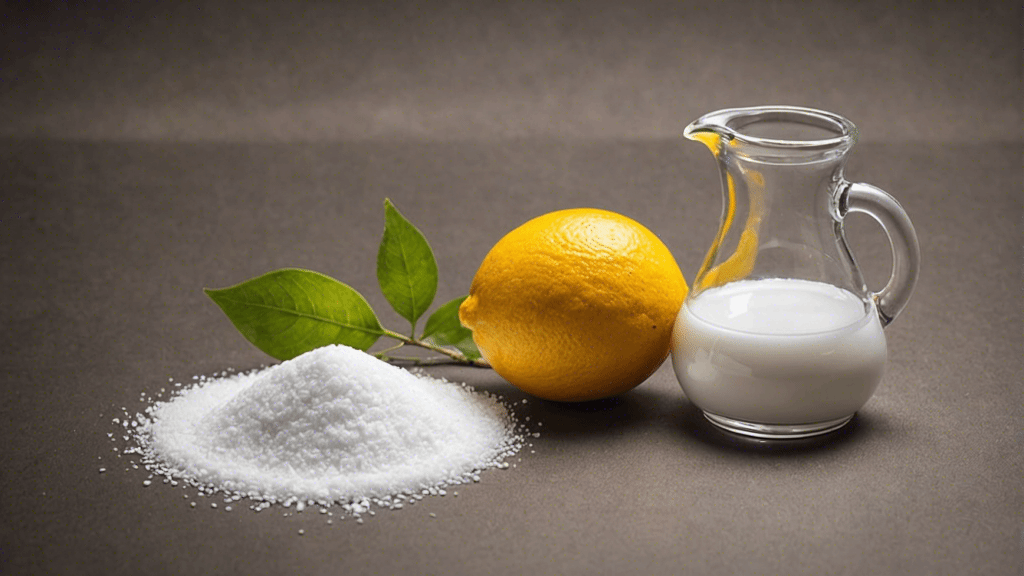
Citric acid is a natural acid found in citrus fruits such as lemons, oranges, and grapefruits, giving them their sour taste. It can also be synthesized and commonly used as an additive in food, cleaning agents, nutritional supplements, and more. Is citric acid strong or weak? Citric acid is a weak acid. In its natural form, it appears as small, transparent crystals, similar to table salt. While it is odorless, it has a sour taste. It belongs to the group of alpha-hydroxy acids (AHAs), meaning it has a hydroxyl group attached to the alpha position of the acid. Other AHAs include lactic acid, glycolic acid, malic acid, and tartaric acid. According to a 2014 study, citrus fruits like lemons and limes are the most reliable natural sources of citric acid. Other natural sources include oranges, tangerines, grapefruits, pineapples, tomatoes, broccoli, carrots, and berries.
The key difference between strong acids and weak acids lies in their degree of dissociation in water.
These acids completely dissociate in water, meaning almost all molecules break down into hydrogen ions (H+) and negative ions (anions). This results in a high concentration of H+ ions in the solution, making them highly effective. Examples include hydrochloric acid (HCl), sulfuric acid (H2SO4), and nitric acid (HNO3).
These acids only partially dissociate in water. Only a small fraction of molecules break down into H+ ions. The majority remain as intact molecules. This leads to a lower concentration of H+ ions, making them weaker than strong acids. Examples include acetic acid (vinegar - CH3COOH), citric acid (found in fruits - C6H8O7), and carbonic acid (soda - H2CO3).
Several factors influence the ease with which an acid provides its H+ ions, thus determining its strength:
The stronger the bond between hydrogen (H) and the remaining anion (negative ion), the more difficult it is for the acid to release H+ ions, making it a weaker acid.
The stability of the anion formed after H+ donation plays a crucial role. More stable anions can easily accommodate the negative charge, making the acid more willing to donate H+, thus stronger.
Generally, atoms holding the dissociable H+ ions with stronger electronegativity (strongly attracting electrons) tend to produce stronger acids. This is because electronegative atoms draw electron density away from H+ ions, weakening the bond and making it easier to release.
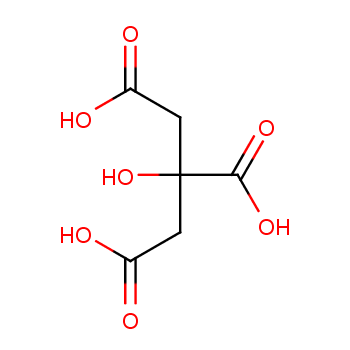
Citric acid, despite having three carboxylic acid groups (COOH), is classified as a weak acid due to its chemical structure and ionization constant (Ka).
Citric acid's structure features three carboxylic acid groups, each with a dissociable hydrogen atom. However, the presence of these groups alone does not guarantee the formation of a strong acid. Reasons include:
The negative charges of two carboxylic acid groups (COO-) adjacent to each dissociable hydrogen can repel some electron density around the O-H bond, slightly weakening the O-H bond and making the release of H+ ions slightly easier. However, this effect is not sufficient to fully ionize a strong acid.
Citric acid can form internal hydrogen bonds between its hydroxyl (OH) and carboxylic (C=O) groups. These internal hydrogen bonds stabilize the molecule, making it less likely to fully dissociate and release all H+ ions.
The slight weakening of the O-H bond is not enough to overcome the stabilizing effect of the molecular structure, resulting in partial dissociation and weak acid behavior.
The ionization constant (Ka) measures the strength of an acid in water. It represents the equilibrium constant of the acid dissociation reaction. Lower Ka values indicate weaker acids as they reflect lower dissociation tendencies. Citric acid is classified as a weak acid because its hydroxyl and carboxylic groups only partially dissociate when dissolved in water. The strength of an acid is calculated by its dissociation constant, which is the ratio between dissociated ions and undissociated molecules.
Citric acid is a triprotic acid with pKa values extrapolated to zero ionic strength at 25°C, which are approximately 3.128, 4.761, and 6.396, with the hydroxyl pKa determined by 13C NMR spectroscopy being 14.4. Citric acid exhibits relatively high pKa values (around 3.13 for the first dissociation) compared to other acids. Since pKa and Ka are inversely related (pKa = -log(Ka)), higher pKa translates to lower Ka values. This lower Ka value reflects citric acid's limited dissociation in water, confirming its classification as a weak acid.
As the acid solution reaches its final equilibrium, the ionization constant weakens. This makes it extremely useful in buffer solutions, applicable within the pH range of 2.1-7.4.
Although citric acid is a weak acid, we can compare its strength with other acids to understand its relative behavior.
Citric acid (pKa≈3.13) is considered slightly stronger than acetic acid (pKa≈4.76), although both are classified as weak acids. Why is citric acid stronger than acetic acid? Reasons include:
Citric acid has three carboxylic acid groups, while acetic acid has only one. These carboxylic groups are electron-withdrawing groups. When a hydrogen dissociates from a citric acid molecule, the negative charge on the remaining carboxylic groups disperses (delocalizes) onto the molecule due to the presence of other carboxylic acid groups. This delocalization helps stabilize the anion, making citric acid more willing to provide H+ ions, whereas the negative charge in acetic acid is concentrated on one carboxylic group.
Citric acid can lose protons in
multiple steps (one for each carboxylic acid group). Although the first dissociation (pKa≈3.13) is relevant here, subsequent dissociations become weaker (higher pKa values) due to repulsion between the increased negative charges on the molecule. On the other hand, acetic acid has only one proton available for dissociation.
Overall, the presence of multiple electron-withdrawing groups and the potential for multiple dissociations make citric acid slightly stronger than acetic acid.
Citric acid exhibits significant differences in properties compared to strong acids like hydrochloric acid (HCl). Here are the main differences:
Hydrochloric acid is a strong acid that completely dissociates in water. Almost all HCl molecules break down into hydrogen ions and chloride ions. In contrast, citric acid only partially dissociates, with an important portion of dissociated ions balanced by intact molecules.
Due to complete dissociation, the pH of hydrochloric acid solution (strong acidity) is much lower than that of citric acid solution, which, due to limited dissociation, has a higher pH (weak acidity).
Strong electrolytes like HCl have excellent conductivity due to the abundance of free ions. Citric acid is a weak electrolyte with fewer free ions, resulting in lower conductivity.
Strong acids like HCl are highly reactive, readily attacking metals, dissolving many substances, and participating in various acid-base reactions. Citric acid, being weaker, exhibits lower reactivity in these aspects.
Essentially, strong acids like hydrochloric acid are more effective due to complete dissociation, leading to a higher concentration of H+ ions and more pronounced acidity.
The pH level of citric acid ranges from 3 to 6, indicating that it is a relatively weak acid. The pH scale ranges from 0 to 14, with 7 being neutral. 0 represents highly acidic items (like battery acid), while 14 represents highly alkaline items (like liquid drain cleaner).
The pH of a 1 mM citric acid solution is approximately 3.2. The pH of citrus fruit juices like orange and lemon depends on the concentration of citric acid, with higher concentrations leading to lower pH values. The pH of lemon juice typically ranges between 2.5 and 3.5. Although this seems acidic, it's important to remember that citric acid only partially dissociates. This limited dissociation makes the acidity of lemon juice much milder compared to strong acids with similar pH values.
Despite being a weak acid, citric acid has a wide range of uses:
Citric acid can be added to processed and packaged foods and beverages like ice cream, sherbet, sodas, and wine as a preservative, emulsifier, and flavor enhancer. It is also added to many canned and jarred foods to help prevent botulism.
Antioxidants extracted from citric acid can help maintain food's edibility for longer periods. For example, sprinkling lemon juice, which contains citric acid, on apples or bananas can help prevent them from browning.
Citric acid is used to help kill harmful bacteria and infections on the skin's surface, which are common in diabetics, elderly people, and smokers. It can also be combined with sodium citrate or potassium citrate to reduce the acidity in urine, helping to prevent gout attacks.
As a component in personal care products, citric acid can help brighten the complexion, correct dark spots, and reduce fine lines. Products containing citric acid can be formulated for use around the eyes, lips, mouth, and nostrils, and can also be safely applied to baby skin. Citric acid and its salts are also used in hair gels, deodorants, and body sprays.
Citric acid can be added to commercial cleaning products because it can help remove hard water stains from dishes and glassware. It is also used to remove coffee and tea stains, rusting, watermarks, and urine stains. Some citric acid-based commercial products are water-based and can corrode metals. To reduce and prevent rusting, dry the metal after cleaning.
In many products, weak acids like citric acid offer desirable safety advantages. Compared to their stronger counterparts, they pose lower risks of irritation or damage during use. This makes them well-suited for applications in food additives and cosmetic ingredients, where gentleness is key. The safety characteristics of citric acid extend its usability in a wider range of products, providing functional benefits to consumers.
In conclusion, citric acid, as a weak acid, possesses specific strength and chemical properties that play important roles in food processing, cleaning agents, and other fields. Its weak acid characteristics make it versatile and essential in different industries, supporting product improvements and innovations. Understanding the key points of citric acid as a weak acid strength can help us better understand its applications in various fields and guide us in selecting appropriate products. Therefore, we should actively explore products containing citric acid to meet our needs, while paying attention to the ingredients in products and choosing ones that are healthy and environmentally friendly.
[1] https://byjus.com/chemistry/pka/
[2] https://studymind.co.uk/questions/explain-why-ethanoic-acid-and-hydrochloric-acid-of-the-same-concentrations-would-give-different-p-h-readings/
[3] https://www.sciencedirect.com/science/article/abs/pii/S0892687515300972
[4] https://en.wikipedia.org/wiki/Citric_acid
[5] https://www.chemicalsafetyfacts.org/chemicals/citric-acid/
[6] https://www.sciencedirect.com/science/article/abs/pii/S0892687515300972
[7] https://www.medicalnewstoday.com/articles/citric-acid#sources
 |
 |
 |



 1YR
1YR


