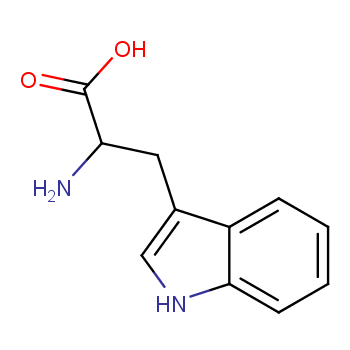
Tryptophan, with the CAS number 73-22-3, is a vital amino acid found in proteins. Amino acids serve as the building blocks of proteins, playing a crucial role in various biological processes. Tryptophan is particularly unique because it is one of the essential amino acids, meaning humans cannot synthesize it internally and must obtain it through diet.

Tryptophan's dipole moment arises primarily from its polar functional groups, particularly the amino (-NH?) and carboxyl (-COOH) groups. The amino group is a donor of hydrogen bonds, and the carboxyl group is an acceptor, leading to overall polar interactions in aqueous environments. The indole side chain contributes to tryptophan’s polarity due to the presence of a nitrogen atom in the aromatic ring, which can also form hydrogen bonds. However, the overall dipole moment of tryptophan is moderate, as the non-polar hydrophobic nature of the indole ring reduces the net dipole moment. The dipoles from the amino and carboxyl groups partially cancel out the effects of the indole ring’s hydrophobicity.

Tryptophan's importance lies in its role as a precursor for the synthesis of several biologically active molecules: 1. Serotonin: Tryptophan is converted into serotonin, a neurotransmitter that regulates mood, appetite, and sleep. Serotonin deficiency is associated with conditions such as depression and anxiety. 2. Melatonin: This hormone regulates the sleep-wake cycle and is involved in circadian rhythms. It also possesses antioxidant and anti-inflammatory properties. 3. Kynurenine Pathway: Tryptophan can be metabolized via the kynurenine pathway, leading to the production of kynurenine and its derivatives, which play roles in immune function and inflammation. 4. Nitric Oxide: Tryptophan can be converted into L-tryptophan, which then serves as a precursor for the synthesis of nitric oxide, a vasodilator and signaling molecule in the cardiovascular system.
Given its essential nature, tryptophan must be included in the human diet. Foods rich in tryptophan include meat, poultry, dairy products, and legumes. Adequate intake of tryptophan is crucial for maintaining good health, especially for children, pregnant women, and older adults who may have reduced synthesis capabilities. Inadequate dietary intake of tryptophan can lead to deficiencies, potentially causing symptoms such as fatigue, irritability, and sleep disturbances. On the other hand, excessive intake is not harmful, but it might compete with other amino acids, such as leucine, for transport into muscle cells, potentially affecting protein synthesis efficiency.
 |
|



 3YRS
3YRS