
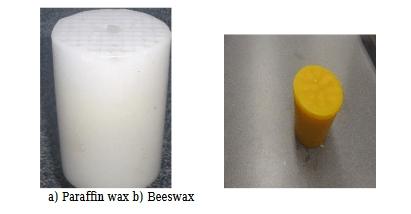
Generally, waxes have many applications. Today, most commercial uses involve paraffin wax derived from petroleum. Although beeswax has been used for centuries, paraffin wax has taken over almost all commercial applications. Both paraffin wax and beeswax offer good water resistance and can be used as natural waterproofing agents, but they have distinct characteristics and applications.
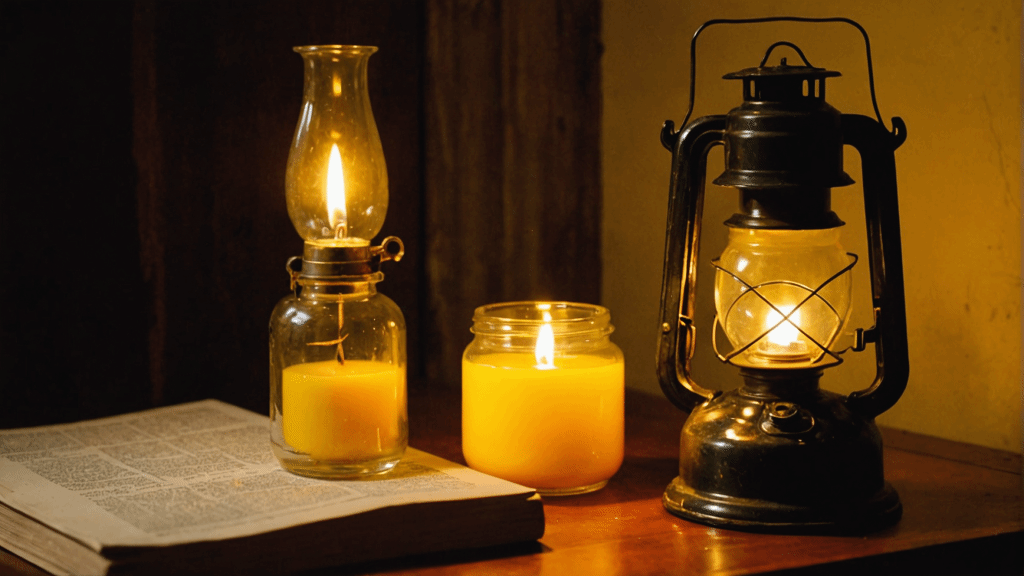
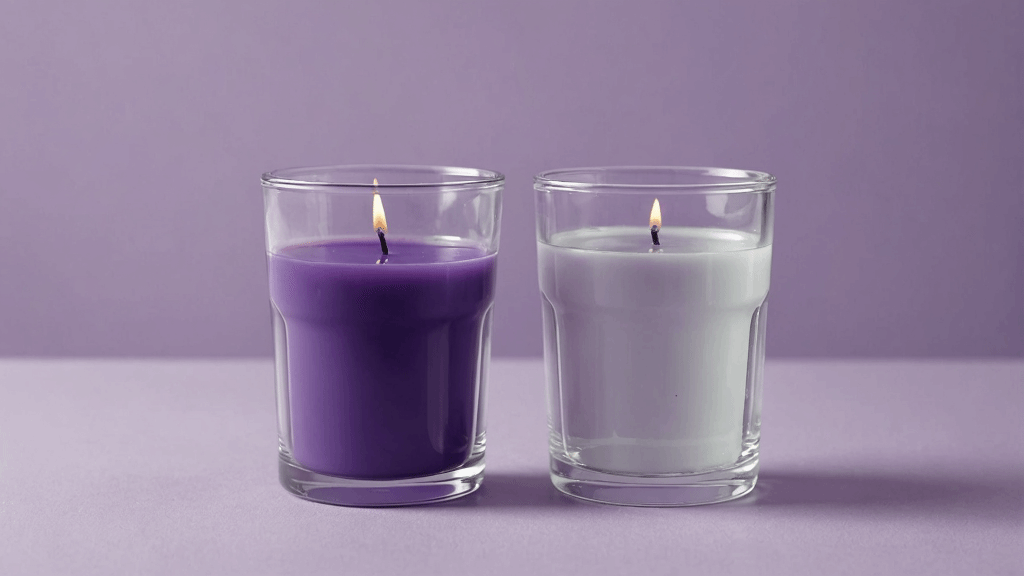
Paraffin wax is used in candles, wax paper, polishes, cosmetics, and electrical insulators. Paraffin wax and beeswax are the most common materials for making candles. Historically, candle making involved the use of beeswax, as it burns easily and cleanly. Beeswax has traditionally been used for making Easter candles, known as "Easter Candles." Beeswax candles are said to be superior to other wax candles as they burn brighter, last longer, don’t bend, and burn more cleanly. It is further recommended for making other candles used in Roman Catholic worship services. Beeswax is also the preferred candle ingredient in Orthodox Christian practices.
Wax therapy is a physical therapy method that involves using heat to alleviate pain and relax muscles. Wax therapists use different types of waxes, including paraffin wax, beeswax, and soy wax. Wax therapy can employ various waxes, each with its own unique benefits. Paraffin wax is frequently used due to its effectiveness in improving circulation, while beeswax's anti-inflammatory properties make it ideal for easing muscle pain.
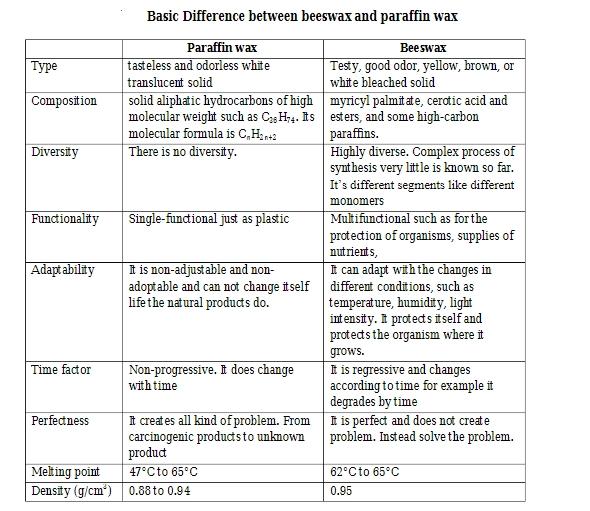
In terms of melting point, beeswax has the highest melting point among all waxes, ranging from 144°F to 147°F (62°C to 64°C), while paraffin wax has a melting point range of 115°F to 154°F (46°C to 68°C). This means paraffin wax may melt in high-temperature environments, often requiring it to be blended with other chemicals to maintain stability. In contrast, the higher melting point of pure beeswax makes it suitable for applications requiring higher temperatures.
Paraffin wax has a lower density and can hold more fragrance oils, resulting in a stronger scent release. Beeswax has a natural, sweet aroma, but the scent is relatively simple. For consumers seeking complex fragrances, paraffin wax candles may be more appealing.
In terms of burn time, beeswax candles typically burn longer than paraffin wax candles due to beeswax's higher melting point. Paraffin wax candles burn faster because of their lower density, but paraffin wax is less expensive, making it a cost-effective option. Though beeswax candles are priced higher, their longer burn time can somewhat offset this cost difference.
From an environmental standpoint, beeswax, being naturally sourced, contrasts sharply with paraffin wax. Beeswax is produced by bees, whereas paraffin wax is derived from petroleum and coal refining. Although paraffin wax is not entirely synthetic, it may cause long-term environmental harm. Paraffin wax candles contain toxic chemicals like benzene and toluene, while beeswax candles are free of these harmful chemicals, making them a natural, eco-friendly choice. Beeswax candles do not produce harmful by-products during burning, require no chemical processing, and pose no lasting pollution or waste issues while being biodegradable.
Thermal energy storage (TES) is a technology that stores excess thermal energy in materials for later use. Latent heat storage using phase change materials (PCM) is a widely used TES technology across various applications. Many PCMs are available for TES, but paraffin wax is one of the most commonly used. Paraffin wax is a saturated hydrocarbon with the chemical formula CnH2n+2, where n represents the number of carbon atoms. The melting point of paraffin wax increases with the number of carbon atoms. It offers several advantages, such as a wide melting temperature range, high latent heat, and good storage density relative to mass. Typically, the melting point range for PCMs used in building applications is between 20°C and 40°C, though this can vary depending on local climate temperatures. However, paraffin wax has two main drawbacks: low thermal conductivity and being derived from petroleum products, a major source of harmful emissions.
Can you replace paraffin wax with beeswax? Paraffin wax, as a phase change material (PCM) for thermal energy storage (TES), has been widely used in solar-to-thermal energy conversion and storage applications. As a petroleum by-product, paraffin wax production reflects environmental impacts and a high carbon footprint. Beeswax can replace paraffin wax as a clean, sustainable, eco-friendly, and potentially viable TES phase change material.
[1]https://en.wikipedia.org/wiki/Beeswax
[2]https://baike.baidu.com/item/%E8%9C%82%E8%9C%A1
[3]https://www.britannica.com/science/paraffin-wax
[4]Hossain M E, Khan M I, Ketata C, et al. Comparative pathway analysis of paraffin wax and beeswax for industrial applications[J]. International Journal of Characterization and Development of Novel Materials, 2010, 1(4): 1-13.
[5]https://www.sciencedirect.com/science/article/abs/pii/S2352152X23011118
 |
 |
|



 1YR
1YR

